The Tradition of Filipino Kamayan: Eating with Hands as Cultural Identity
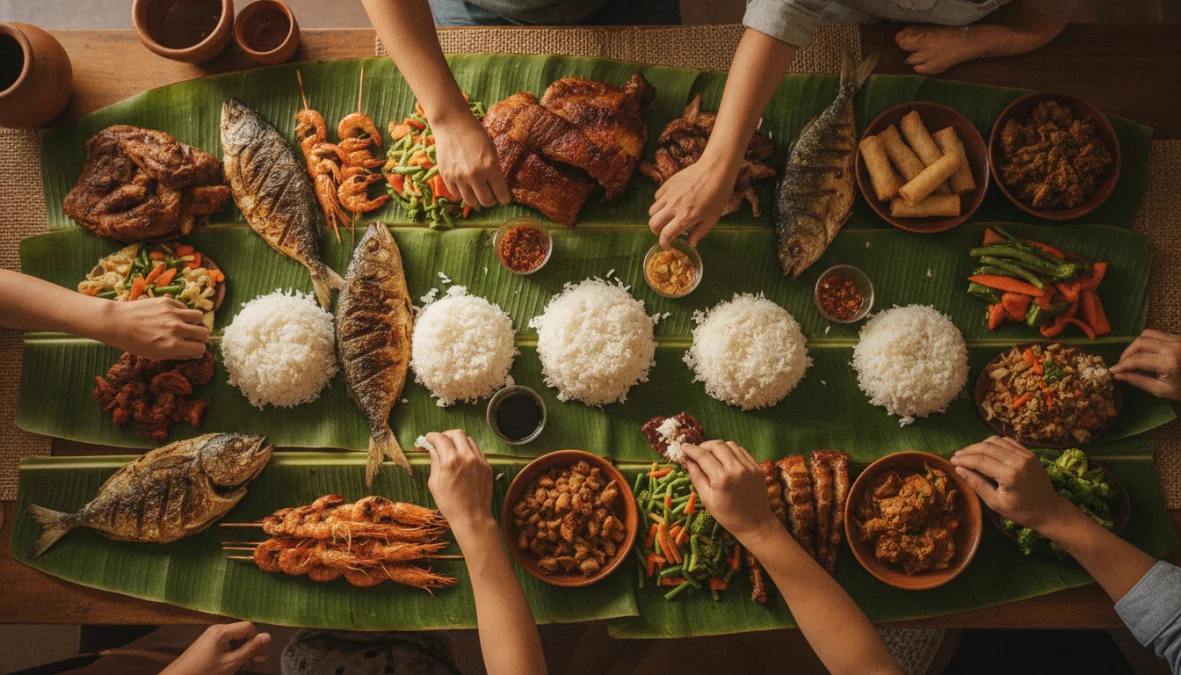
Picture this: a long table draped with fresh banana leaves, mountains of steaming rice crowned with grilled fish, crispy pork belly, and vibrant vegetables, and a room full of people laughing as they dig in—literally—with their bare hands. This is kamayan, and it’s so much more than just a meal. The kamayan Filipino tradition represents centuries of cultural identity, communal values, and a profound connection to ancestral roots that no fork or spoon could ever replicate. In a world obsessed with Western dining etiquette, this Filipino eating with hands practice stands as a beautiful rebellion—a delicious reminder that the best experiences happen when we strip away the unnecessary and get back to basics.
What Is Kamayan and Why It Matters to Filipino Culture
The word “kamayan” literally translates to “by hand” in Tagalog, but reducing it to just eating without utensils would be like calling a cathedral just a building. The kamayan Filipino tradition has roots stretching back to pre-colonial Philippines, long before Spanish conquistadors arrived with their fancy silverware. For indigenous Filipinos, this wasn’t simply about consumption—it was a spiritual practice. Touching food directly was believed to create a connection between the eater and the earth that provided it, fostering gratitude and mindfulness that modern dining often lacks.
The kamayan cultural significance goes deeper than nostalgia. Throughout centuries of colonization—first Spanish, then American—Filipinos held onto this practice as an act of cultural resistance. While the elite adopted Western table manners, ordinary families continued eating with their hands, preserving an essential piece of their identity. Today, understanding why Filipinos eat with their hands means recognizing it as both a celebration of heritage and a statement about authenticity. Similar to how other cultures maintain meaningful food traditions—like the ceremonial precision of Japanese wagashi sweets—kamayan serves as living heritage, a tangible link to ancestors who understood that how we eat shapes who we are.
The Kamayan Feast Experience: From Preparation to Practice
A traditional kamayan meal is theater, art gallery, and family reunion rolled into one aromatic, colorful spectacle. The preparation alone reveals the care embedded in this kamayan dining tradition.
How a Traditional Kamayan Meal Is Set Up
The foundation of any kamayan feast tradition is the banana leaf—nature’s biodegradable tablecloth that adds a subtle, earthy aroma to the food. These glossy green leaves are carefully washed and laid across a long table, creating a communal canvas. In the center, mountains of white rice form the base, while around it, an abundance of dishes creates a landscape of flavors: golden lechon (roast pig) with crackling skin, grilled bangus (milkfish) stuffed with tomatoes and onions, sinigang-soaked vegetables, garlicky shrimp, and often a whole array of regional specialties depending on the occasion.
The visual presentation matters enormously. There’s an artistry to banana leaf dining that rivals any plated fine dining experience. Colors pop against the green backdrop—red tomatoes, orange carrots, the charred exterior of grilled meats. Everything is arranged for easy access, encouraging sharing and exploration. Noticeably absent? Plates, forks, knives, spoons. This deliberate minimalism isn’t poverty—it’s philosophy. The focus shifts from individual portions to collective abundance, from hurried consumption to intentional savoring. Much like Turkish meze culture, kamayan emphasizes sharing as the heart of hospitality.
The Etiquette and Technique of Eating Kamayan Style
If you’re wondering how to properly eat kamayan, there’s definitely technique involved. First rule: use only your right hand. In Filipino culture (and many Asian traditions), the left hand is reserved for personal hygiene, making the right hand the respectful choice for eating. Before the feast begins, everyone washes their hands thoroughly—hygiene is paramount in this Philippine hand eating custom.
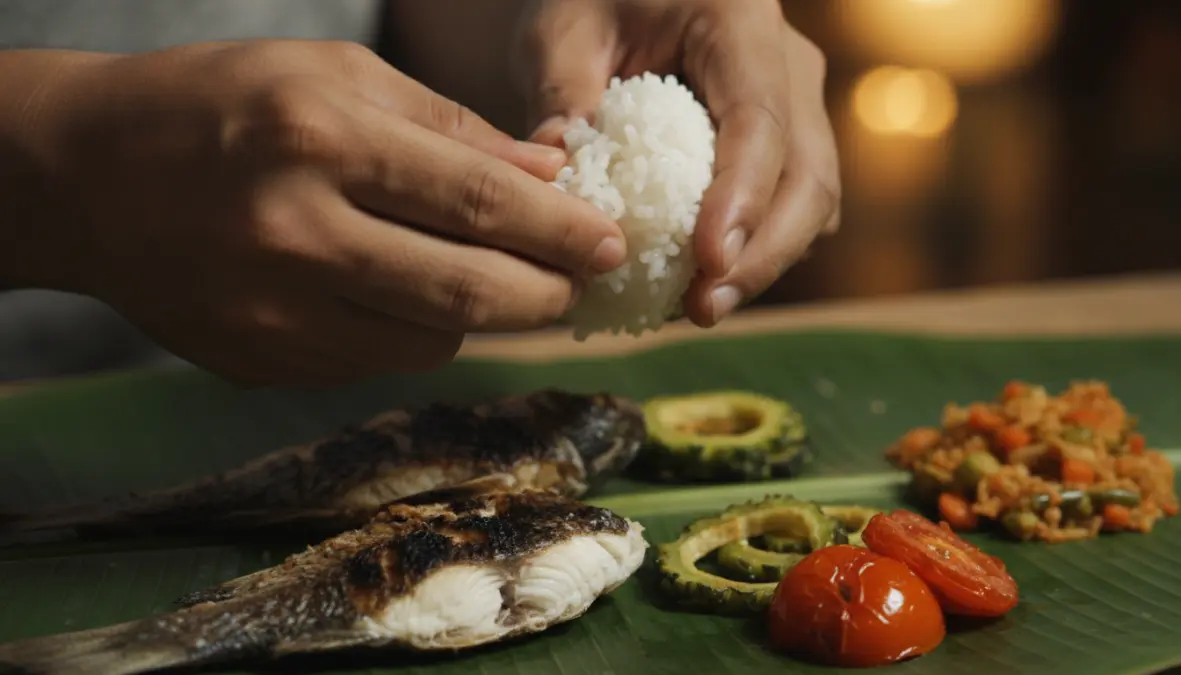
The technique itself is surprisingly elegant. You take a small portion of rice, add a bit of your chosen protein or vegetable, then use your fingers to compress it into a compact ball or mound. The thumb acts as a pusher, guiding the food into your mouth without your fingers actually entering. You never lick your fingers during the meal—that’s considered poor form. Instead, there’s a rhythm to it: scoop, compress, eat, repeat. The process slows you down, making you more aware of textures, temperatures, and flavors in ways that forks simply can’t convey.
But beyond mechanics, the real etiquette is social. Kamayan is about conversation, laughter, and presence. You can’t scroll your phone while eating kamayan—both hands are occupied (well, one literally). This forced unplugging creates space for genuine Filipino communal dining connection, embodying the bayanihan spirit of cooperation and community that defines Filipino culture.
Kamayan as Living Heritage: Community, Identity, and Modern Revival
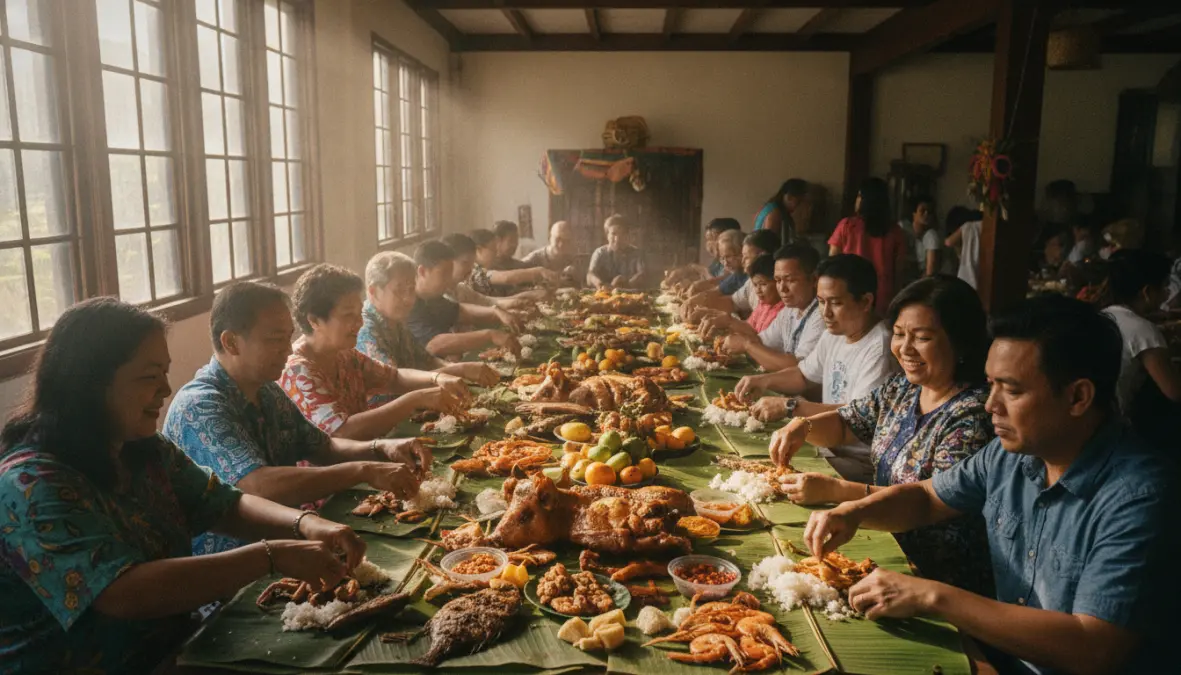
The beauty of the kamayan cultural significance lies in its democratic nature. When everyone eats from the same banana leaf spread, social hierarchies dissolve. The CEO sits beside the janitor, the elder beside the child—all equal before the feast. This symbolism wasn’t lost during the colonial period, when maintaining ancestral Filipino customs became an act of quiet resistance against imposed cultural hierarchies.
Today, we’re witnessing a fascinating kamayan renaissance. Young Filipinos, particularly in the diaspora, are reclaiming this practice as a proud expression of identity. Understanding the history of kamayan in Philippines helps second and third-generation Filipino-Americans reconnect with roots that colonialism and migration nearly severed. Urban restaurants in Manila, Los Angeles, and New York now offer kamayan nights, attracting curious foodies and nostalgic expats alike.
You’ll also encounter the modern cousin of traditional kamayan: the boodle fight. Originally a military mess hall practice in the Armed Forces of the Philippines, boodle fights feature the same banana leaf presentation but with a competitive, communal eating frenzy that’s become popular at celebrations and team-building events. While less ceremonial than traditional kamayan, it carries the same spirit of equality and togetherness.
The cultural meaning of eating with hands Philippines extends beyond food into broader questions of identity. In choosing kamayan over Western dining etiquette, Filipinos assert that their way isn’t primitive—it’s purposeful. It’s a reminder that Filipino cultural heritage deserves celebration, not assimilation. Just as rice holds deep spiritual significance across Asian cultures, the act of eating it with bare hands connects Filipinos to generations of ancestors who understood that nourishment feeds more than just the body.
FAQ
What foods are typically served in a kamayan feast?
A traditional kamayan meal centers on rice accompanied by grilled or fried fish, roasted meats like lechon or chicken, seafood (shrimp, crabs), and vegetables. Regional variations exist, but the principle remains: abundant, shareable dishes that taste great eaten by hand.
Is eating with your hands hygienic?
Absolutely, when done properly. The Philippine hand eating custom requires thorough handwashing before and after the meal. Studies actually suggest that eating with hands can aid digestion and increase awareness of food temperature, preventing burns.
Which hand should you use for kamayan?
Always use your right hand. In Filipino culture and many Asian traditions, the right hand is designated for eating while the left is reserved for other purposes. This isn’t just etiquette—it’s a deeply ingrained cultural practice showing respect.
Is kamayan unique to the Philippines?
While the kamayan Filipino tradition has distinct characteristics, hand-eating exists across many cultures—India, parts of Africa, the Middle East. What makes kamayan uniquely Filipino is the specific banana leaf presentation, the combination of dishes, and its role as cultural identity marker through colonial and modern periods.
Whether you’re Filipino by birth, heritage, or simply curious about Filipino hospitality and communal eating practices, experiencing an authentic kamayan meal offers something profound: a chance to slow down, connect with others, and remember that sometimes the most meaningful traditions are the ones that bring us back to our most human selves—together, grateful, and gloriously messy-fingered.