The Philosophy of Slow Food Movement: From Italian Origins to Global Impact
Picture this: it’s the mid-1980s, and a golden arch is about to rise in one of Rome’s most historic squares. But instead of celebration, there’s resistance. A group of passionate Italians, led by a food writer named Carlo Petrini, decided that enough was enough. What started as a protest against a McDonald’s opening near Piazza di Spagna became something far more profound—a global movement that would reshape how millions think about food, culture, and sustainability. This is the story of the slow food movement philosophy, born from Italian defiance and now thriving across continents.
What is the Slow Food Movement and Its Core Philosophy
The slow food movement philosophy emerged in 1986 in the small Italian town of Bra, Piedmont, when Carlo Petrini and a group of activists saw fast food chains as a direct threat to Italy’s culinary heritage. Their response wasn’t just about preserving pasta recipes—it was about defending an entire way of life centered around conscious eating and cultural preservation.
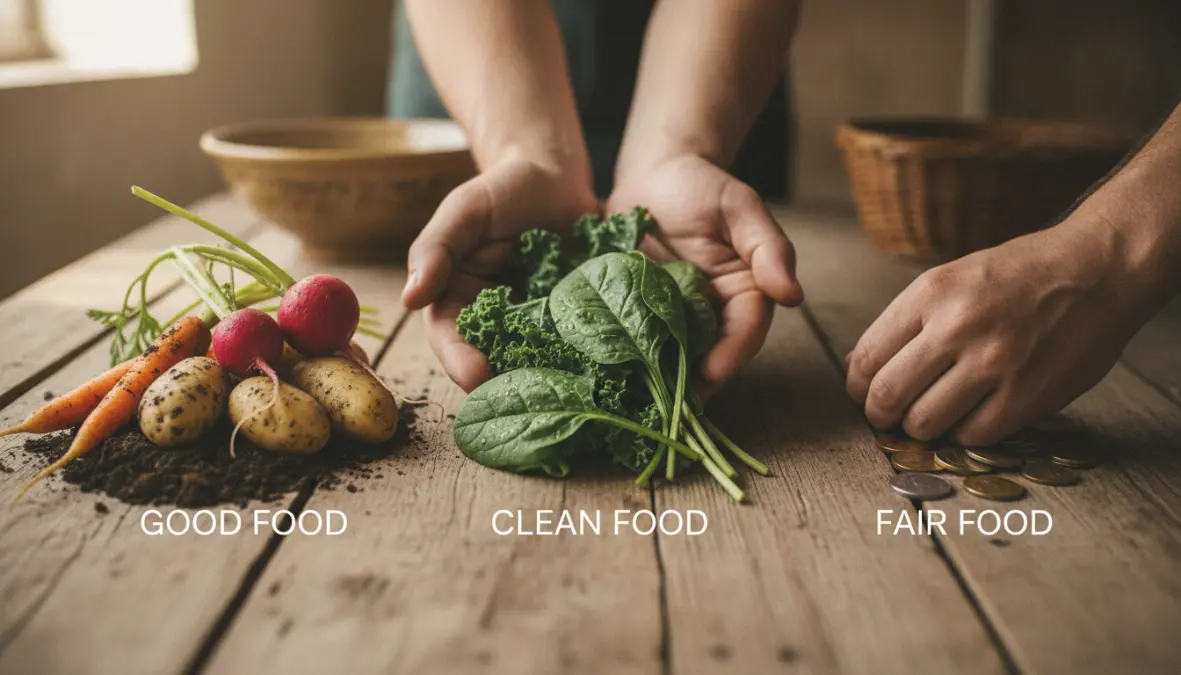
At its heart, the movement rests on three interconnected pillars, often summarized as “Good, Clean, and Fair.” Good refers to the quality, flavor, and pleasure of food—eating should be a joyful experience, not just fuel consumption. Clean addresses environmental sustainability, advocating for production methods that don’t harm the planet or deplete resources. Fair ensures social justice, demanding that farmers and producers receive equitable compensation for their work.
These slow food principles go beyond mere consumption habits. They’re intrinsically tied to biodiversity protection, recognizing that industrial agriculture’s monoculture threatens thousands of traditional food varieties. The movement celebrates the gastronomic pleasure of eating while simultaneously championing ecological responsibility. It’s not about eating slowly in the literal sense—it’s about being deliberate, informed, and connected to what’s on your plate and where it comes from.
This philosophy represents a radical departure from the fast food mentality that prioritizes speed, uniformity, and profit over quality, sustainability, and cultural significance. It’s a reminder that food is more than calories—it’s history, identity, and community.
Italian Roots and the Birth of a Culinary Revolution
To understand why the slow food movement started in Italy, you need to appreciate the deep cultural connection Italians have with their regional cuisines. From the risottos of Lombardy to the seafood of Sicily, Italy’s culinary landscape is a tapestry of hyperlocal traditions, each reflecting centuries of agricultural wisdom and community identity.
Carlo Petrini recognized that this traditional food culture was under siege from globalization and industrialization. The opening of that McDonald’s in Rome wasn’t just a business development—it symbolized a cultural invasion. Petrini’s response was both intellectual and visceral, rooted in the Italian appreciation for convivialità—the art of enjoying food together, slowly, with conversation and connection.
In 1989, the movement formalized its vision with the Slow Food Manifesto, signed by delegates from 15 countries in Paris. The document introduced the concept of “eco-gastronomy”—a philosophy that unites pleasure and responsibility, recognizing that protecting the planet and celebrating culinary traditions are inseparable goals. The manifesto boldly declared war on the “universal folly of Fast Life” and championed a return to human-paced living.
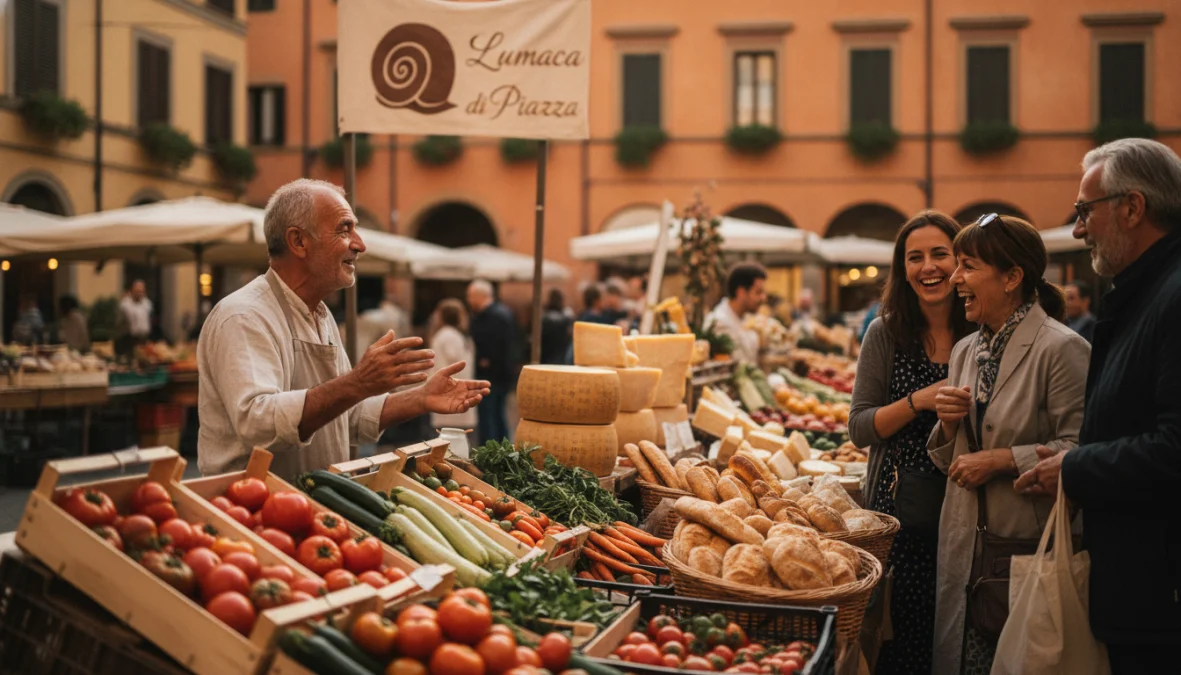
The movement chose the snail as its symbol—a brilliant metaphor for deliberate, conscious progress rather than reckless speed. What began in Italian osterie, those cozy family-run taverns where locals gather for multi-hour meals, evolved into an international organization with presence in over 160 countries. Similar to traditions like Swedish fika, which celebrates intentional breaks and connection, Slow Food transformed everyday eating into a philosophical act of cultural preservation and resistance against homogenization.
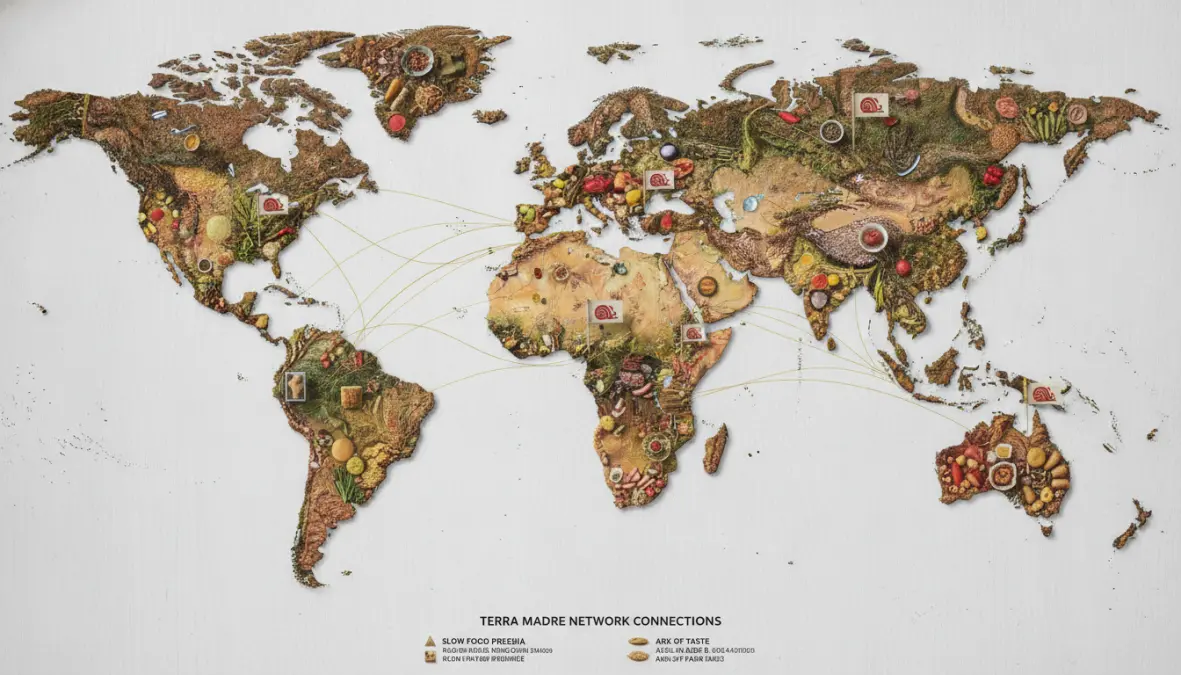
Global Impact and Modern Applications of Slow Food Philosophy
From its Italian origins, Slow Food has spawned numerous international initiatives that actively protect biodiversity and sustainable food systems. The Presidia project supports small-scale producers of traditional foods at risk of extinction—from Georgian wine made in ancient clay vessels to Brazilian native honey. These aren’t museum pieces; they’re living traditions that provide livelihoods while preserving genetic diversity.
The Ark of Taste catalog now includes over 5,000 heritage foods from around the world, documenting everything from forgotten grain varieties to artisanal cheese-making techniques. It’s a living archive that recognizes culinary diversity as equally important as linguistic or biological diversity. The Terra Madre network connects food communities globally, creating solidarity between a Moroccan argan oil producer and a Montana cattle rancher—both fighting to maintain traditional practices against industrial pressures.
The movement’s global impact extends into education, with thousands of school gardens teaching children where food actually comes from. It’s influenced gastronomy tourism, making food heritage a legitimate reason to travel, much like experiencing Moroccan tagine traditions or Indonesian rendang preparation. Renowned chefs worldwide now cite Slow Food principles as foundational to their cooking philosophy.
Related movements like farm-to-table and kilometer-zero sourcing share DNA with Slow Food, though they often focus more narrowly on proximity rather than the broader cultural and social dimensions. In our current era of climate crisis and corporate food monopolies, the slow food movement philosophy offers a proven alternative—one that’s simultaneously ancient and urgently contemporary, showing that pleasure and responsibility can coexist on the same plate.
FAQ
What are the main principles of slow food movement?
The core slow food principles are Good (quality and flavor), Clean (environmentally sustainable production), and Fair (social justice for producers). These principles emphasize biodiversity protection, pleasure in eating, and respect for both cultural traditions and the planet.
How does slow food differ from organic food?
While organic food focuses primarily on production methods without synthetic chemicals, slow food encompasses a broader philosophy that includes cultural heritage, biodiversity, fair compensation for producers, and the social experience of eating. Slow Food can include organic products, but it prioritizes traditional varieties and methods that might not be certified organic.
Can slow food philosophy be practiced in everyday life?
Absolutely. Start by sourcing from local farmers’ markets, learning about seasonal foods, cooking traditional recipes, eating with others mindfully, and choosing products that support small-scale producers. It’s about making conscious choices rather than perfect adherence—every intentional decision counts.
What is the difference between slow food and fast food?
Fast food prioritizes speed, uniformity, low cost, and convenience, often at the expense of quality, sustainability, and cultural value. Slow food values tradition, biodiversity, environmental health, fair labor practices, and the pleasure of eating—seeing food as cultural heritage rather than mere fuel.
The slow food movement philosophy proves that resistance can be delicious. What started as Italian indignation at a hamburger chain has blossomed into a global network defending the right to eat well, sustainably, and joyfully. Whether you’re savoring traditional dumplings or simply choosing tomatoes from a local farmer, you’re participating in this ongoing revolution—one mindful bite at a time.