Biltong: South Africa’s Traditional Dried Meat and Dutch-African Preservation Heritage
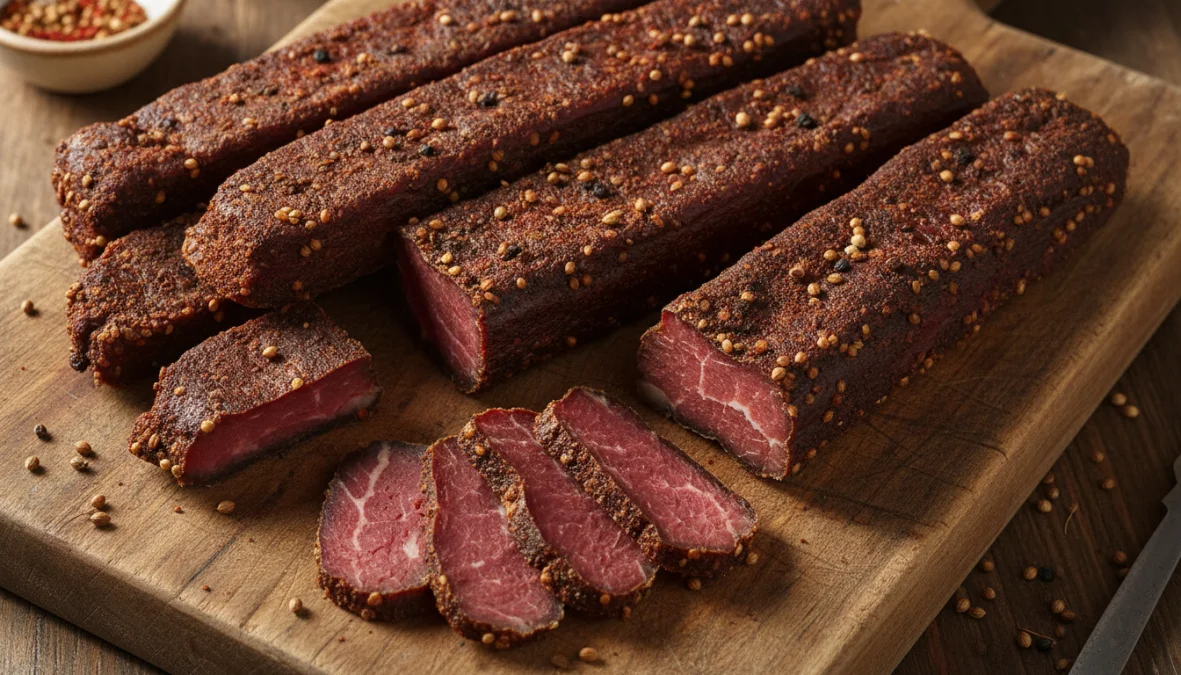
There’s something deeply primal about the act of preserving meat—turning fresh cuts into something that can last weeks or months without refrigeration. In South Africa, this ancient practice evolved into biltong south african tradition, a dried meat delicacy that tells the story of survival, migration, and cultural fusion. Unlike the sweet, chewy jerky you might grab at a gas station, biltong is a different beast entirely: thicker, more tender, and bursting with the bold flavors of coriander and vinegar. It’s not just food; it’s edible history, carried across the veldt by Dutch settlers and perfected over centuries into the beloved snack South Africans crave today.
What Is Biltong? Understanding South Africa’s Iconic Dried Meat
At its core, south african biltong is air-dried, cured meat—typically beef, but also game animals like kudu and springbok. The term “biltong” comes from Dutch: “bil” (rump) and “tong” (strip), reflecting its origins with the Boer settlers who arrived at the Cape Colony in the 17th century. These dutch african food heritage pioneers faced a critical challenge: how to preserve meat in the harsh African climate without modern refrigeration. Drawing on European salting techniques and adapting them to local conditions, they created what would become a defining element of South African cuisine.
The Voortrekkers—Dutch farmers who migrated inland during the Great Trek—relied heavily on biltong during their long journeys across uncharted territory. This african dried meat provided essential protein that could withstand weeks of travel in ox-drawn wagons. The traditional ingredients are beautifully simple: vinegar (usually malt or apple cider) for initial curing and antimicrobial properties, coarse salt, toasted coriander seeds, and black pepper. Some recipes add brown sugar, but purists argue this dilutes authenticity. This cultural connection mirrors other preserved food traditions around the world, much like how ancient preservation techniques shaped Peruvian ceviche.
The Traditional Biltong Curing and Preservation Method
Understanding the biltong preservation method reveals why this delicacy tastes so distinctly different from other dried meats. The magic lies in the biltong curing process, which relies on air-drying rather than smoking or heat-cooking. First, select quality meat—typically silverside or topside beef cuts, though game meat adds wonderful complexity. The meat is cut with the grain into thick strips, usually 2-5 cm thick, rather than the thin slices jerky requires.
Here’s how to make traditional south african biltong at home with an authentic traditional biltong recipe:
- Prepare the meat: Cut 1-2 kg beef into thick strips along the grain
- Vinegar wash: Submerge strips in apple cider vinegar for 30 minutes to 2 hours (this is crucial for food safety)
- Spice mixture: Combine 3 tablespoons coarse salt, 2 tablespoons toasted coriander (crushed), 1 tablespoon black pepper, optional 1 teaspoon brown sugar
- Coat thoroughly: Pat meat dry, then press spice mixture generously onto all surfaces
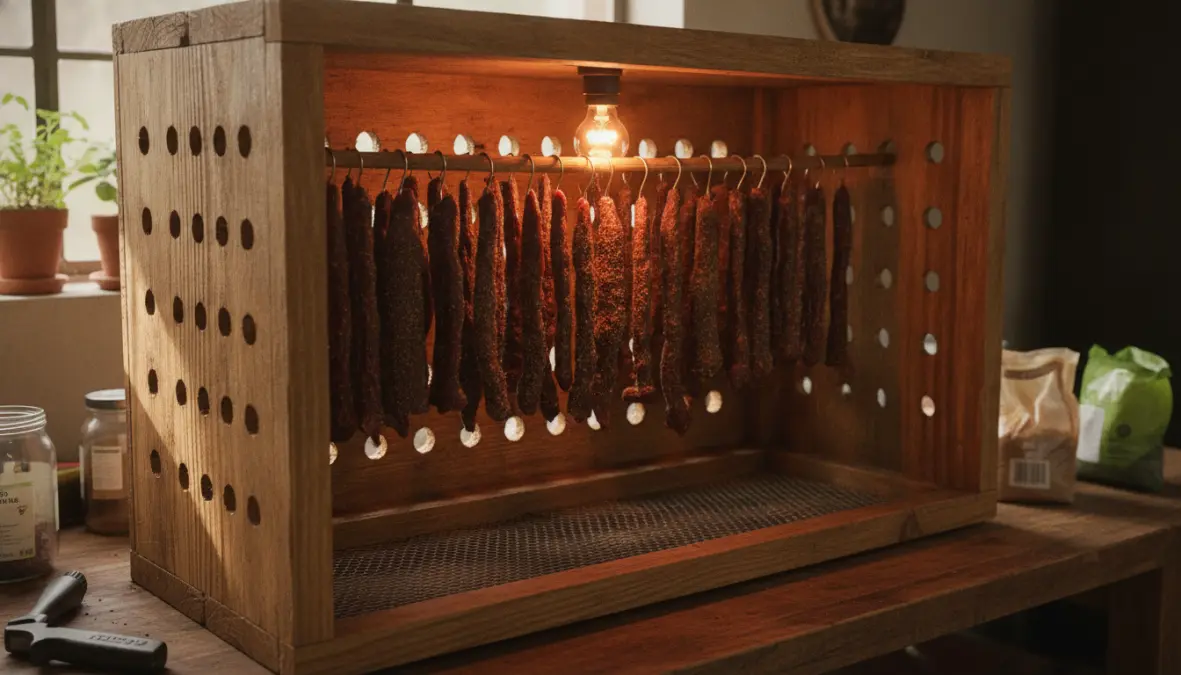
- Hang to dry: Use hooks or a biltong box (a ventilated wooden box with a low-watt bulb for gentle warmth and airflow)
- Cure time: 5-7 days for semi-wet biltong, 10-14 days for fully dried—humidity and temperature affect timing
The ideal conditions for homemade biltong are 15-20°C with low humidity and constant airflow. The coriander and vinegar combination is what defines authentic biltong—these aren’t optional additions but essential elements of the biltong dutch colonial preservation technique. Unlike jerky, which is cooked at low temperatures, biltong remains raw throughout the process, relying entirely on salt, acid, and drying to prevent bacterial growth. This preservation principle connects to broader food heritage traditions, similar to how indigenous preservation methods shaped maple syrup production.
Biltong vs Jerky: Key Differences in Preparation and Taste
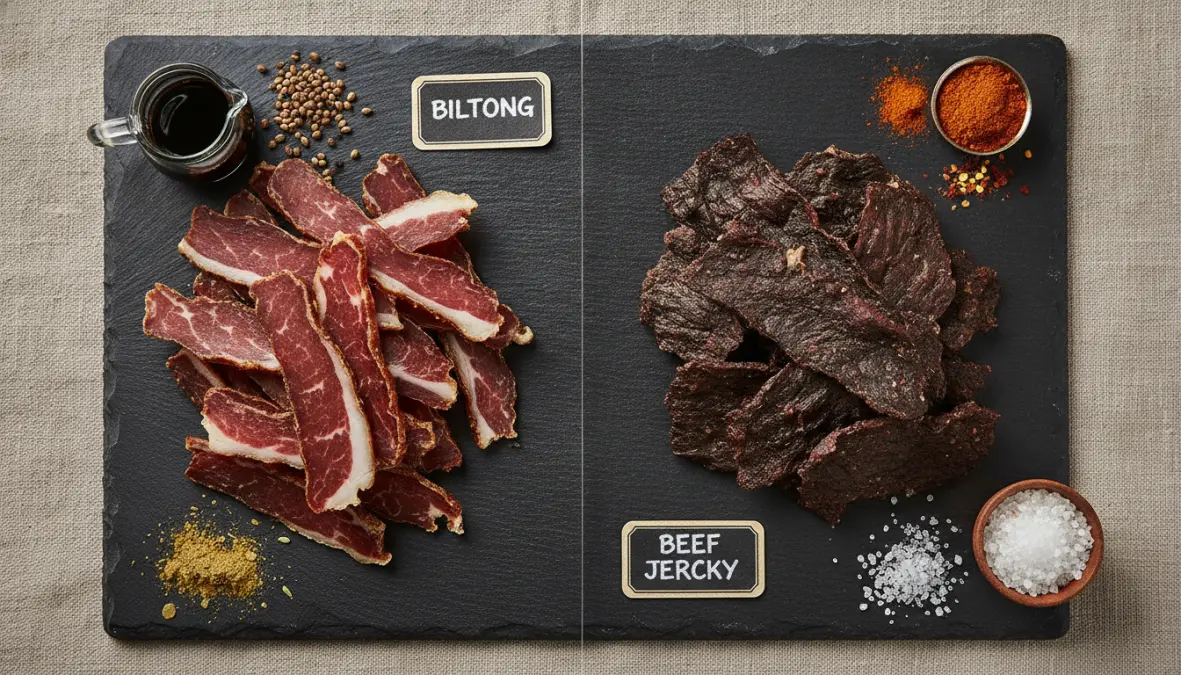
The question of biltong vs jerky comes up constantly, and while both are dried meats, they’re fundamentally different products. Understanding the difference between biltong and beef jerky illuminates two distinct preservation philosophies:
- Preparation method: Biltong is air-dried raw; jerky is smoked or heated to 70°C+
- Cut thickness: Biltong uses thick strips (2-5 cm); jerky uses thin slices (3-5 mm)
- Texture: Biltong is tender and can be slightly moist inside; jerky is uniformly chewy and dry
- Flavor profile: Biltong features vinegar tang and coriander earthiness; jerky often has sweet, smoky, or teriyaki notes
- Curing time: Biltong takes 5-14 days; jerky is ready in hours
- Cultural origin: Biltong is Dutch-African; jerky comes from Native American pemmican traditions
The texture difference is perhaps most striking—biltong maintains a steak-like quality when done properly, while jerky’s thinness creates that distinctive leather-like chew. Both have their place, but biltong enthusiasts argue their tradition produces more nuanced, complex flavors.
Biltong in Modern South African Culture and Beyond
Today, biltong south african tradition thrives in contemporary culture, transcending its humble preservation origins. Walk into any South African home, and you’ll likely find a biltong box in the garage or kitchen. It’s no longer just survival food—it’s a beloved snack enjoyed while watching rugby matches, road-tripping across the country, or simply as a protein-rich afternoon treat. The biltong cultural significance in south africa extends beyond nutrition into identity itself, much like how bobotie represents Cape Malay heritage or haggis embodies Scottish identity.
Modern variations have expanded the tradition considerably. Droëwors (dried sausage) applies the same curing principles to spiced ground meat in casings, creating a thinner, more portable snack. Game meats like kudu and springbok offer distinctive flavors prized by connoisseurs. Some producers now make biltong from ostrich, chicken, or even fish, though beef remains the gold standard.
The international spread of South African diaspora communities has brought biltong to global attention. Specialty shops in London, Sydney, and New York now stock imported biltong, while expatriates make homemade biltong to combat nostalgia. The nutritional profile helps this popularity—high in protein (up to 50%), low in carbohydrates, and rich in iron and B vitamins, biltong appeals to keto dieters, athletes, and health-conscious snackers. Unlike mass-produced jerky loaded with sugar and preservatives, traditionally made biltong contains only meat, vinegar, salt, and spices.
For those outside South Africa wanting to experience authentic biltong, seeking out specialty importers or learning how long does biltong take to cure (typically 5-14 days depending on preference) to make your own becomes part of connecting with this dutch african food heritage. The beauty of biltong lies in its simplicity—ancient meat preservation techniques meeting bold, distinctive spicing to create something that tastes unmistakably of its place and people.
Like many traditional foods that define cultural identity—from Polish pierogi to West African fufu—biltong represents more than sustenance. It’s a tangible connection to history, a reminder that the best food traditions emerge from necessity and are perfected through generations of refinement. Whether you’re enjoying a strip of kudu biltong on a Karoo farm or making your first batch in a converted cardboard box in your apartment, you’re participating in a centuries-old tradition that continues to bring people together through the simple pleasure of perfectly preserved meat.