The Philosophy Behind Japanese Bento: Art, Balance, and Nutritional Harmony
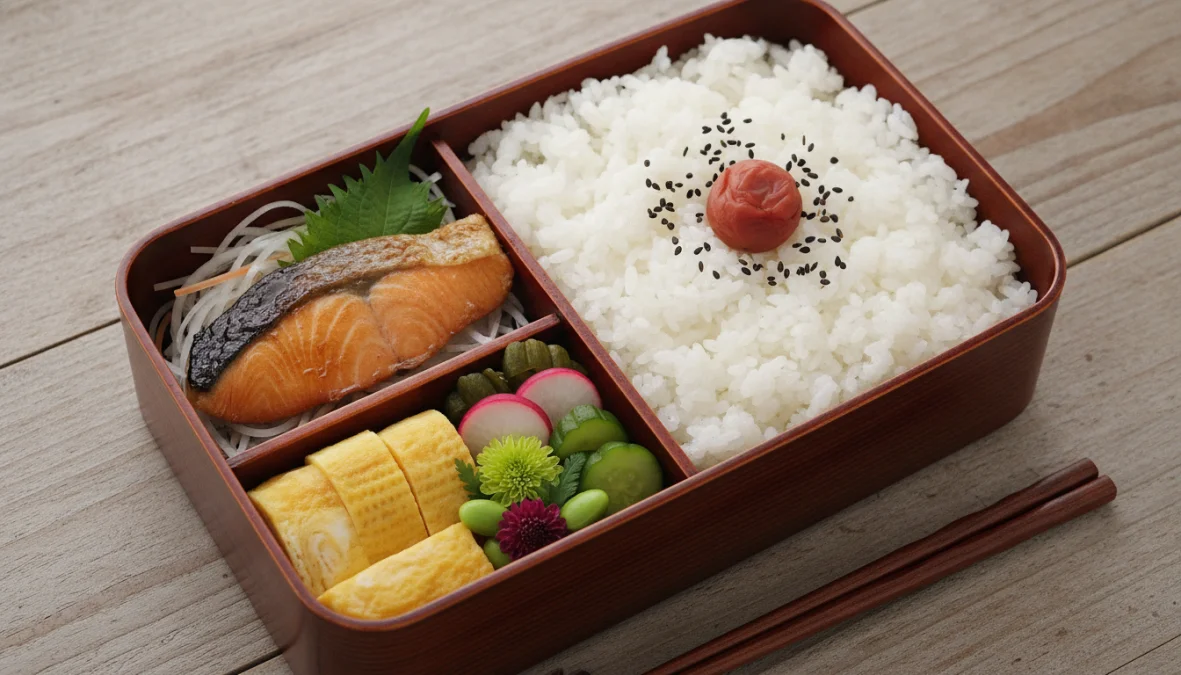
When you peek inside a traditional Japanese bento box, you’re looking at far more than a packed lunch. You’re witnessing centuries of cultural wisdom compressed into a compact container—a philosophy that transforms everyday eating into an art form balancing aesthetics, nutrition, and mindfulness. The bento box philosophy represents a uniquely Japanese approach to food that treats each meal as an opportunity for harmony, both visual and nutritional, creating what many consider edible poetry.
The Foundations of Bento Box Philosophy
The origins of Japanese bento philosophy stretch back to the Kamakura period (1185-1333), when dried rice meals called hoshi-ii were carried in small bags. But the bento as we know it today evolved through centuries of refinement, eventually becoming inseparable from the broader washoku philosophy—Japan’s traditional dietary culture that UNESCO recognized as Intangible Cultural Heritage in 2013.
At its core, bento box philosophy embodies several traditional bento principles rooted in Japanese aesthetics. The concept of ma (negative space) teaches that emptiness is as important as fullness, preventing visual clutter and encouraging appreciation of each component. The yin-yang balance ensures neither heavy nor light foods dominate, creating equilibrium that satisfies without overwhelming.
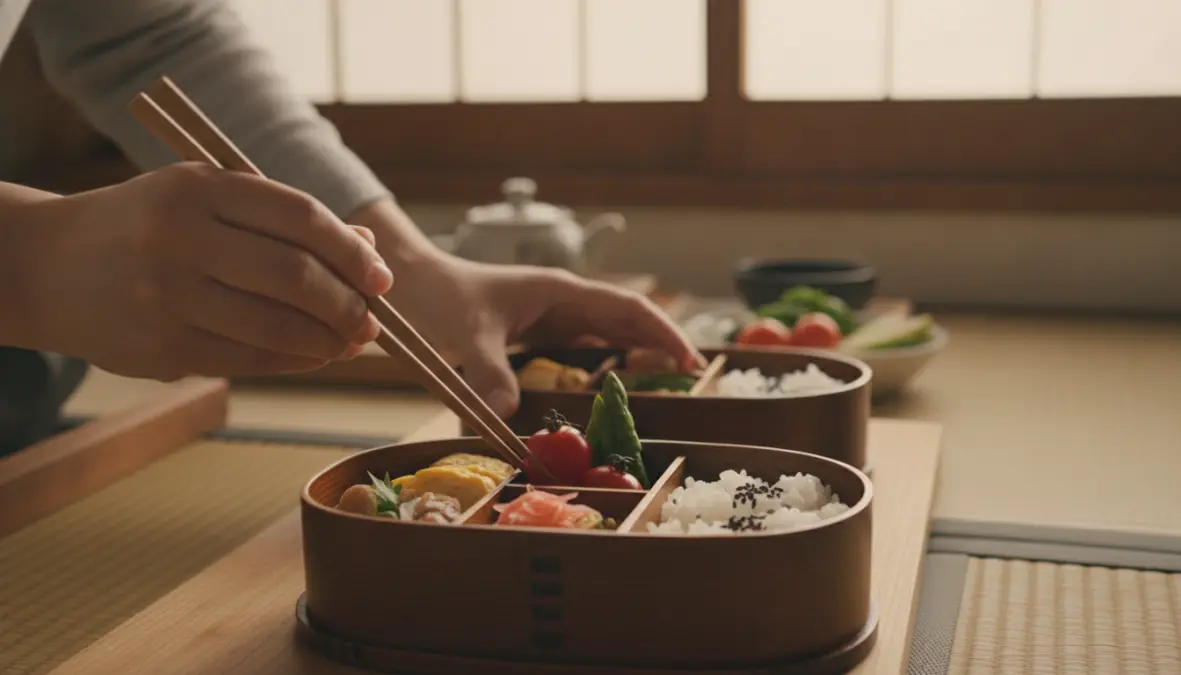
In Japanese lunch box culture, the homemade bento (tezukuri bento) carries profound cultural significance beyond its commercial counterpart. When a mother rises early to prepare a bento for her child, she’s not just packing lunch—she’s expressing love, transmitting cultural values, and teaching the importance of seasonal awareness and nutritional balance. This daily ritual reflects broader Japanese values: attention to detail, respect for ingredients, and the belief that care in preparation directly influences the wellbeing of the recipient. Similar to how wagashi sweets embody seasonal beauty in Japanese tea culture, bento boxes translate these aesthetic principles into everyday sustenance.
The Five Pillars of Bento Harmony: Aesthetic and Nutritional Balance
Understanding bento box balance requires diving into its governing principles. The philosophy behind Japanese bento boxes rests on interconnected concepts that create both Japanese food aesthetics and bento nutritional harmony simultaneously.
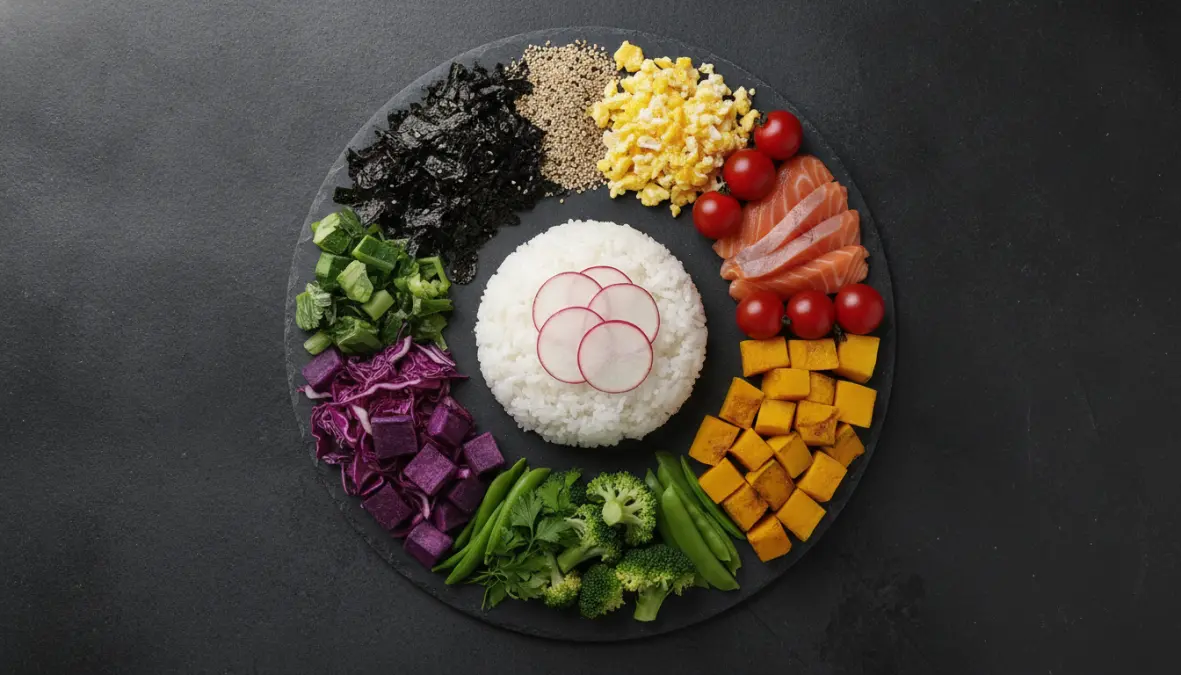
The foundational principle is goho-goshoku, or “five colors five methods.” The five colors—white (rice, daikon), black (seaweed, black sesame), red (tomato, salmon), yellow (egg, squash), and green (vegetables)—aren’t arbitrary aesthetic choices. Each color represents different phytonutrients, ensuring comprehensive nutritional coverage. Traditional wisdom understood what modern nutrition science confirms: eating a rainbow guarantees diverse vitamins and minerals.
Equally important is gomi, the five tastes: sweet, salty, sour, bitter, and umami balance. A well-constructed bento touches all five flavor notes, creating satisfaction that prevents overeating. The sweet might come from tamagoyaki (rolled omelet), salt from pickles, sourness from vinegared vegetables, bitterness from greens, and umami from fish or mushrooms.
The typical nutritional proportion follows a 3:2:1 or 4:3:2:1 ratio—three parts carbohydrates (usually rice), two parts protein, and one part vegetables (or four parts grain, three parts vegetables/fruit, two parts protein, one part pickles). This ratio, refined over generations, provides sustained energy while maintaining portion control naturally through the container’s size.
Visual Aesthetics: The Art of Mindful Arrangement
Bento box art employs specific arrangement techniques that transform food presentation into visual storytelling. The nami-nori method creates wave-like patterns, while yama-gata builds mountain shapes—both reflecting Japan’s landscape. The use of ma negative space prevents overcrowding, allowing each element to shine.
The selection of shun seasonal ingredients connects eaters to nature’s cycles. Spring might feature bamboo shoots and cherry blossom-shaped carrots, while autumn brings chestnuts and mushrooms. This seasonality isn’t merely decorative—ingredients at their peak offer superior nutrition and flavor.
Traditional bento differs dramatically from kyaraben (character bento), where foods form cartoon characters. While kyaraben captures international attention, traditional bento focuses on subtle beauty, natural colors, and the inherent beauty of quality ingredients. Both approaches share the core principle of mindful cooking—the preparer’s focused attention transforming mundane tasks into meditation. Just as kaiseki dining elevates seasonal ingredients to high art, bento philosophy applies similar reverence to portable meals.
Nutritional Philosophy: Feeding Body and Spirit
The art and balance in bento preparation extends beyond vitamins to encompass holistic wellness. The concept of hara hachi bu—eating until 80% full—guides portion sizing. Bento containers naturally enforce this principle through physical constraints, preventing the overeating common with larger plates.
The traditional bento principles consider food combinations for optimal digestion. Rice provides grounding energy, pickles aid digestion through beneficial bacteria, and the variety prevents palate fatigue. The ichiju-sansai concept—one soup, three dishes—often adapts to bento format with rice plus three complementary sides, creating textural and nutritional diversity.
Perhaps most profound is bento preparation as spiritual practice. The quiet morning ritual of washing, cutting, cooking, and arranging becomes a form of active meditation. This mindful cooking infuses the meal with intention and care—qualities Japanese culture believes transfer to the eater, nourishing spirit alongside body. Similar to how Swedish fika creates space for presence through coffee breaks, bento philosophy builds mindfulness into meal preparation itself.
Bento Philosophy in Modern Life: Practical Applications and Cultural Legacy
Japanese lunch box culture has adapted remarkably to contemporary demands while preserving core principles. Modern workers might use microwaveable containers or purchase convenience store bento, yet the fundamental philosophy—balance, variety, appropriate portions—persists. The global meal prep movement has embraced elements of bento box philosophy, though often missing the aesthetic and spiritual dimensions that distinguish it from simple batch cooking.
The cultural significance of bento boxes extends to sustainability. Reusable containers reduce waste, seasonal eating supports local agriculture, and appropriate portions combat food waste. These environmental benefits emerge naturally from traditional practices, not modern environmental consciousness—proving ancient wisdom’s contemporary relevance.
How to create balanced bento boxes in non-Japanese contexts? The principles translate across cuisines. Apply the five-color rule to Mediterranean ingredients, maintain the protein-grain-vegetable ratio with local foods, practice seasonal eating with regional produce. The philosophy transcends specific dishes to embrace universal nutritional and aesthetic wisdom. Much like Nordic smørrebrød demonstrates minimalist food philosophy in Scandinavia, bento offers a Japanese framework applicable anywhere.
The generational transmission of bento-making—particularly from mothers to children—preserves not just recipes but cultural values: care, attention, seasonal awareness, and nutritional wisdom. Special occasion bento, like osechi ryori served during New Year, elevate the philosophy to ceremonial heights, demonstrating its flexibility across contexts.
Embracing the philosophy behind Japanese bento boxes doesn’t require Japanese ingredients or specialized containers. It requires understanding that meals can be miniature universes—complete, balanced, beautiful—and that the act of mindful preparation transforms cooking from chore to meditation. Whether you’re packing lunch for work or preparing dinner at home, the bento philosophy invites you to see food as art, balance nutrition intuitively, and invest meals with intention. In our rushed modern world, perhaps we all need a little bento wisdom: the reminder that nourishment encompasses far more than calories, and that beauty, balance, and care can fit inside even the smallest box.