Som Tam: Thailand’s Fiery Green Papaya Salad and Street Food Culture
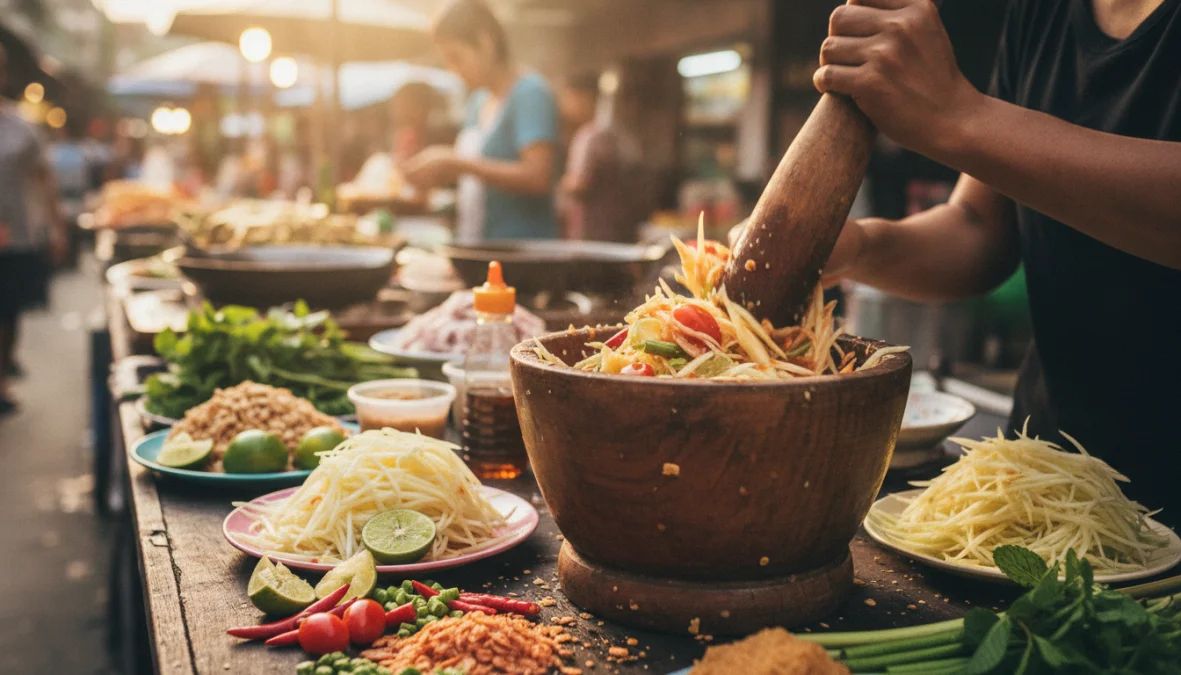
The rhythmic pounding of a mortar and pestle echoes through bustling Bangkok streets as vendors transform humble green papaya into one of Thailand’s most beloved dishes. Som tam thai tradition represents far more than a simple salad—it’s a cultural phenomenon that captures the essence of Thai cuisine’s perfect balance between fiery heat, tangy lime, savory fish sauce, and subtle sweetness. This vibrant green papaya salad has evolved from its northeastern roots to become an iconic symbol of Thai street food, served everywhere from roadside carts to upscale restaurants worldwide.
The Heart of Som Tam Thai Tradition: Origins and Cultural Significance
The som tam thai tradition traces its origins to the northeastern Isaan cuisine, a region sharing deep cultural ties with neighboring Laos. Historically, this fiery salad emerged from agricultural communities where green papaya grew abundantly and preservation techniques like fermented fish provided essential protein. The dish’s name literally translates to “pounded sour,” referring to both the preparation method and its characteristic tangy flavor profile.
What began as humble farmer’s fare has transformed into Thailand’s unofficial national dish, rivaling even pad thai in popularity. The migration of Isaan workers to Bangkok during the mid-20th century brought som tam to urban centers, where it quickly captivated Thai palates across social classes. Today, you’ll find som tam vendors on virtually every street corner, their colorful displays of ingredients attracting locals and tourists alike.
The cultural significance of this dish extends beyond mere sustenance. Som tam embodies the Thai principle of creating harmony from contrasting elements—much like Vietnamese pho represents morning rituals, som tam defines Thai street food culture. It’s a social dish, often prepared to order while customers watch, creating an interactive dining experience that strengthens community bonds in markets and neighborhoods.
Som Tam Recipe: Essential Ingredients and Authentic Preparation
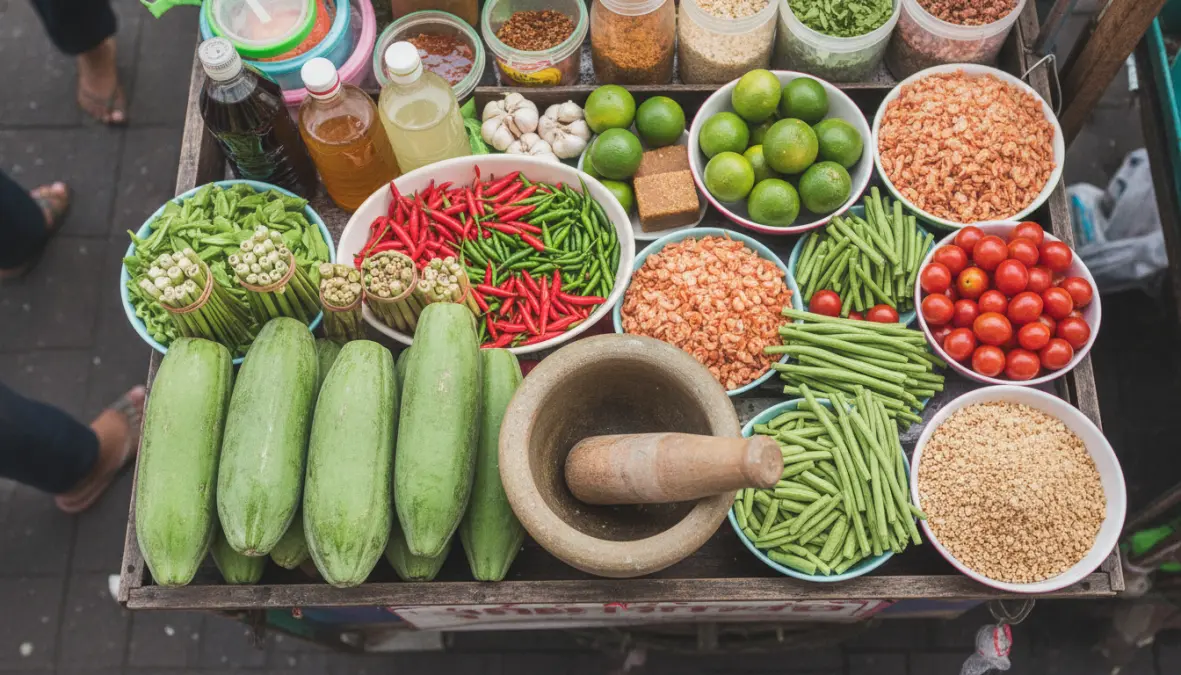
Understanding how to make authentic som tam requires appreciating the delicate balance of flavors that defines Thai cuisine. The foundation starts with shredded green papaya—unripe, firm fruit that provides the perfect crunchy texture. Essential som tam ingredients include Thai chilies (adjust quantity based on heat tolerance), garlic cloves, palm sugar, lime juice, fish sauce, cherry tomatoes, long beans, and roasted peanuts. More authentic versions incorporate dried shrimp and sometimes pla ra (fermented fish sauce) for deeper umami complexity.
The preparation technique is crucial—the mortar and pestle isn’t just traditional; it’s essential for properly bruising ingredients to release their flavors. A traditional thai papaya salad recipe follows this process: First, pound garlic and chilies into a paste. Add palm sugar and continue pounding to dissolve. Toss in long beans and tomatoes, lightly bruising them. Add shredded green papaya and pound gently while turning with a spoon. Finally, season with fish sauce and lime juice, then mix in peanuts and dried shrimp.
The art lies in balancing four fundamental tastes: spicy from chilies, sour from lime, salty from fish sauce, and sweet from palm sugar. Each vendor develops their signature ratio, but authentic som tam should make your lips tingle, your mouth pucker, and leave you reaching for sticky rice—the traditional accompaniment that helps temper the heat. When selecting green papaya, choose rock-hard, completely unripe fruit with white flesh. If unavailable outside Thailand, substitute with kohlrabi, jicama, or cucumber for similar crunch, though the authentic flavor will differ slightly.
Popular Som Tam Variations Across Thailand
The beauty of som tam variations reflects Thailand’s regional diversity and culinary creativity. Som Tam Thai represents the Bangkok-style version—slightly sweeter with added peanuts and dried shrimp, considered the most tourist-friendly option. Som Tam Lao or Som Tam Poo Pla Ra stays true to Isaan roots, incorporating fermented fish sauce and sometimes raw fermented crab, delivering intense, funky flavors that divide opinions even among Thais. This som tam with fermented fish exemplifies the difference between som tam thai and lao styles.
Som Tam Pu includes pickled crab, adding briny sweetness and textural contrast. Som Tam Khai Khem features salted duck eggs, their rich yolks creating creamy pockets amid the crunchy salad. Modern Bangkok vendors have introduced fusion variations using fruits like mango or apple, and even adding seafood like grilled prawns. Each variation maintains the core technique while celebrating different ingredient combinations, similar to how massaman curry adapted foreign influences into Thai cuisine.
Som Tam in Thai Street Food Culture: Where and How to Experience It
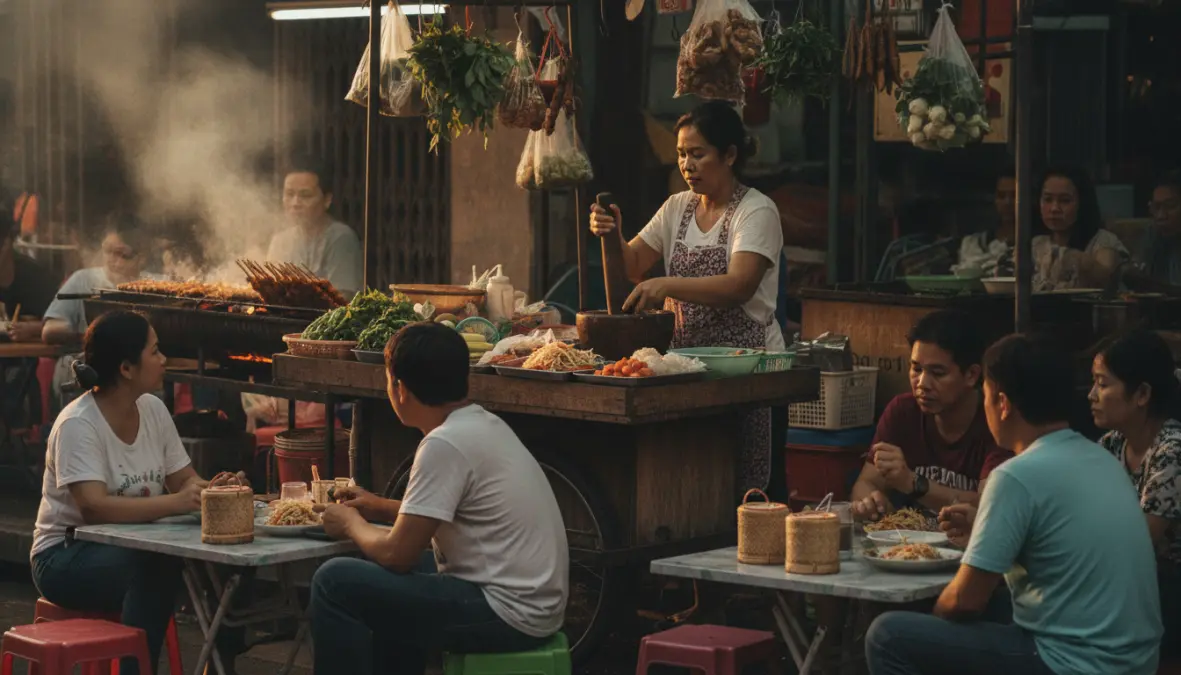
Experiencing som tam street food bangkok authentically means venturing beyond tourist areas to neighborhood markets and street-side stalls. The best som tam in thailand often comes from unassuming vendors with decades of experience, their weathered mortars and pestles testament to countless salads pounded to perfection. Prime hunting grounds include Chatuchak Weekend Market, Or Tor Kor Market, and the streets of Ari and Thonglor neighborhoods where locals queue during lunch hours.
When ordering, communicate your spice tolerance clearly—vendors typically ask “pet maak mai?” (very spicy?). Hold up fingers to indicate chili quantity if language barriers exist. Watch closely as your salad is prepared; authentic vendors pound ingredients rhythmically, adjusting seasoning by taste throughout the process. This made-to-order approach ensures optimal freshness and allows customization impossible in pre-made dishes.
The traditional consumption ritual pairs som tam with sticky rice and often grilled chicken (gai yang), creating a complete meal that exemplifies Isaan food culture. Much like rice holds sacred significance across Asia, sticky rice serves as both palate cleanser and essential component of the som tam experience. Prices remain remarkably affordable—typically 40-60 baht ($1-2) at street stalls versus inflated tourist restaurant prices.
The social aspect of eating som tam mirrors traditions like Turkish meze or Argentine asado—it’s meant for sharing, conversation, and connection. Street-side plastic tables become gathering spots where office workers, students, and families bond over this communal dish. Where to eat som tam in bangkok matters less than embracing the authentic street food experience: plastic stools, bustling atmosphere, and flavors that challenge and delight in equal measure.
Som tam’s journey from regional specialty to global phenomenon demonstrates how traditional dishes transcend borders while maintaining cultural authenticity. Whether you’re pounding your first batch at home or joining locals at a Bangkok street stall, this fiery green papaya salad offers an unforgettable taste of Thailand’s vibrant culinary soul. The next time that mortar and pestle starts its rhythmic song, you’ll understand you’re witnessing living tradition—one spicy, sour, sweet, and utterly addictive bite at a time.