The Georgian Supra Tradition: A Complete Guide to the Ancient Feast and Toastmaster Culture
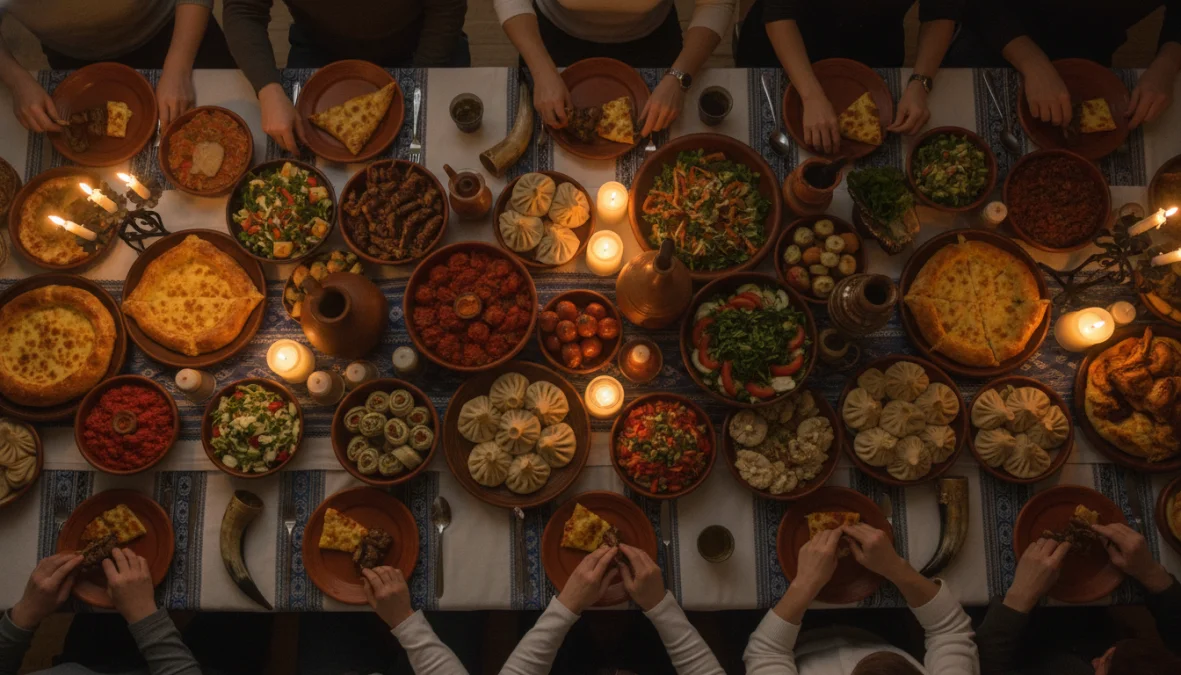
Picture this: you’re seated at a long table overflowing with bread, cheese, grilled meats, and vibrant vegetable dishes. Wine flows freely from clay vessels and animal horns. Around you, voices rise in passionate toasts that blend poetry, philosophy, and heartfelt emotion. Welcome to the Georgian supra tradition—an ancient feast that’s far more than just a meal. It’s a sacred ritual, a cultural institution, and a profound expression of Georgian hospitality customs that has survived millennia virtually unchanged.
What Is the Georgian Supra Tradition?
The georgian supra feast is the cornerstone of Georgian social life, an elaborate banquet that transforms eating and drinking into a ceremonial art form. Unlike regular dinners, the supra table tradition follows strict ritualistic protocols that date back thousands of years, possibly to pre-Christian times when communal feasting served both social and spiritual purposes.
The word “supra” literally means “tablecloth” in Georgian, but it represents so much more—it’s the entire ecosystem of food, wine, toasts, songs, and human connection. A traditional georgian banquet can be organized for weddings, funerals, religious holidays like Easter and New Year, birthdays, or simply to honor guests. There are two main types: the everyday supra for family gatherings, and the ceremonial supra for major life events, which follows more elaborate protocols.
What makes the georgian supra tradition unique is its combination of abundance and ritual. The supris magida (supra table) must overflow with food—leaving the table empty or sparse would be considered deeply shameful. This abundance symbolizes prosperity, generosity, and the Georgian belief that hospitality is sacred. The feast serves as a bridge between the living and the dead, the secular and the spiritual, uniting communities across generations.
The Tamada: Heart and Soul of the Georgian Feast Ritual
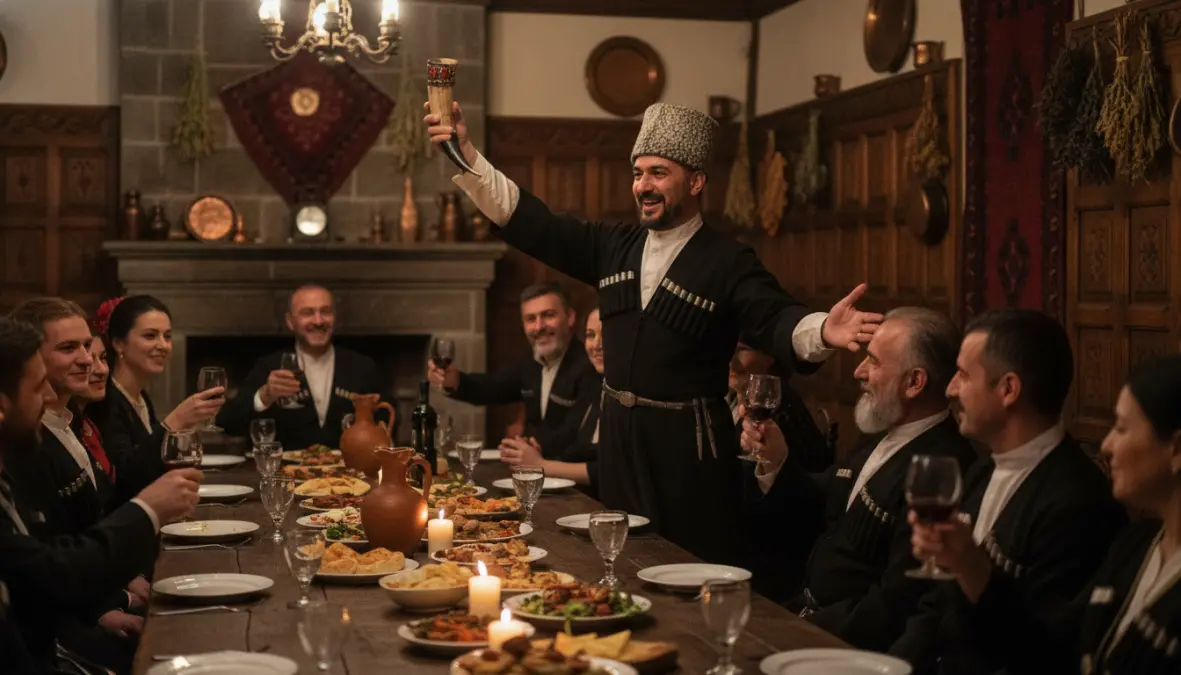
At the center of every supra ceremony georgia sits the tamada toastmaster—the undisputed master of ceremonies who orchestrates the entire event. Without a tamada, there is no true supra. This person, always chosen with great care, must be eloquent, witty, respected, and possess the rare ability to balance gravitas with humor over many hours.
The role of tamada in georgian supra extends far beyond simply proposing toasts. The tamada controls the flow of conversation, ensures every guest feels included, maintains the proper hierarchy at the table, and guides the emotional arc of the evening from solemn remembrance to joyful celebration. Choosing a tamada is an honor typically reserved for elder family members, distinguished guests, or individuals known for their oratorical skills.
The georgian toasting culture follows a traditional sequence that rarely varies. The first toast always honors God (or peace in secular settings), followed by toasts to parents, the homeland, the deceased, the hosts, children, friendship, love, and many others. Each toast can last several minutes, often incorporating stories, poetry, proverbs, and philosophical reflections. Similar to how Moroccan tagine tradition centers around slow, communal experiences, the Georgian supra refuses to be rushed.
Understanding traditional georgian supra etiquette is crucial: guests must not drink until the tamada completes his toast and drinks first. Interrupting a toast is considered extremely rude. When your turn comes to speak, you’re expected to stand and deliver your own words—simple “cheers” won’t suffice at a formal supra.
The Art of Georgian Toasting
Learning how to toast at georgian supra is an art form unto itself. A proper toast weaves together personal anecdotes, cultural wisdom, humor, and genuine emotion. The tamada might speak for five to ten minutes on a single topic—say, friendship—exploring its philosophical dimensions, sharing stories, and building to an emotional crescendo before finally raising his glass.
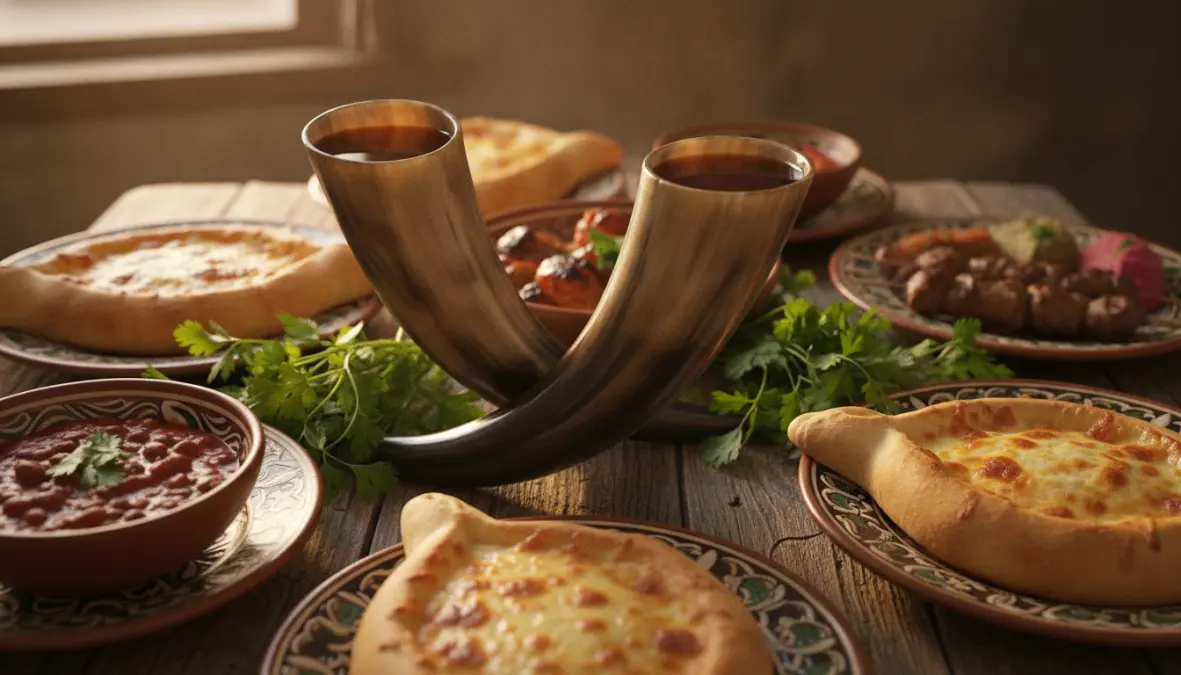
The georgian wine culture is inseparable from the supra experience. Georgia boasts an 8,000-year-old winemaking tradition, making it arguably the birthplace of wine itself. The qvevri wine tradition—fermenting wine in large clay vessels buried underground—produces unique, amber-colored wines that flow freely throughout the feast. Wine is drunk from the kantsi drinking horn, which cannot be set down until emptied, making each toast a commitment.
When asking how long does georgian supra last, expect anywhere from four to eight hours, sometimes extending until dawn. The marathon nature reflects the deep social bonds being reinforced—this isn’t about efficient eating but about strengthening community ties through shared ritual.
The Supra Table: Food, Wine, and Sacred Symbolism
The physical supra table tradition is a sight to behold. The table groans under the weight of countless dishes: khachapuri (cheese-filled bread), khinkali (soup dumplings), mtsvadi (grilled meat skewers), lobio (bean stew), satsivi (walnut-based sauces), fresh vegetables, pickles, and much more. Just as bread holds sacred significance across cultures, Georgian bread anchors the supra table as both sustenance and symbol.
The traditional georgian banquet arrangement follows specific protocols. Hot dishes alternate with cold, colors balance across the table, and strategic placement ensures easy access. The abundance isn’t mere excess—it represents the host’s honor and the community’s prosperity. Running out of food would bring shame upon the household.
Much like Turkish meze culture celebrates shared plates, the supra emphasizes communal eating, though with more formal structure. The georgian culinary heritage displayed at a supra showcases regional variations—eastern Georgian supras might emphasize meat and wheat, while western regions incorporate more corn-based dishes and unique spice blends.
The spiritual dimension of the supra ceremony georgia blends Christian, pagan, and secular elements seamlessly. Toasts to the deceased aren’t mournful but celebratory, keeping ancestors present in family consciousness. Polyphonic singing supra often erupts spontaneously, with participants harmonizing ancient Georgian songs that UNESCO recognizes as intangible cultural heritage. These moments transform the feast into something transcendent.
Among caucasian feast traditions, the Georgian supra stands out for its elaborate toasting system and spiritual depth, preserving customs that might otherwise have vanished in our fast-paced modern world.
FAQ: Understanding Georgian Supra Culture
How long does a Georgian supra last?
Typically 4-6 hours, though celebratory supras for weddings or major holidays can extend 8-10 hours or even until sunrise. The duration reflects the importance of the occasion and the depth of social bonds being celebrated.
Can women be tamada?
Traditionally, the tamada role was reserved for men, but modern Georgian society has become more flexible. Women increasingly serve as tamada, especially at family gatherings, though formal ceremonial supras still predominantly feature male toastmasters.
What happens if you don’t drink alcohol at a supra?
While wine is central to the tradition, respectful abstainers can participate by raising a glass of juice or water. The key is participating in the toasts themselves—the ritual matters more than the beverage, though refusing entirely might be seen as antisocial.
How many toasts are typical?
A full supra includes 15-30 formal toasts, sometimes more. Each major life aspect receives its tribute: God, homeland, parents, children, friendship, love, the deceased, peace, and others depending on the occasion.
Is the supra tradition still practiced today?
Absolutely. The history of georgian feasting tradition continues unbroken into the present. Georgians maintain supra customs with remarkable consistency, viewing them as essential to cultural identity. Even young, urban Georgians participate regularly.
What’s the difference between a supra and a regular dinner?
A regular dinner is casual eating; a supra is a ritualized ceremony with formal toasting sequences, a designated toastmaster, abundant traditional foods, extended duration, and spiritual/communal significance that transcends mere dining.
The georgian supra tradition offers something rare in our modern world: a living link to ancient wisdom about community, gratitude, and human connection. Whether you’re fortunate enough to attend one in Georgia or inspired to incorporate its spirit of intentional celebration into your own gatherings, the supra reminds us that meals can be sacred moments when we slow down, honor what matters, and truly connect with those around us. In a time when dinner often means scrolling phones while eating takeout, perhaps we all need a little more supra in our lives.