Coulibiac: Russia’s Elaborate Fish Pie and Festive Tradition
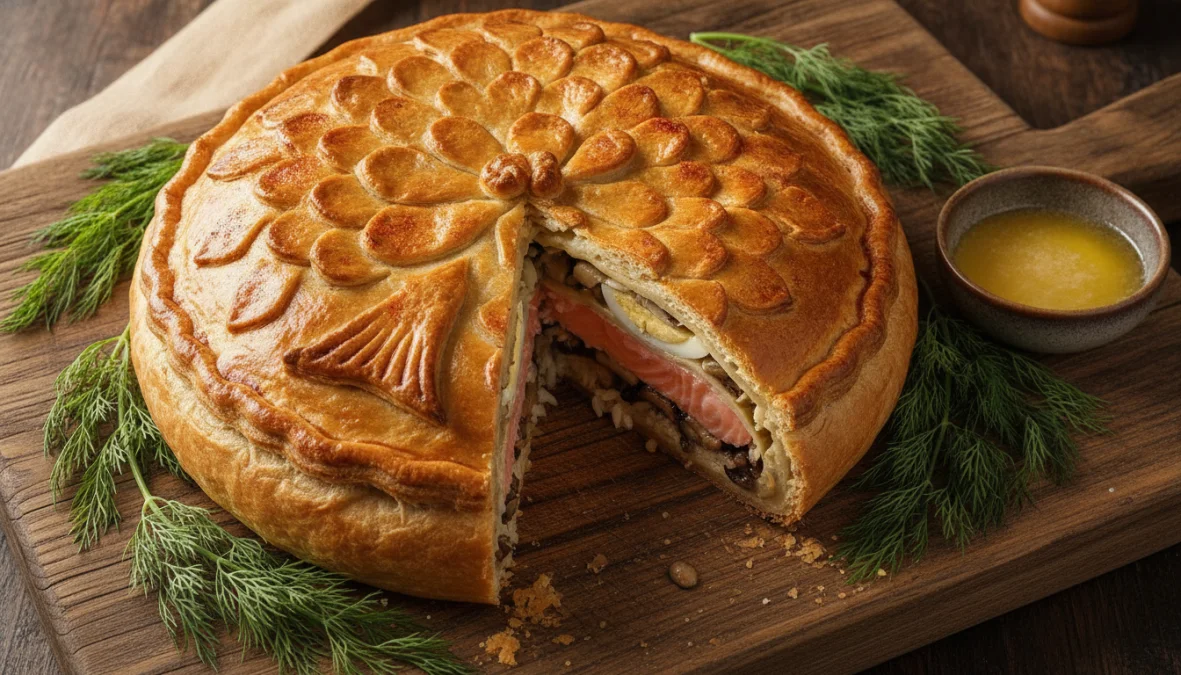
Imagine slicing through layers of golden, flaky pastry to reveal a cascade of salmon, rice, mushrooms, and crepes—each element perfectly distinct yet harmoniously combined. This is coulibiac, Russia’s most elaborate and spectacular fish pie, a dish so impressive it has graced tsarist banquets, French haute cuisine menus, and modern festive tables alike. The coulibiac russian tradition represents far more than a recipe; it’s a culinary monument to patience, skill, and the Russian love of celebration through food.
What Is Coulibiac? Understanding Russia’s Iconic Fish Pie
At its heart, coulibiac (or kulebyaka in Russian) is a multi-layered savory pie that showcases the complexity and richness of russian cuisine traditions. Dating back to the 17th and 18th centuries, this traditional coulibiac emerged as a centerpiece dish for special occasions, when Russian cooks wanted to demonstrate both their technical prowess and their household’s prosperity.
The name itself tells a story of cultural exchange: “kulebyaka” is purely Russian, likely derived from the German “kohlgebäck” (cabbage pastry), though by the time it reached its refined form, cabbage had long been replaced by fish. The French name “coulibiac” came into use during the 19th century when Russian aristocracy embraced French culinary terminology, and the dish itself became a sensation in Parisian restaurants.
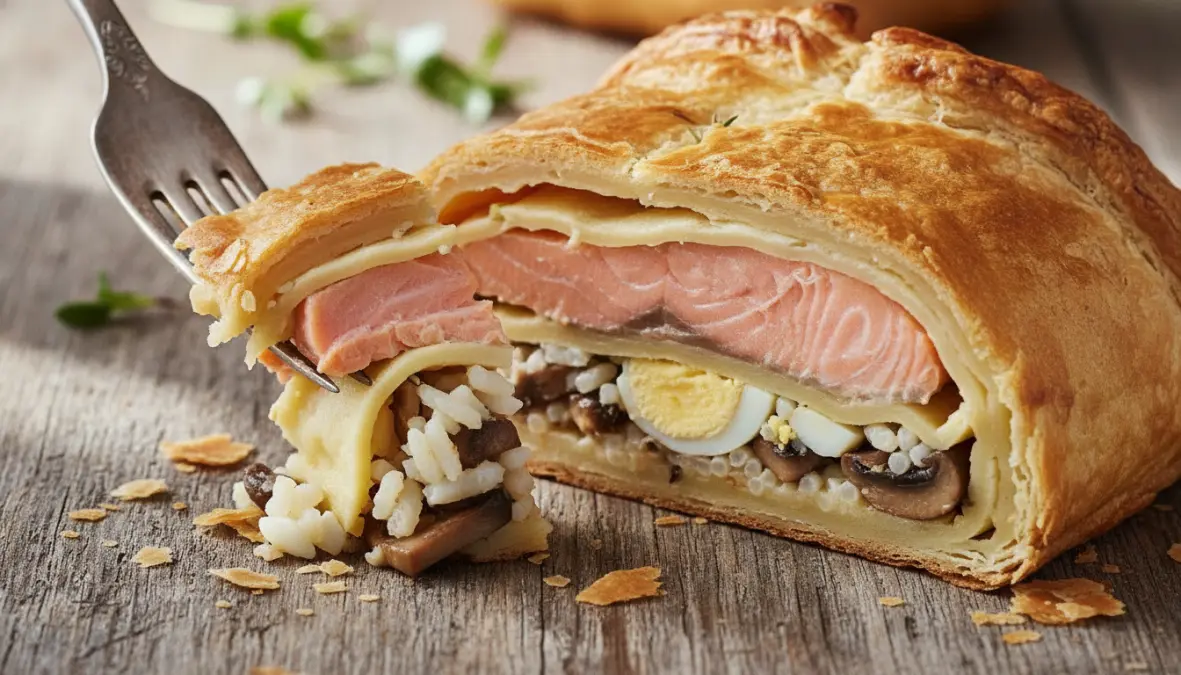
What makes this russian fish pie so special? It’s the architectural approach to construction. Unlike simpler pies, coulibiac features distinct, visible layers: flaky puff pastry or rich brioche dough encases a carefully arranged interior of poached salmon (or historically, sturgeon), cooked rice or buckwheat kasha, hard-boiled eggs, sautéed mushrooms, and often thin vesiga (dried spinal marrow of sturgeon, though rarely used today). Perhaps most ingeniously, thin crepes separate these layers, preventing moisture migration and ensuring each component maintains its integrity.
In traditional Russian celebrations, coulibiac represented abundance and hospitality. Its complexity required time, skill, and quality ingredients—all markers of a household that valued its guests. Like many sacred European baking traditions, this dish transformed food into cultural expression.
The Traditional Coulibiac Recipe: Ingredients and Layering Technique
Understanding how to make authentic coulibiac requires patience and planning. A traditional russian fish pie history reveals that the original versions used sturgeon when available, though salmon coulibiac has become the standard due to salmon’s wider availability and rich flavor that stands up beautifully to the other components.
The essential ingredients for a coulibiac recipe include: fresh salmon fillets (about 1.5 pounds for a large pie), either puff pastry or brioche dough for the casing, cooked long-grain rice or buckwheat kasha (buckwheat being more traditional), hard-boiled eggs chopped coarsely, sautéed mushrooms (wild mushrooms were traditional, but cremini or shiitake work wonderfully), fresh dill, and butter. You’ll also need to make 4-5 thin crepes—essentially Russian blini—to act as moisture barriers.
The layering technique is where coulibiac becomes art. After rolling out your pastry base, you build upward: first a crepe, then a layer of rice or kasha seasoned with dill and butter, another crepe, then the poached or barely-cooked salmon (it will finish cooking in the oven), more crepe, the mushroom mixture, another crepe, and finally the chopped eggs mixed with more dill. Each layer should be about half an inch thick, creating a substantial cross-section when sliced.
This coulibiac festive occasion recipe requires careful sealing—the top pastry layer must be firmly attached to prevent the filling from escaping during baking. Traditional cooks cut decorative patterns into the top or fashion pastry fish as ornaments, then brushed everything with egg wash for that characteristic golden sheen.
The 19th century saw coulibiac’s triumphant entry into French haute cuisine, thanks to Russian aristocrats living in Paris and French chefs employed in Russian households. Auguste Escoffier himself included coulibiac in his culinary repertoire, introducing it to the grandest European hotels and restaurants. The French adaptation often used more butter-rich brioche and refined the presentation further, though Russian cooks insisted their more rustic versions had superior flavor. This cross-pollination mirrors the cultural exchanges seen in other culinary traditions, much like Turkish meze culture influenced Mediterranean dining customs.
For home cooks attempting their best salmon coulibiac recipe, the key is organization: prepare each component separately the day before, refrigerate everything, and assemble when cold—this prevents layers from bleeding together and makes handling much easier.
Coulibiac in Modern Russian Celebrations and Festive Occasions
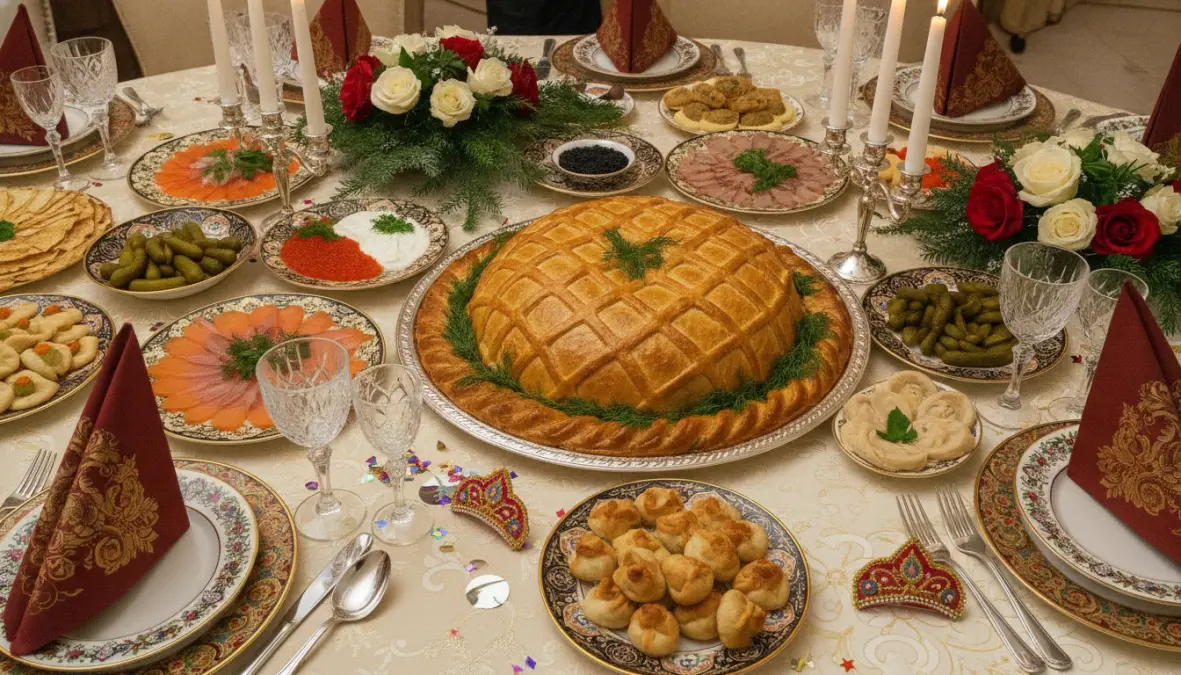
Today, coulibiac remains firmly rooted in the category of festive russian dishes, though its presence has evolved. You’re most likely to encounter this spectacular pie during New Year’s celebrations—Russia’s most important secular holiday—at weddings, during Maslenitsa (the week before Lent, when fish dishes take center stage), and occasionally at easter celebration tables, though Easter typically features sweet kulich bread more prominently.
The russian christmas fish pie tradition (celebrated in January according to the Orthodox calendar) sometimes includes coulibiac, particularly in families maintaining pre-Revolutionary customs. The dish’s association with Orthodox fasting periods—when meat was forbidden but fish allowed—gave it special status as a “feast within a fast.”
In contemporary Russia, coulibiac occupies an interesting position: most home cooks consider it too labor-intensive for regular preparation, yet it’s experiencing a revival thanks to the broader movement celebrating traditional Russian cuisine. High-end Moscow and St. Petersburg restaurants specializing in historical Russian cooking prominently feature coulibiac, often with creative variations like trout, pike-perch, or even mixed seafood versions.
The dish has also found its way into zakuski—the elaborate appetizer spreads that begin Russian festive meals—served in smaller, individual portions rather than as a massive centerpiece pie. This adaptation makes the layered fish pie coulibiac recipe more accessible to modern cooks while preserving the essential character.
Internationally, coulibiac appears on upscale menus in cities with significant Russian diaspora communities and in restaurants dedicated to classical French-Russian cuisine. The coulibiac vs wellington difference often sparks culinary debates: while Beef Wellington wraps a single ingredient (beef tenderloin) in pastry, coulibiac’s complexity lies in its multiple, distinct layers—making it technically more challenging and visually more dramatic when sliced.
Much like Swedish fika’s cultural significance extends beyond coffee itself, coulibiac represents something larger than its ingredients: it embodies the Russian value of creating abundance, beauty, and togetherness through shared meals.
FAQ
What is the difference between coulibiac and kulebyaka?
There’s no difference in the dish itself—”kulebyaka” is the original Russian name, while “coulibiac” is the French adaptation that became popular when the dish entered French haute cuisine in the 19th century. Both terms refer to the same elaborate layered fish pie.
Can coulibiac be made with ingredients other than salmon?
Absolutely! Traditional versions used sturgeon, and regional variations include trout, pike, or mixed seafood. Some modern interpretations even feature chicken or vegetarian fillings with mushrooms and vegetables, though purists argue these aren’t true coulibiac.
How difficult is it to make traditional coulibiac?
It’s time-consuming rather than technically difficult. The individual components—rice, fish, eggs, mushrooms—are straightforward to prepare. The challenge lies in organization, layering carefully, and achieving a well-sealed pastry crust. Beginners should allow 3-4 hours, including preparation and baking time.
What is traditionally served with coulibiac?
Coulibiac is typically accompanied by melted butter (sometimes infused with lemon and dill), sour cream, or a light fish velouté sauce. It’s often preceded by zakuski appetizers and followed by lighter courses, as it’s quite rich and filling on its own.
Whether you’re exploring global dumpling traditions or diving into elaborate festive dishes, coulibiac stands as a testament to how food becomes art when celebration and tradition intersect. This magnificent Russian fish pie invites us to slow down, layer by careful layer, and create something truly spectacular—a fitting centerpiece for life’s most memorable gatherings.