Cassoulet: The French Bean Stew That Defines Languedoc Identity
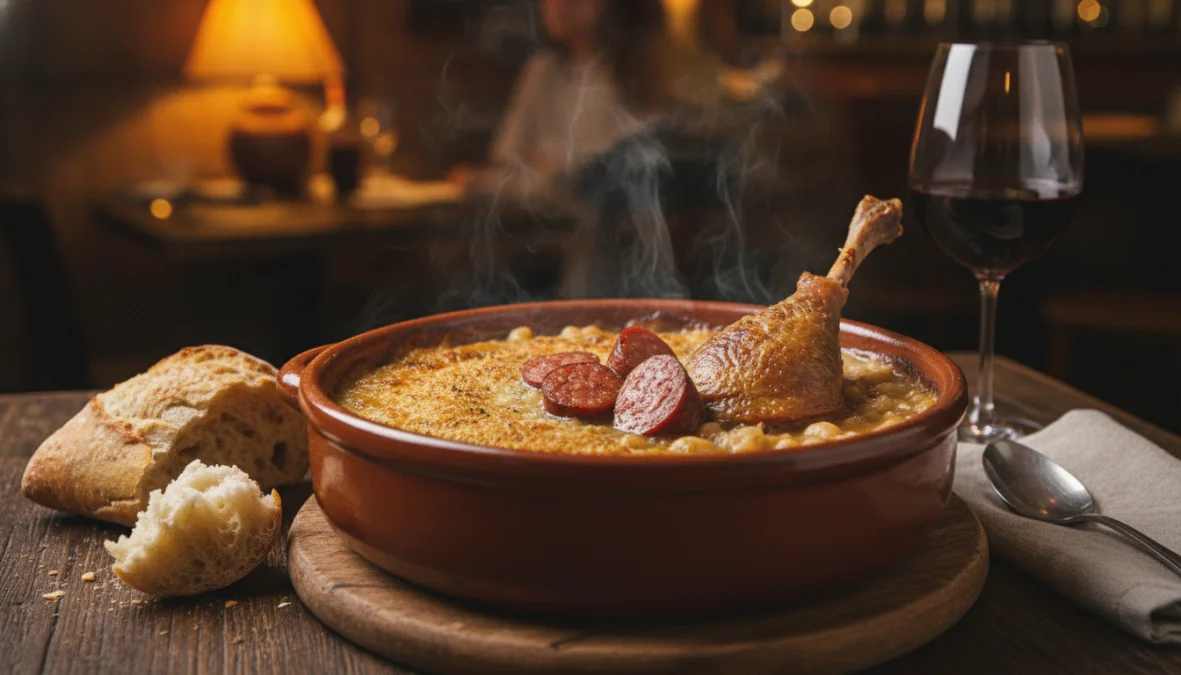
Picture a bubbling earthenware pot filled with creamy white beans, tender duck confit, and fragrant sausage, its golden crust crackling under your spoon. This is cassoulet, the cassoulet french tradition that has warmed hearts and sparked passionate debates across the Languedoc region for centuries. More than just a French bean stew, cassoulet represents the soul of Occitan culture, embodying the region’s agricultural heritage, communal values, and fierce local pride. Like borscht in Eastern Europe or feijoada in Brazil, this slow-cooked stew tells the story of a people and their land.
The Origins and Cultural Significance of Cassoulet
The cassoulet history is as rich and layered as the dish itself. Legend traces its origins to the siege of Castelnaudary during the Hundred Years’ War, when townspeople pooled their remaining provisions—beans, preserved meats, and whatever else they had—to create a hearty stew that fortified defenders. While historians debate the accuracy of this tale, it perfectly captures the communal spirit that defines cassoulet french tradition today.
What we know for certain is that cassoulet emerged as peasant fare in medieval Languedoc cuisine, born from practical necessity. The region’s farmers grew white beans and raised ducks and pigs, preserving meat as confit and sausage to survive harsh winters. The genius of cassoulet lies in transforming these humble ingredients into something transcendent through time, technique, and the magic of the earthenware pot (cassole) that gives the dish its name.
Today, understanding what makes cassoulet a French tradition means recognizing its role in preserving regional identity. In an era of globalization, cassoulet remains defiantly local, tied to specific towns, ingredients, and methods. It’s comfort food elevated to cultural heritage, a dish that brings families together on Sunday afternoons and defines French terroir as surely as any wine. Similar to how osechi ryori defines Japanese New Year, cassoulet marks special occasions and reinforces community bonds.
The Holy Trinity: Castelnaudary, Carcassonne, and Toulouse Cassoulet
Ask where to find an authentic cassoulet recipe from Languedoc, and you’ll ignite one of France’s most delicious feuds. Three cities claim the crown, each defending its version with religious fervor. The difference between cassoulet variations may seem subtle to outsiders, but locals will passionately explain why their hometown’s approach is definitively superior.
Castelnaudary: The Purist’s Cassoulet
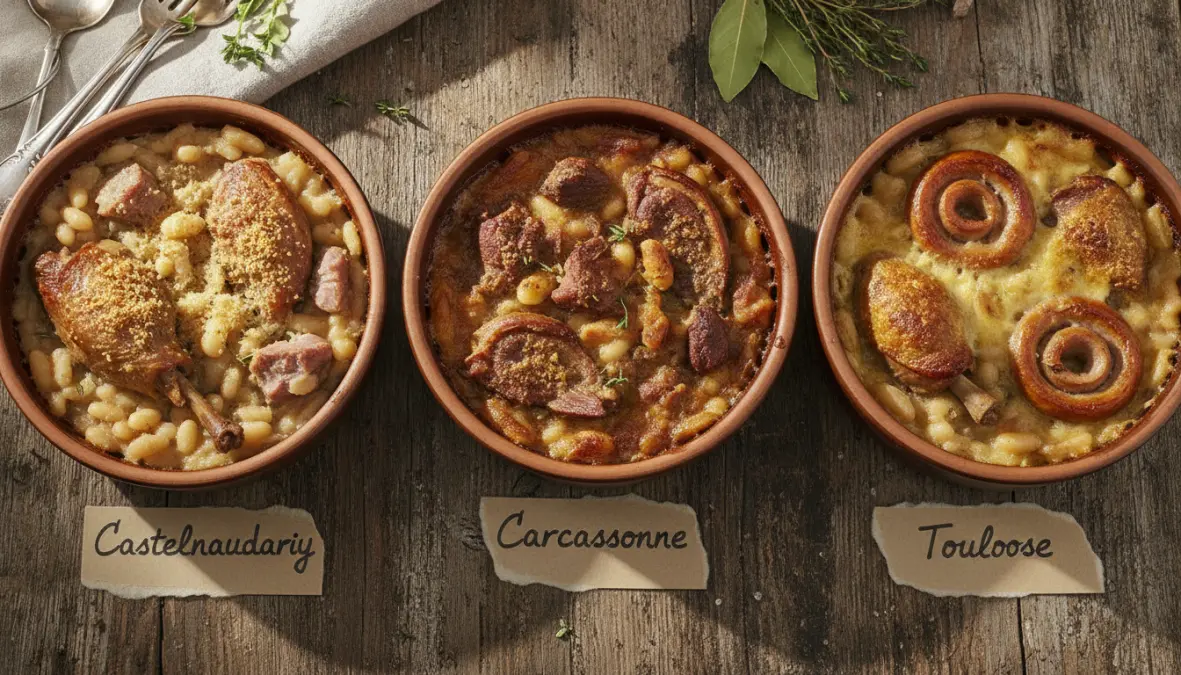
The Castelnaudary cassoulet is considered the mother of all cassoulets, the original against which others are measured. This version embraces beautiful simplicity: local white beans (ideally Tarbais or Lingot varieties), pork shoulder, pork rind, duck confit, and fresh sausage. Nothing more, nothing less. Purists argue that any additions dilute the essential harmony of these ingredients.
The town even hosts an annual cassoulet festival and maintains a brotherhood (Confrérie du Cassoulet) dedicated to preserving authentic preparation methods. When locals discuss how to make traditional French cassoulet, Castelnaudary’s version serves as the reference point—the elegant baseline from which others diverge.
Carcassonne and Toulouse Variations
The Carcassonne cassoulet builds on Castelnaudary’s foundation by adding seasonal game. During hunting season, you’ll find partridge nestled among the beans, and mutton or lamb often appears, adding deeper, earthier flavors. This medieval walled city claims its cassoulet reflects a more sophisticated, urban palate.
Meanwhile, the Toulouse cassoulet takes a different path. This pink city version must include Toulouse sausage (the region’s famous saucisse de Toulouse), duck confit, and sometimes lamb or mutton. Toulouse cooks argue their cassoulet showcases the best of French rustic cooking, balancing multiple meats without overwhelming the beans. The friendly rivalry between these three cities has created a rich tapestry of regional French dishes, each version reflecting its hometown’s character and agricultural traditions.
Making Traditional Cassoulet: Essential Ingredients and Technique
A truly cassoulet recipe traditional requires patience, quality ingredients, and respect for time-honored techniques. While the specific meats vary by region, certain elements remain non-negotiable. The foundation is always white beans—preferably Tarbais or Lingot—prized for their creamy texture and ability to absorb flavors without breaking apart during the long cooking process.
For the best cassoulet recipe with duck confit, source properly preserved duck legs, their fat a crucial flavor component. You’ll also need quality sausage (Toulouse-style if possible), pork shoulder or belly, pork rind for body, and aromatics: onions, garlic, tomato, and herbs like thyme and bay leaf. The earthenware pot (cassole) isn’t just traditional—its porous clay distributes heat evenly and creates the dish’s signature crust.
The cassoulet cooking time and method separates casual attempts from authentic results. First, soak and gently simmer beans with aromatics and pork rind until tender. Meanwhile, brown your meats separately. Layer everything in the cassole—beans, meats, cooking liquids—then bake slowly. Here’s where tradition becomes poetry: as the cassoulet bakes, a golden crust (croûte) forms on top. Classic technique calls for breaking this crust and stirring it back into the beans seven times, each cycle adding depth and creating the creamy, luscious consistency that defines great cassoulet. The entire process takes six to eight hours, though much of that is unattended simmering.
Modern home cooks wondering how to make traditional French cassoulet without specialty ingredients can make acceptable substitutions—Great Northern beans for Tarbais, quality garlic sausage for Toulouse sausage—but invest in good duck confit and take time with the slow cooking. This is not weeknight dinner; it’s a weekend project worth every minute.
FAQ: Common Questions About Cassoulet
What makes cassoulet different from other bean stews?
The defining characteristic of cassoulet french tradition is the specific combination of white beans with preserved meats (especially duck confit), the use of an earthenware pot, and the slow-cooking technique that creates multiple crusty layers. Unlike simple bean stews, cassoulet is a complex, layered dish where fat from the confit enriches the beans, creating an unctuously creamy texture impossible to achieve otherwise.
Which cassoulet version is the most authentic?
This question starts arguments in Languedoc! Castelnaudary cassoulet claims the title of original, while Toulouse cassoulet and Carcassonne cassoulet defend their variations as equally traditional. The truth? All three are authentic expressions of regional French dishes, reflecting their towns’ distinct culinary identities. Choose based on available ingredients and personal preference.
Can cassoulet be made ahead of time?
Absolutely—in fact, cassoulet often tastes better the next day as flavors meld. Prepare completely, then refrigerate. Before serving, bring to room temperature and reheat slowly in the oven, breaking the crust as it reforms. Many French families prepare cassoulet on Saturday for Sunday lunch, embracing this make-ahead advantage.
What wine pairs best with cassoulet?
This rich slow-cooked stew demands robust red wines from Languedoc cuisine‘s terroir. Try Corbières, Minervois, or Fitou—earthy, full-bodied reds that stand up to the dish’s richness without overwhelming its subtle flavors. A good Madiran also works beautifully, its tannins cutting through the fat.
Is cassoulet difficult to make at home?
Cassoulet isn’t technically difficult, but it requires time and organization. The individual steps are straightforward; the challenge lies in managing the long cooking process. Start with a simplified version to understand the technique, then progress to more complex variations. The reward—a pot of authentic French bean stew that fills your home with incredible aromas—makes the effort worthwhile.
For those curious about where to eat cassoulet in France, the Languedoc region offers countless options, from humble village bistros to celebrated restaurants. But there’s something special about making cassoulet at home, connecting to centuries of tradition through the simple act of layering beans and meat in a clay pot. Like haggis in Scotland or congee across Asia, cassoulet proves that the most meaningful foods are those that carry stories, connect us to place, and bring people together around a shared table. The cassoulet cultural significance Languedoc extends beyond ingredients and technique—it’s about preserving identity, one slow-cooked pot at a time.