Laksa: The Spicy Noodle Soup That Defines Peranakan Fusion Cuisine
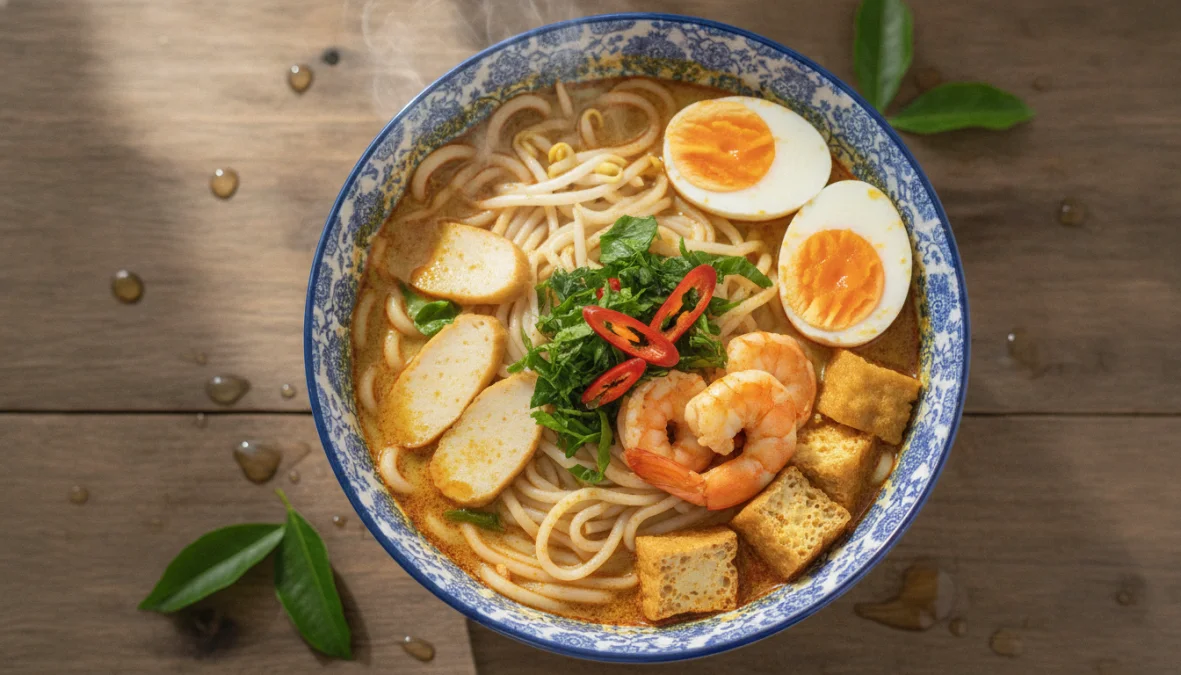
Picture this: a steaming bowl of golden curry broth, fragrant with lemongrass and turmeric, cradling silky rice vermicelli noodles and crowned with succulent prawns, fish cakes, and crispy fried tofu. This is laksa, the iconic spicy noodle soup that embodies the beautiful collision of cultures defining peranakan cuisine. More than just a dish, laksa tells the story of centuries of cultural exchange, trade routes, and the unique laksa peranakan tradition that emerged from one of Southeast Asia’s most fascinating communities.
The Origins of Laksa and Peranakan Cuisine
The story of laksa peranakan tradition begins with the Straits Chinese, also known as the Peranakan people, who emerged from the intermarriage between Chinese traders and local Malay women in the Straits Settlements of Malacca, Penang, and Singapore between the 15th and 17th centuries. As Chinese merchants traveled along ancient spice routes for trade, many settled in these thriving port cities, creating a distinctive hybrid culture that blended Chinese customs with Malay traditions.
This cultural fusion gave birth to Nyonya cuisine—named after the Peranakan women who became the culinary architects of this remarkable food tradition. Peranakan cuisine represents one of the world’s earliest examples of true fusion cooking, combining Chinese ingredients and cooking techniques with Malay spices, belacan shrimp paste, and coconut milk curry preparations. The result was something entirely unique: straits chinese food that transcended its parent cultures.
Laksa emerged as the crown jewel of this peranakan fusion food. While the exact origins remain debated, food historians trace singapore laksa history to the bustling markets of the Straits Settlements, where Peranakan cooks adapted Chinese noodle soups with Malay curry techniques and spices. The dish evolved differently across regions—Singapore’s creamy curry laksa, Penang’s tangy asam laksa, and Johor’s unique fish-based version—each reflecting local preferences while maintaining its Peranakan roots. Like mole poblano’s blend of indigenous and Spanish influences, laksa represents the delicious outcome of cultural convergence.
What Makes Laksa Unique: Ingredients and Regional Variations
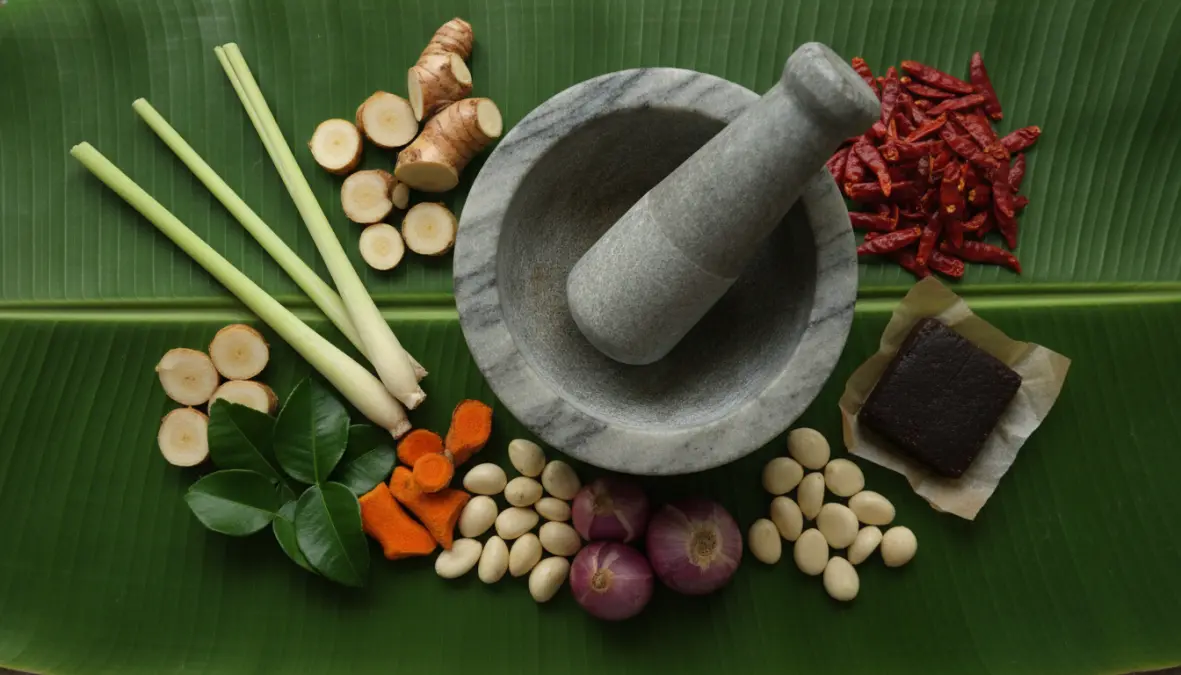
At the heart of every authentic nyonya laksa lies the rempah spice paste, a fragrant mixture that defines the dish’s complex flavor profile. Traditional laksa curry paste typically includes:
- Dried chilies for heat and depth
- Galangal, turmeric, and ginger for aromatic warmth
- Lemongrass and kaffir lime leaves for citrus notes
- Candlenuts or macadamias for richness
- Belacan (fermented shrimp paste) for umami complexity
- Shallots and garlic for foundational flavor
The traditional peranakan laksa recipe demands patience: these aromatics are laboriously pounded together in a mortar and pestle, then slowly fried in oil until fragrant. This labor-intensive process releases essential oils and creates the foundation for the spicy noodle broth that makes laksa unforgettable.
The difference between laksa lemak and laksa asam represents the dish’s regional diversity. Laksa Lemak (also called Curry Laksa) dominates in Singapore and Kuala Lumpur, featuring a rich coconut milk curry base with thick rice vermicelli noodles, prawns, fish cakes, tau pok (fried tofu puffs), and cockles. The broth is creamy, spicy, and slightly sweet—a characteristic of malay chinese fusion cooking.
Asam Laksa from Penang takes a completely different approach as a tamarind based soup. This version uses mackerel or sardines flaked into a sour, fish-forward broth with tamarind, torch ginger flower, and Vietnamese mint. The noodles are thicker, and the experience is refreshingly tangy rather than creamy—showing how the same dish evolved uniquely across communities.
Laksa Johor offers yet another variation, using spaghetti instead of rice noodles and a fish-based gravy with coconut milk, demonstrating how peranakan fusion food characteristics include adaptability and regional innovation. Similar to how curry evolved differently across continents, each laksa variation tells a story of local ingredients and preferences.
How to Experience Authentic Laksa Peranakan Tradition
Experiencing authentic laksa peranakan tradition means seeking out establishments that honor traditional preparation methods. In Singapore, legendary hawker stalls like Marine Parade Laksa and Sungei Road Laksa have maintained their recipes for generations. Malaysia’s Penang offers countless asam laksa specialists, while Malacca’s Peranakan restaurants serve laksa alongside other straits chinese food specialties.
Recognizing quality nyonya laksa involves several telltale signs: the broth should be vibrantly colored and intensely fragrant, with visible specks of spice paste. The coconut milk curry should be rich but not greasy, balanced between spicy, savory, and slightly sweet. Fresh toppings matter—prawns should be plump, laksa leaves (Vietnamese coriander) aromatic, and the sambal belacan fierce.
For those wanting to try how to make authentic nyonya laksa at home, the journey begins with finding quality ingredients. Asian supermarkets stock dried laksa leaves, good belacan, and sometimes fresh laksa paste. However, making your own rempah from scratch delivers superior results. The best laksa paste for traditional recipe preparation involves sourcing fresh aromatics and taking time to properly pound and fry the spice mixture—shortcuts compromise the dish’s soul.
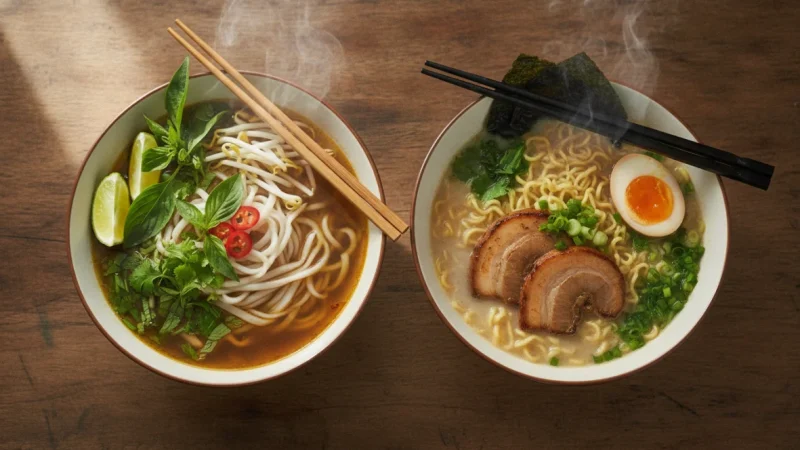
A proper laksa recipe also demands attention to assembly. Cook noodles separately and rinse to prevent cloudiness. Build each bowl individually: noodles first, then toppings, finally ladling the piping hot broth over everything. The experience should mirror the ritual of assembling pho, where proper technique elevates simple ingredients into something transcendent.
FAQ
What is the difference between laksa and curry?
Laksa is a specific noodle soup incorporating curry elements (particularly in laksa lemak), but it’s more complex—combining curry spices with distinctively Peranakan ingredients like belacan, laksa leaves, and regional variations that include sour tamarind-based versions.
Is laksa Peranakan Chinese or Malay?
Laksa is quintessentially Peranakan—neither purely Chinese nor Malay, but a unique fusion created by the Straits Chinese community. It represents the history of peranakan laksa in singapore and Malaysia as a culinary bridge between cultures.
What are the main types of laksa?
The primary varieties are Curry Laksa/Laksa Lemak (creamy coconut-based), Asam Laksa (sour tamarind-based), and Laksa Johor (fish-based with spaghetti). Each region has developed distinctive versions reflecting local tastes.
What makes Nyonya laksa special?
Nyonya laksa’s uniqueness lies in its labor-intensive rempah spice paste, the balance between Chinese ingredients and Malay spices, and the laksa noodle soup cultural significance as a symbol of successful cultural fusion and Peranakan heritage.
How spicy is traditional laksa?
Traditional laksa ranges from moderately to quite spicy, depending on regional style and personal preference. The heat comes from fresh chilies in the rempah and accompanying sambal belacan, but the coconut milk in curry laksa provides cooling balance.
Laksa stands as delicious proof that the best culinary innovations emerge when cultures meet, mingle, and create something greater than the sum of their parts. This humble bowl of noodles carries centuries of history, embodying the peranakan fusion cuisine characteristics that transformed Southeast Asian food culture. Whether you’re slurping curry laksa at a Singapore hawker center or tackling an authentic recipe at home, you’re participating in a tradition that celebrates diversity, adaptation, and the universal language of incredible food.