Lahmacun: Turkey’s Ancient Flatbread Pizza and Its Armenian Heritage
The moment a paper-thin flatbread emerges from a wood-fired oven, topped with spiced minced meat and aromatic herbs, you’re witnessing a culinary tradition that spans centuries. Lahmacun, often called Turkish pizza, represents far more than a popular street food—it’s a delicious testament to the lahmacun turkish tradition and the complex cultural tapestry of the Middle East. With roots that intertwine Armenian heritage and Anatolian cooking techniques, this ancient flatbread tells a story of migration, cultural exchange, and culinary evolution that continues to captivate food lovers worldwide.
What Is Lahmacun: The Middle Eastern Flatbread That Predates Pizza
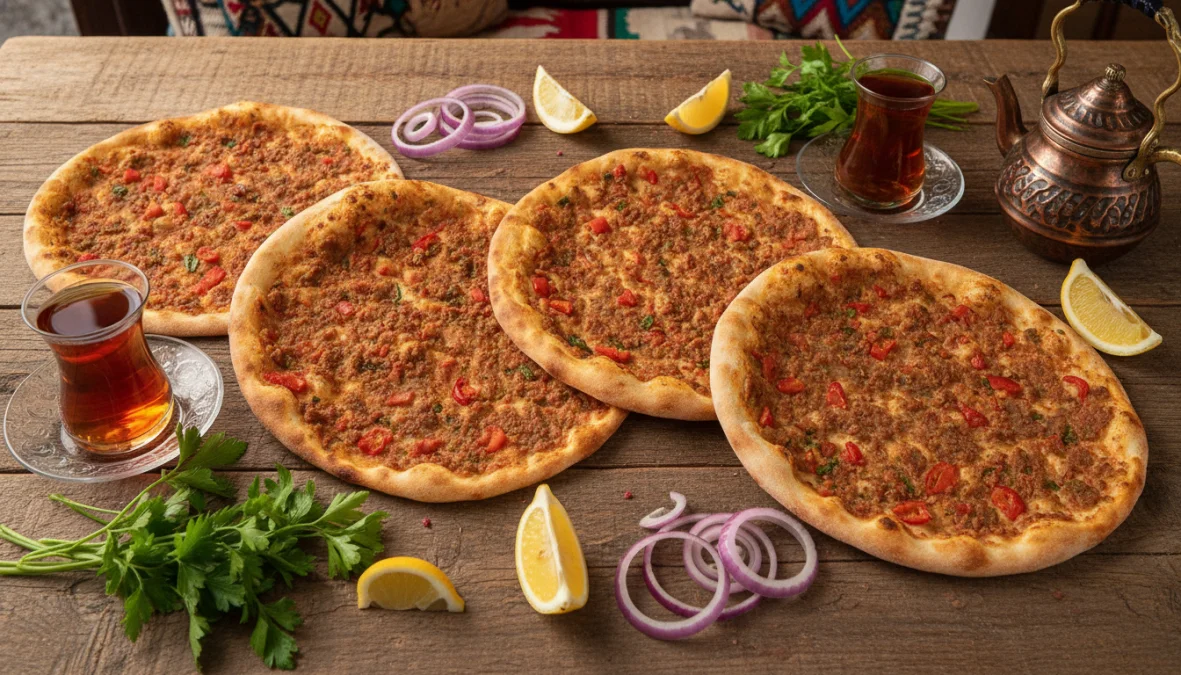
Lahmacun (pronounced lah-mah-JOON) is a traditional middle eastern flatbread topped with a thin layer of minced meat, vegetables, and spices, then baked at high temperatures until crispy. The name derives from the Arabic “lahm bi’ajin,” literally meaning “meat with dough,” which perfectly captures this dish’s essence. Unlike the thick-crusted Italian pizza most Westerners know, lahmacun features an almost cracker-thin base that serves as a vehicle for its intensely flavored topping.
The turkish flatbread pizza typically measures about 10-12 inches in diameter and arrives at your table so thin you can nearly see through it. The topping—a mixture of finely minced lamb or beef, tomatoes, peppers, onions, parsley, and a blend of middle eastern spices including cumin, paprika, and Aleppo pepper—is spread so thinly that it becomes one with the dough during baking. This creates a harmonious bite where bread and topping are inseparable, a key difference between lahmacun and pizza.
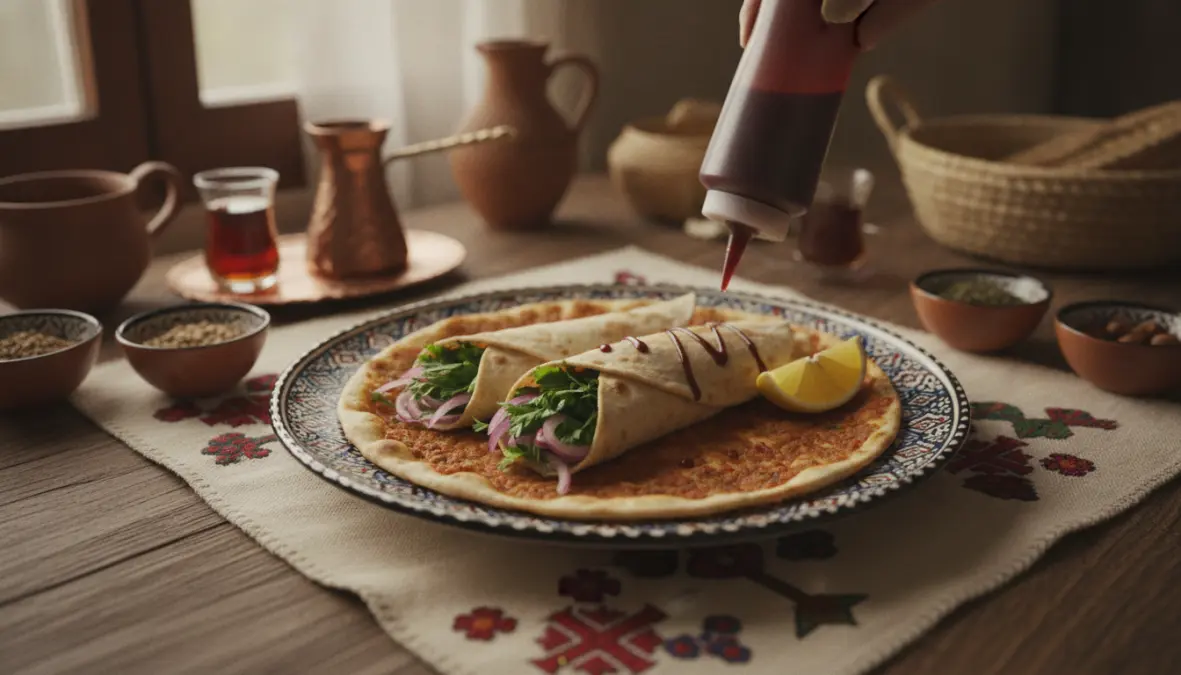
Regional variations exist throughout Turkey, Armenia, Syria, and Lebanon, each adding local touches to this turkish cuisine tradition. In southeastern Turkey, particularly in Gaziantep and Urfa, you’ll find spicier versions with more pronounced cumin notes. The dish is traditionally served rolled up like a wrap, filled with fresh parsley, sliced onions, a squeeze of lemon, and sometimes tomatoes—transforming it into a portable meal perfect for turkish street food culture. Similar to how different regions celebrate their culinary heritage, like the slow-cooked traditions of Moroccan tagine, lahmacun represents the soul of Anatolia culinary heritage.
Lahmacun History: From Armenian Roots to Turkish Culinary Icon
The lahmacun history is as layered as the dish itself, reflecting centuries of cultural interaction in the Levantine cuisine region. While the exact origins remain debated, most food historians acknowledge that armenian lahmacun played a foundational role in the dish’s development. Armenian communities across Anatolia perfected flatbread techniques long before the Ottoman period, creating various minced meat preparations that would influence regional cuisines profoundly.
During the ottoman food culture era, culinary traditions from diverse ethnic groups—Armenian, Arab, Kurdish, and Turkish—melded together in imperial kitchens and local bakeries alike. The lahmacun turkish tradition as we know it today emerged from this cultural synthesis, becoming particularly popular in southeastern Anatolia where Armenian populations were concentrated. As the dish spread throughout the Ottoman Empire, it adapted to local tastes while maintaining its essential character: thin dough, spiced meat, high-heat cooking.
The 20th century saw lahmacun transform from a regional specialty into a symbol of Turkish national cuisine, appearing in restaurants from Istanbul to Ankara. Today, it’s as ubiquitous in Turkey as hamburgers in America, sold in dedicated lahmacun shops, served alongside traditional Turkish mezze, and enjoyed by millions as comfort food. Yet this popularization has also sparked debates about the lahmacun armenian vs turkish origin, with both communities claiming authentic ownership of the recipe.
The Armenian Connection: Cultural Heritage and Recipe Evolution
The Armenian contribution to lahmacun cannot be overstated. Traditional armenian lahmacun often features slightly different spice profiles, sometimes incorporating more herbs like mint and basil, and occasionally using a touch of pomegranate molasses for tang. Armenian bakers were renowned throughout Anatolia for their bread-making skills, and many of the techniques still used in modern lahmacun preparation—from dough fermentation methods to oven temperature control—trace back to Armenian culinary knowledge.
The diaspora following the early 20th century Armenian migration spread these recipes globally, establishing Armenian restaurants in the Middle East, Europe, and the Americas that kept the tradition alive. Today, in cities with significant Armenian communities like Beirut, Los Angeles, and Paris, you’ll find authentic lahmacun preparations that maintain older recipe variations, some claiming lineages stretching back generations. This cultural preservation through food mirrors other immigrant culinary traditions, much like how Lithuanian rye bread carries ancient baking wisdom across borders.
Authentic Lahmacun Recipe: How to Make Traditional Turkish Flatbread Pizza
Making authentic lahmacun at home requires attention to detail but rewards you with incomparable flavor. For the dough, combine 500g all-purpose flour, 300ml warm water, 7g instant yeast, 1 tablespoon olive oil, and 1 teaspoon salt. Knead until smooth and elastic (about 10 minutes), then let rise for one hour until doubled.
For the topping—the heart of any lahmacun recipe—you’ll need: 400g finely minced lamb (or half lamb, half beef), 2 large tomatoes (finely chopped or grated), 1 green bell pepper (minced), 1 large onion (grated), 2 cloves garlic (minced), a large handful of fresh parsley (finely chopped), 2 tablespoons tomato paste, 1 teaspoon Aleppo pepper (or paprika plus cayenne), 1 teaspoon cumin, salt, and black pepper to taste. Mix all topping ingredients thoroughly—the consistency should be spreadable but not watery.
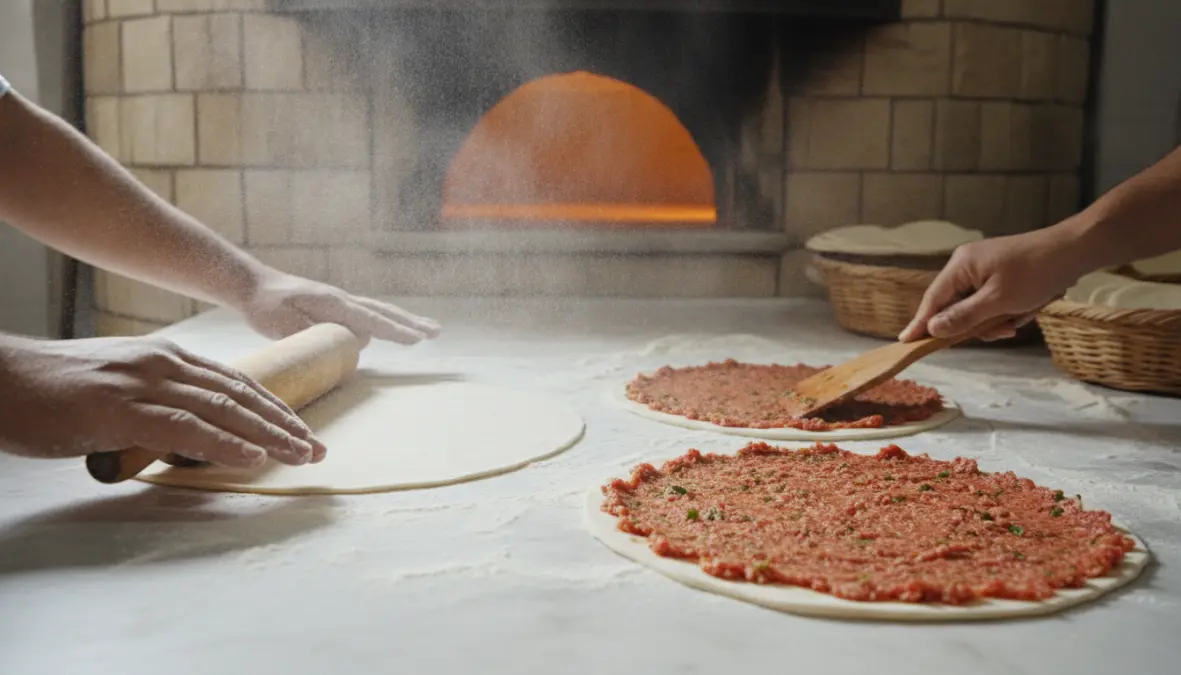
To understand how to make authentic lahmacun at home, focus on three keys: thin dough, high heat, and quick cooking. Divide the risen dough into 8 portions. Roll each portion paper-thin on a floured surface—about 10-12 inches in diameter. Preheat your oven to its maximum temperature (ideally 250°C/480°F or higher). Spread a very thin layer of the meat mixture across each dough round, leaving a small border. Bake for 5-7 minutes until the edges crisp and the meat cooks through.
The traditional lahmacun toppings and ingredients come alive when served properly: roll the hot lahmacun around fresh parsley, thin-sliced onions, tomato wedges, and a generous squeeze of lemon juice. Some regions add a dollop of yogurt or a sprinkle of sumac. Unlike pide (the boat-shaped Turkish flatbread with enclosed edges), lahmacun is meant to be rolled and eaten like a wrap. Vegetarian versions substitute the minced meat flatbread topping with finely chopped mushrooms, walnuts, or lentils mixed with the same spice blend.
FAQ: Common Questions About Lahmacun
What’s the difference between lahmacun and pide?
While both are Turkish flatbreads, pide has a thicker, boat-shaped crust with raised edges and is typically topped with cheese, eggs, or chunks of meat. Lahmacun is paper-thin, round, topped with a spread of minced meat mixture, and meant to be rolled up with fresh herbs. Think of pide as similar to a calzone or stuffed pizza, while lahmacun resembles a crispy, meat-topped tortilla.
Can you freeze lahmacun?
Yes! Lahmacun freezes exceptionally well. After baking, cool completely, then stack with parchment paper between each piece and freeze in an airtight bag for up to three months. Reheat directly from frozen in a hot oven (200°C/400°F) for 5-7 minutes until crispy again.
Where to eat best lahmacun in Turkey?
For the most authentic lahmacun, head to southeastern Turkey—particularly Gaziantep, Urfa, or Adana. These cities are considered the birthplace of the best lahmacun, where family-run establishments have perfected recipes over generations. In Istanbul, look for shops in the Fatih or Kadıköy districts where southeastern Turkish migrants have established renowned lahmacun spots.
What makes Armenian and Turkish lahmacun different?
The lahmacun armenian vs turkish origin debate extends to preparation differences. Armenian versions often include more herbs (mint, basil), sometimes feature lamb exclusively, and may add pomegranate molasses for acidity. Turkish lahmacun tends toward a spicier profile with more cumin and Aleppo pepper, and commonly uses a lamb-beef blend. Both traditions value the ultra-thin crust and high-heat baking method.
Is there a traditional vegetarian lahmacun?
While traditional lahmacun centers on meat, vegetarian adaptations have historical precedent in communities observing fasting periods. Modern vegetarian versions use finely chopped mushrooms, walnuts, or red lentils combined with the traditional vegetable and spice mixture, maintaining the dish’s essential character while accommodating dietary preferences.
The lahmacun cultural significance middle east extends far beyond its delicious taste—it represents centuries of shared culinary heritage, cultural exchange, and the beautiful complexity of regional cuisines. Whether you encounter it as turkish street food wrapped in paper from a bustling bakery, or carefully prepared at home following your grandmother’s recipe, lahmacun connects us to the ancient origins of turkish flatbread and the communities who’ve preserved these traditions. Next time you roll up that crispy, spiced flatbread with fresh herbs and lemon, you’re participating in a ritual that spans generations and borders, proving that the best food carries stories as rich as its flavors.