Hungarian Goulash History: From Shepherd’s Pot to National Symbol

Picture this: 9th-century shepherds on Hungary’s vast plains, tending their cattle under endless skies, cooking meat in iron cauldrons over open fires. This simple survival meal would eventually become one of Europe’s most beloved dishes and Hungary’s ultimate culinary symbol. The hungarian goulash history is a fascinating journey from humble herdsmen food to a dish that defines an entire nation’s identity—a story flavored with paprika, politics, and pride.
The Origins of Goulash: A Shepherd’s Survival Meal
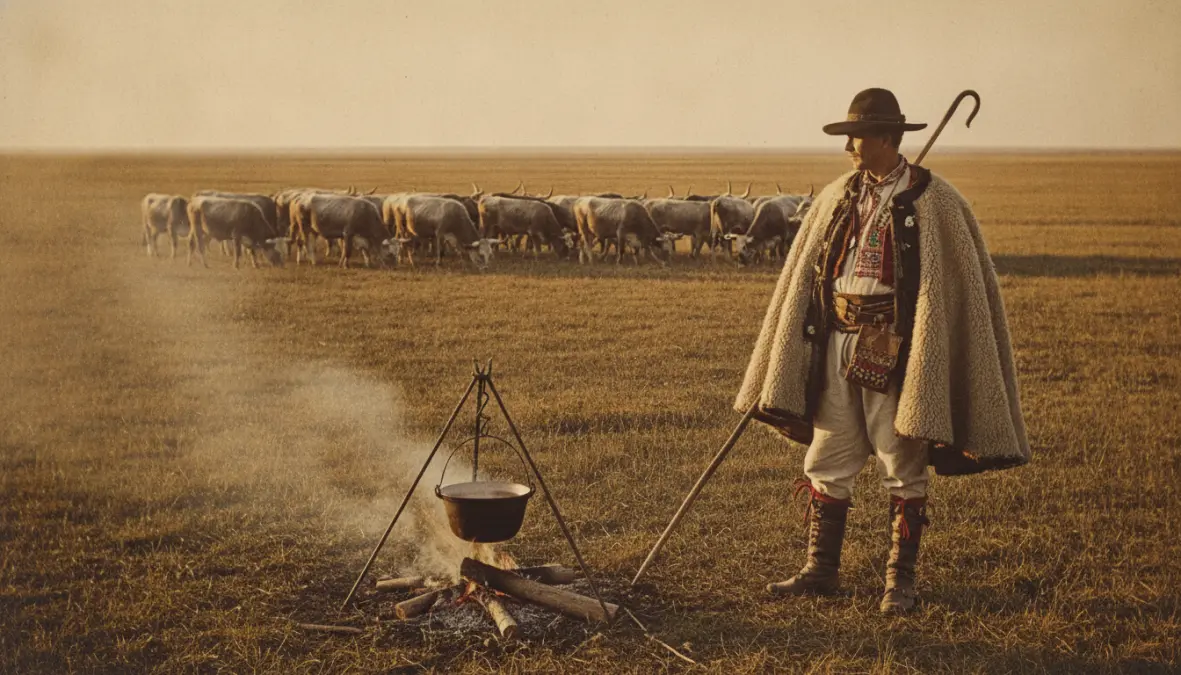
The goulash origins trace back to the 9th century when Magyar tribes settled in the Carpathian Basin, establishing what would become Hungary. On the Great Hungarian Plain (Alföld), cattle herders known as gulyás—literally “herdsmen”—developed a practical cooking method perfectly suited to their nomadic lifestyle. These shepherds would slaughter cattle, cut the meat into cubes, season it simply with salt, and cook it slowly in heavy iron cauldrons called bogrács suspended over open fires.
But here’s the clever part: they’d cook the meat until nearly all liquid evaporated, then dry the chunks in the sun. This portable “meat jerky” could be stored in sheep-stomach bags for weeks. When needed, they’d simply add water, heat it up, and voilà—instant shepherd’s stew. This early version of gulyás history was purely functional: protein-rich, easy to transport, and requiring minimal ingredients. The cauldron cooking method wasn’t just practical—it became a ritual, a gathering point for herdsmen sharing stories under starlit skies.
These early goulash versions were worlds apart from what we know today. No paprika, no tomatoes, no complex flavors—just beef, onions, and perhaps some wild herbs. The dish remained essentially unchanged for centuries, a working-class meal tied intrinsically to the herdsmen food culture of the plains.
How Paprika Transformed Hungarian Cuisine and Goulash
The game-changer arrived in the 16th and 17th centuries when Turkish Ottoman forces occupied much of Hungary. Among the cultural exchanges (alongside architecture and coffee culture) came a vibrant red spice that would revolutionize magyar cuisine forever: paprika. Initially brought from the Americas to Europe, paprika spice found its way into Hungarian kitchens through Turkish traders and gradually became cultivated locally, particularly around Szeged and Kalocsa.
The introduction of paprika marks a pivotal moment in hungarian goulash history. Suddenly, this plain shepherd’s stew transformed into something extraordinary. The paprika history hungary connection is inseparable from the dish’s evolution—the spice didn’t just add color and flavor; it fundamentally redefined what goulash could be. By the 18th century, paprika cultivation had become widespread, and Hungarian cooks experimented with different varieties, from sweet to fiery hot.
This hungarian cuisine evolution accelerated as other ingredients joined the mix. Tomatoes (another New World import), potatoes, carrots, and bell peppers gradually found their way into the cauldron. The difference between shepherd’s goulash and modern goulash became stark: the original was a simple meat-and-onion soup, while the evolved version became a rich, complex stew with layers of flavor. Caraway seeds, garlic, and marjoram added aromatic depth. The cooking technique refined too—long, slow simmering became essential for developing the characteristic deep red color and velvety texture.
From Peasant Food to National Identity
The 19th century witnessed goulash’s remarkable social elevation. During the Hungarian Revolution of 1848 and the subsequent struggle for independence from the Austro-Hungarian Empire, goulash became a powerful symbol of national identity. Intellectuals and patriots deliberately embraced this peasant dish as authentically Magyar, contrasting it with Austrian Wiener schnitzel and French haute cuisine favored by the aristocracy.
How did goulash become hungary’s national dish? Through deliberate cultural reclamation. Restaurants in Budapest began serving refined versions, and cookbooks standardized recipes. Poets wrote about it, painters depicted it, and politicians served it at banquets. The dish transcended class boundaries—a count and a cowherd could bond over the same bowl. This democratization of goulash mirrored Hungary’s national aspirations, making it central to Hungarian culinary heritage. By the late 1800s, goulash houses (gulyáscsárda) dotted the countryside, and the dish had spread throughout Europe, carried by Hungarian emigrants and celebrated in international expositions.
Traditional Goulash Recipe and Regional Variations
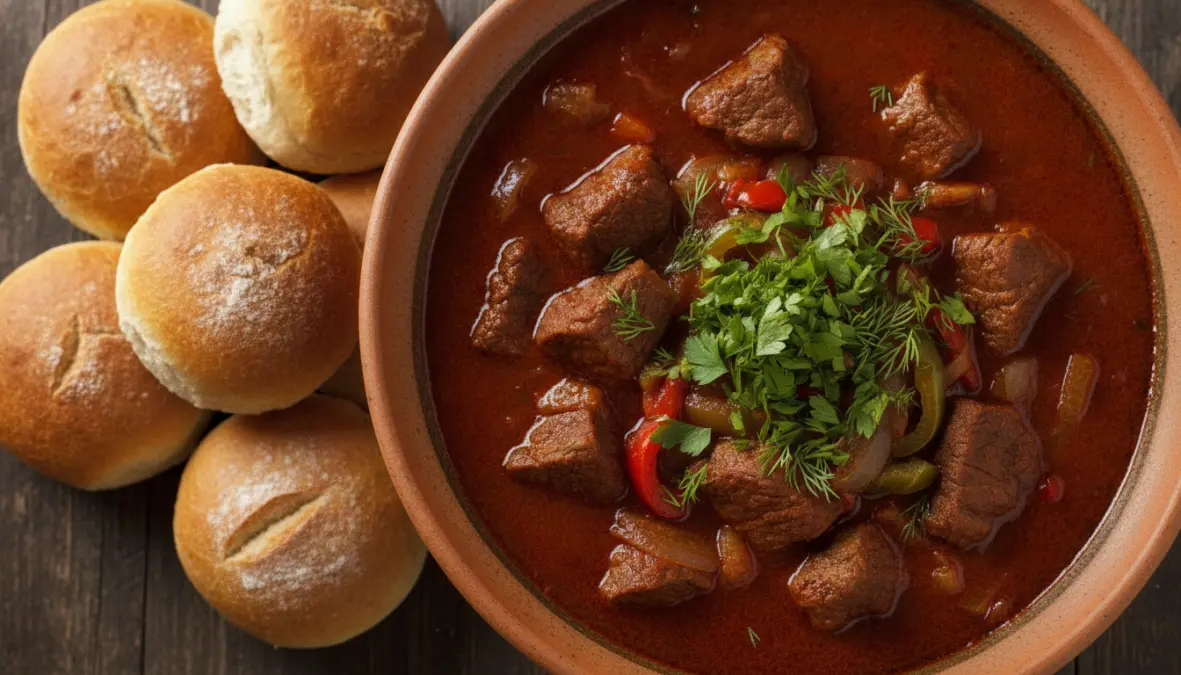
A traditional goulash recipe remains surprisingly simple despite its rich flavor. The essentials include beef (typically chuck or shank), plenty of onions (often equal in weight to the meat), quality Hungarian paprika, caraway seeds, and time—lots of it. Unlike quick stews, authentic goulash requires at least two hours of gentle simmering. Some recipes add potatoes, carrots, or peppers; others keep it pure meat and broth.
Here’s where things get interesting: when was goulash invented in hungary in its recognizable form? Most food historians point to the early 1800s as when the modern paprika-based version crystallized. But understanding hungarian stew history means distinguishing between gulyás (a soup) and pörkölt (a thicker stew). True Hungarian gulyás is brothier, almost soup-like, often containing potatoes and eaten with a spoon. Pörkölt, conversely, is thick and stewier, typically served with nokedli (Hungarian dumplings). Many foreigners actually prefer pörkölt but call it goulash—a source of gentle exasperation for Hungarians!
Regional variations abound across Hungary. Szeged-style goulash might feature more peppers and spicier paprika, while Debrecen versions could include smoked sausage. The evolution of hungarian goulash recipe continued as it spread internationally—Austrian goulash became thicker, German versions added beer, American adaptations incorporated tomato paste and shortcuts. Czech guláš evolved into something distinctly different. Each adaptation tells its own migration story, though purists insist nothing beats the original cooked in a bogrács over an open fire.
Much like other national dishes such as borscht for Eastern European identity or feijoada for Brazilian culture, goulash represents far more than sustenance—it’s memory, heritage, and belonging in a bowl.
FAQ: Hungarian Goulash History
What is the origin of Hungarian goulash?
Goulash originated with 9th-century Magyar cattle herders (gulyás) on the Hungarian plains. These shepherds created a portable meat stew cooked in iron cauldrons, which they could dry and reconstitute while tending livestock. The modern version emerged after paprika was introduced in the 16th-17th centuries.
When was paprika added to goulash?
Paprika entered Hungarian cuisine during the 16th-17th centuries through Ottoman Turkish influence, though it didn’t become a staple ingredient in goulash until the 18th century when cultivation became widespread around Szeged and Kalocsa.
Is goulash a soup or a stew?
Traditional Hungarian gulyás is actually a soup—brothier than most expect. The thicker version foreigners often call “goulash” is technically pörkölt. Both are authentic Hungarian dishes, just different preparations.
Why is goulash important to Hungarian culture?
Goulash became a symbol of Hungarian national identity during the 19th-century independence movement. It represented authentic Magyar culture against Austrian influence, transcending class divisions and embodying Hungarian resilience and pride.
What’s the difference between gulyás and pörkölt?
Gulyás is a paprika-spiced beef soup with vegetables and plenty of broth, while pörkölt is a thick stew with minimal liquid, typically served with dumplings or bread. Both use similar ingredients but different liquid ratios and cooking techniques.
The journey of goulash from survival food to national treasure demonstrates why goulash is important to hungarian culture—it’s not just about taste, but about identity forged through history. Next time you enjoy a steaming bowl, remember you’re tasting centuries of Hungarian heritage, from shepherd’s cauldrons to revolution, from humble beginnings to proud symbol. That’s the true flavor of traditional stew done right.