The Sacred Ritual of Matcha: Beyond the Tea Bowl
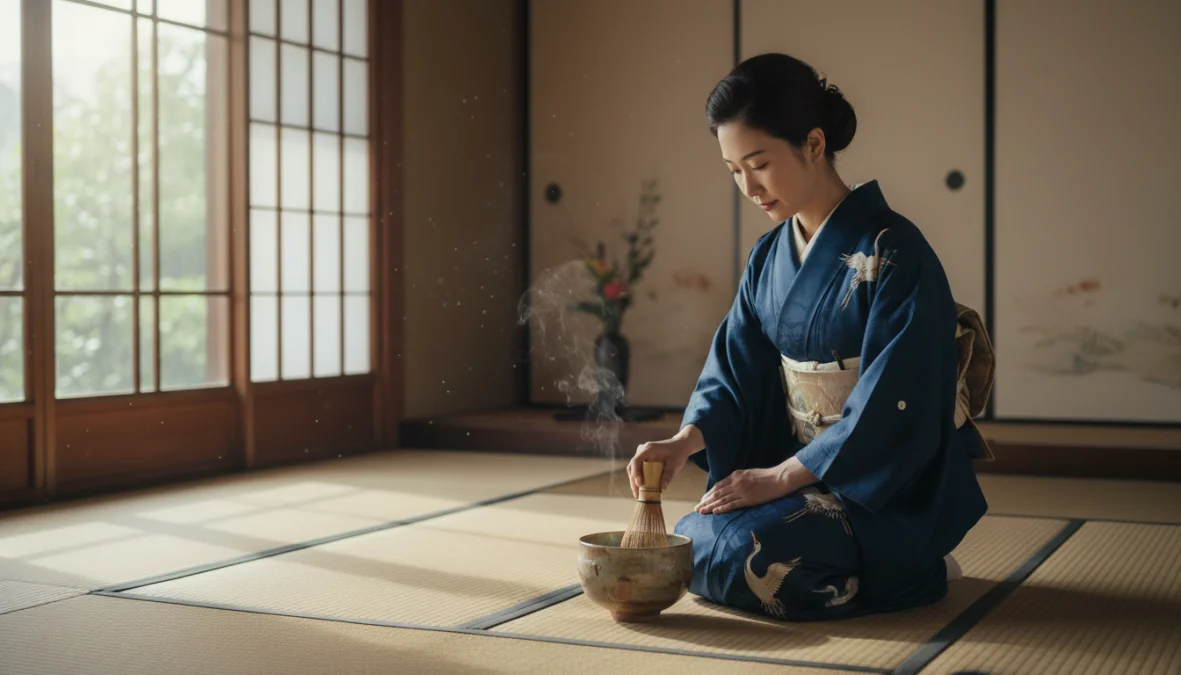
Picture this: you’re kneeling on a tatami mat in a quiet room, watching steam rise from a emerald bowl of matcha. Every gesture—from the way the tea master purifies the tools to the precise whisking motion—carries centuries of meaning. This isn’t just about drinking tea; it’s about entering a sacred space where time slows down and every movement matters. The matcha ceremony tradition represents one of Japanese culture’s most refined practices, transforming a simple beverage into a profound spiritual experience rooted in Zen Buddhism and aesthetic philosophy.
The Essence of Chanoyu: Understanding the Japanese Tea Ceremony
The Japanese tea ceremony, known as chanoyu (literally “hot water for tea”), emerged in the 15th century when Zen Buddhism monks adopted tea drinking as a mindfulness practice to stay alert during meditation. What started as a practical ritual evolved into a sophisticated art form under the guidance of influential tea masters like Sen no Rikyū, who codified the ceremony’s principles in the 16th century.
At its heart, the chanoyu tradition rests on four fundamental concepts: wa (harmony), kei (respect), sei (purity), and jaku (tranquility). These aren’t just philosophical abstractions—they guide every aspect of the ceremony, from how guests enter the tea room to the precise angle at which the chawan tea bowl is turned. The practice embodies wabi sabi aesthetics, finding beauty in simplicity, imperfection, and the transient nature of the moment.
The zen tea ceremony differs dramatically from casual tea drinking. It’s a choreographed meditation where host and guests participate in what some describe as “moving zen.” Three main schools preserve these traditions today: Urasenke (the most widely practiced), Omotesenke, and Mushakōjisenke, each with subtle variations in procedure while maintaining the ceremony’s core spiritual essence. Much like how rice holds sacred significance in Asian cultures, matcha has become inseparable from Japanese spiritual and cultural identity.
The Art of Matcha Preparation: Tools, Techniques, and Sacred Steps
Understanding matcha preparation requires appreciating that each tool and gesture carries symbolic weight. The matcha ritual transforms ordinary objects into sacred instruments, and tea ceremony etiquette demands that practitioners master both the physical movements and their underlying meanings.
Essential Tools of the Matcha Ceremony
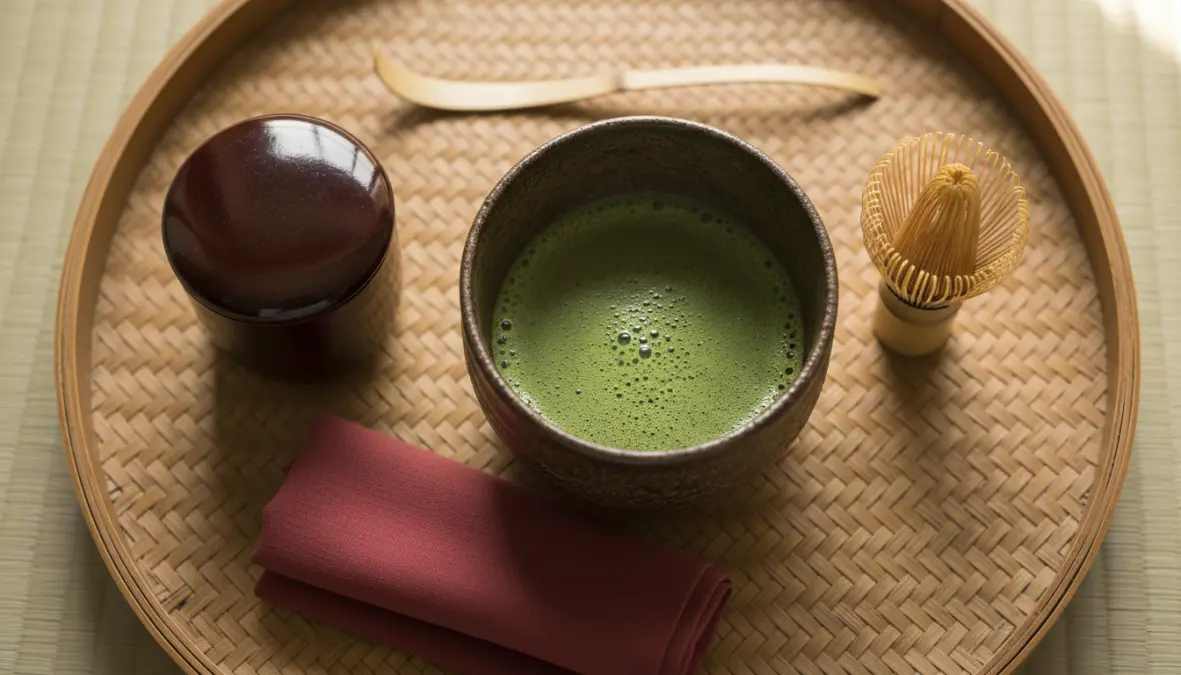
The chawan tea bowl serves as the ceremony’s centerpiece—more than just a vessel, it’s often a treasured piece of pottery chosen to reflect the season and occasion. The chasen bamboo whisk, carved from a single piece of bamboo with typically 80-120 delicate tines, creates the characteristic froth that distinguishes properly prepared matcha. The chashaku (bamboo scoop) measures the precise amount of ceremonial grade matcha, while the natsume or chaire (tea caddy) stores the precious powder. Finally, the hishaku (bamboo ladle) transfers hot water with grace and precision. Each tool connects the practitioner to centuries of traditional matcha culture, their simple beauty reflecting wabi sabi principles.
The Choreography of Preparation
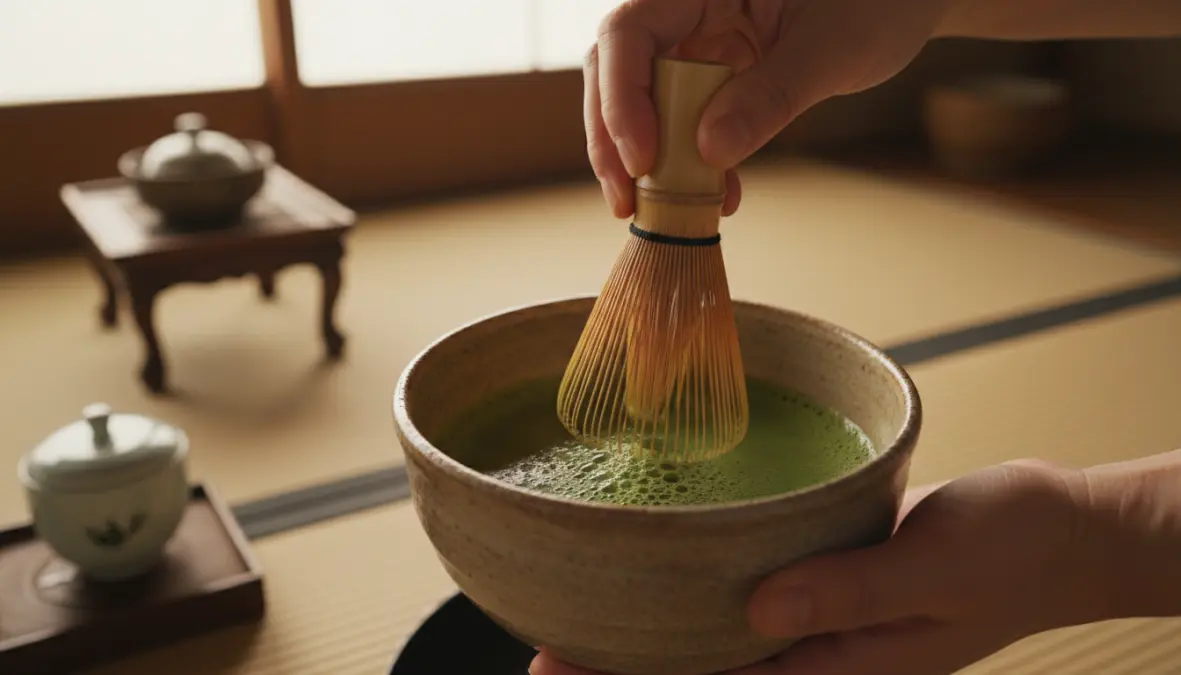
Learning how to perform a traditional matcha ceremony means mastering a precise sequence. The host enters carrying the tools, then purifies each implement using the fukusa (silk cloth) in ritualized movements. The bowl is warmed with hot water, the chasen tested, then the water discarded. Ceremonial grade matcha powder is carefully scooped into the bowl—the amount differs between koicha (thick tea, using more powder) and usucha (thin tea, more commonly served). Hot water follows, and the host whisks in a specific “M” or “W” pattern until the perfect foam forms. The bowl is then turned to present its most beautiful side to the guest—a gesture embodying respect and attention to detail. This is mindfulness practice in its purest form, where complete presence transforms simple actions into meditation. Just as wagashi sweets complement the tea ceremony, every element works in harmony to create a complete sensory experience.
Bringing the Matcha Ceremony into Modern Life
You don’t need a dedicated tea room or years of formal training to incorporate the matcha ceremony tradition into your daily routine. The ceremony’s essence lies not in perfection but in intention—the commitment to being fully present during the preparation and consumption of your tea.
Start by designating a quiet space in your home where you can practice without distraction. Invest in basic matcha ceremony tools and utensils: a bowl, whisk, and scoop are sufficient. Before beginning, take a moment to clear your mind. As you measure the matcha, feel the texture of the powder. Listen to the sound of water being poured. Notice the transformation as whisking creates foam. These small acts of attention cultivate the same mindfulness that formal practitioners seek.
The spiritual meaning of matcha ceremony becomes accessible when you approach preparation as meditation rather than routine. Similar to the Swedish fika tradition’s emphasis on pausing, the matcha ritual creates intentional breaks from modern life’s frenetic pace. Research shows that such mindful practices reduce stress, improve focus, and enhance overall well-being.
Understanding tea ceremony etiquette enriches your practice even at home. Turn your bowl before drinking, appreciating its shape and glaze. Sip slowly, acknowledging the effort behind each cup’s creation. Clean your tools with care and gratitude. These gestures, however simple, connect you to an unbroken chain of practitioners stretching back centuries—a form of cultural ritual as meaningful as any bread-breaking ceremony.
FAQ
What is the difference between a tea ceremony and simply drinking matcha?
The difference between matcha ceremony and regular tea lies in intention and mindfulness. A formal ceremony follows prescribed movements, emphasizes aesthetics, and creates a meditative space. Casual matcha drinking focuses on convenience and flavor. The ceremony transforms consumption into spiritual practice.
How long does a traditional Japanese tea ceremony last?
An authentic Japanese matcha tea ceremony with koicha (thick tea), usucha (thin tea), and kaiseki meal can last four hours. Simplified versions focusing on usucha alone typically take 45 minutes to an hour, depending on the number of guests and formality level.
Can anyone learn the matcha ceremony tradition?
Absolutely! While mastering the ceremony takes years, anyone can learn traditional matcha preparation at home. Many cultural centers and tea schools offer beginner classes. Start with basic tools and movements, gradually deepening your understanding of the philosophy behind each gesture.
What is the proper etiquette when attending a tea ceremony?
Key tea ceremony etiquette includes: arrive on time, wear subdued colors, remove watches and jewelry, enter the tea room respectfully, admire the displayed scroll and flowers, accept the bowl with gratitude, turn it before drinking, compliment the tea, and express thanks to your host. Silence and attentiveness show respect.
The matcha ceremony tradition offers modern life something increasingly rare: permission to slow down. In a world obsessed with efficiency, this ancient practice reminds us that some things shouldn’t be rushed. Whether you commit to formal study or simply bring more awareness to your morning tea, the ceremony’s wisdom remains relevant—teaching us that the journey matters more than the destination, and that beauty lives in fleeting moments of complete attention.