The Art of French Charcuterie: Regional Traditions and Preservation Mastery
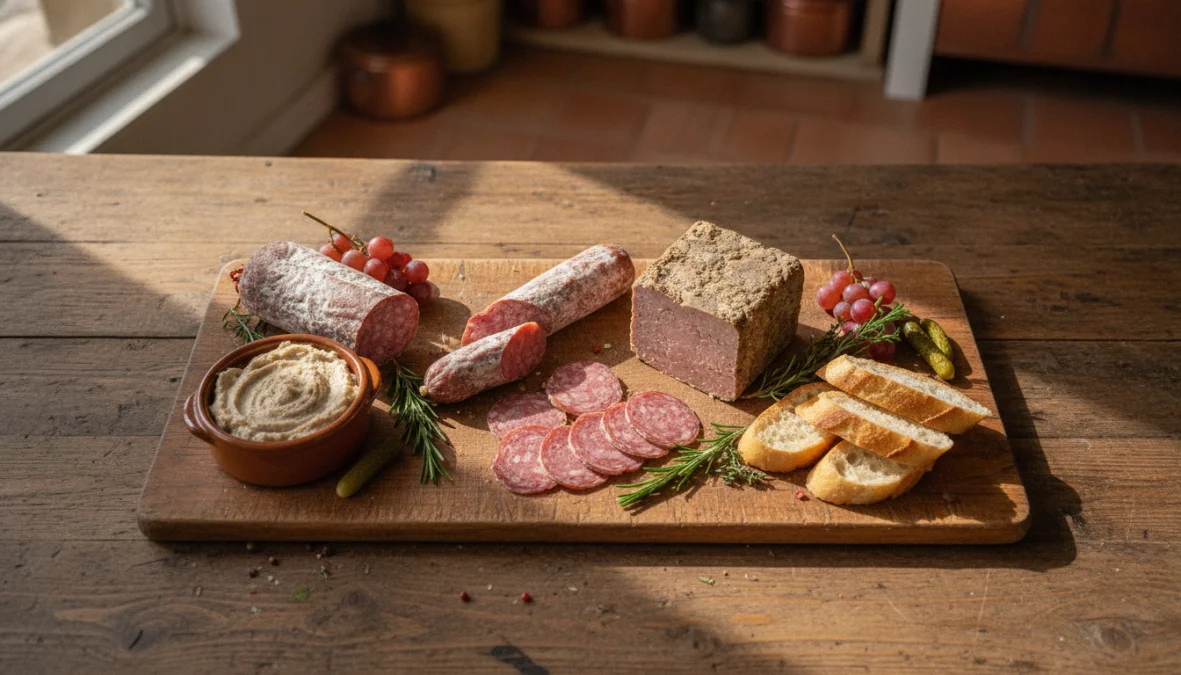
Picture this: a rustic French farmhouse kitchen where strings of sausages hang from wooden beams, earthenware terrines line the shelves, and the air carries the intoxicating aroma of herbs, spices, and aging meats. This is where the french charcuterie tradition comes alive—a centuries-old craft that transformed simple preservation needs into one of France’s most celebrated culinary arts. From the sun-drenched markets of Provence to the misty hills of Brittany, every region tells its own story through carefully cured meats, each bite revealing generations of knowledge passed down from charcutier to apprentice.
The Foundation of French Charcuterie Tradition
The french charcuterie tradition emerged from practical necessity but evolved into a revered charcuterie craft tradition that defines French gastronomy. Before refrigeration, preserving meat meant survival through harsh winters, and French artisans developed sophisticated methods that went far beyond simple storage. The word “charcuterie” itself derives from “chair cuite” (cooked flesh), though the craft encompasses much more than cooking—it’s a philosophical approach to honoring every part of the animal.
At the heart of traditional french curing lies a deep respect for time and natural processes. Unlike modern industrial production that rushes to market, authentic French charcuterie demands patience. A proper saucisson sec might hang for months, developing complex flavors impossible to replicate artificially. The charcutier acts as both scientist and artist, understanding how salt concentration, temperature fluctuations, and humidity levels work in harmony. Quality begins with the raw materials—heritage breed pigs raised on specific diets, sea salt harvested from traditional salt marshes, and locally foraged herbs that reflect regional terroir. This connection between land, ingredient, and technique creates products that taste unmistakably French, carrying the essence of their birthplace in every slice.
French Preservation Techniques and Artisan Methods
The magic of french preservation techniques lies in their elegant simplicity combined with meticulous execution. French meat preservation employs several core methods, each developed to suit different cuts and regional climates. Dry curing covers meat with salt (sometimes mixed with sugar and spices), drawing out moisture through osmosis—this method creates saucisson sec and other dried sausages. Wet brining submerges meat in salt solutions, ideal for hams like the legendary Jambon de Bayonne. Smoking adds both flavor and preservative compounds, particularly popular in Alsace and northern regions. The confit method slowly cooks meat in its own fat, then stores it submerged in that protective layer—think duck confit from Gascony.
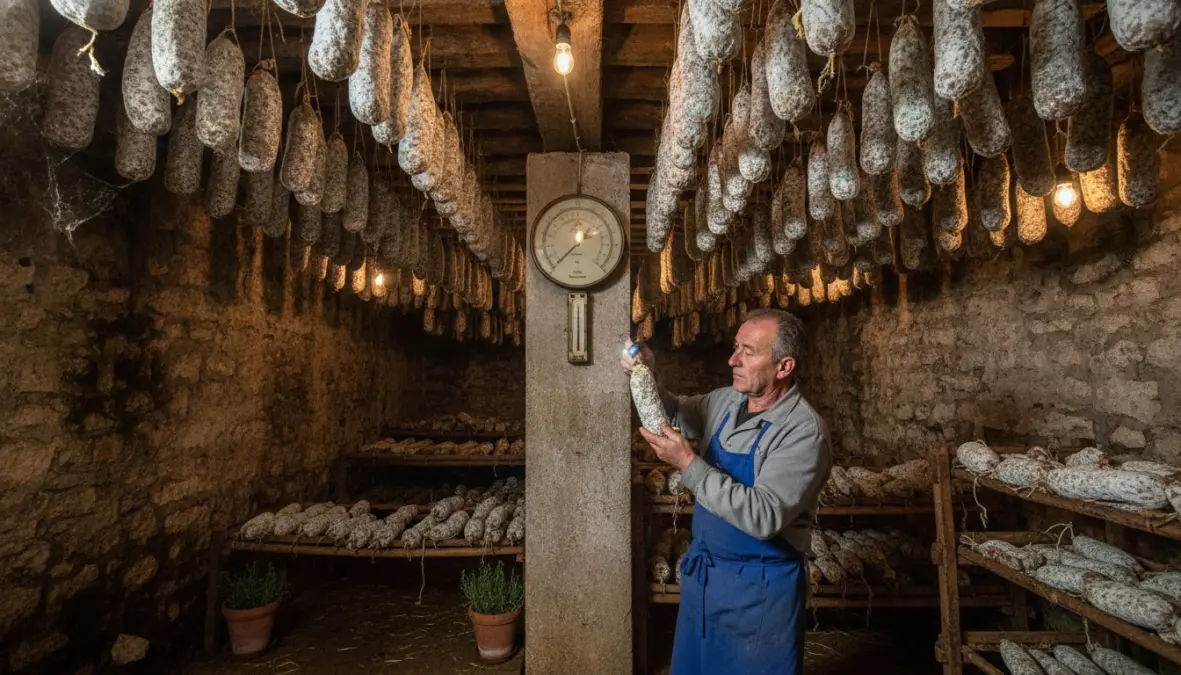
Artisan charcuterie france producers understand that french charcuterie methods require precise environmental conditions. Traditional aging cellars maintain temperatures between 10-15°C (50-59°F) with humidity around 70-75%. The terroir plays a crucial role—coastal regions benefit from salt-laden air, while mountainous areas provide cool, dry conditions perfect for long-cured products. Spices aren’t merely flavoring; black pepper, juniper, and garlic contain antimicrobial properties that aid preservation. The charcutier must read the meat, adjusting salt ratios based on fat content, thickness, and intended aging period. Too little salt risks spoilage; too much creates inedible results. This delicate balance separates artisan craftsmanship from industrial production.
The Science Behind Traditional Curing
Traditional french curing transforms meat through controlled biochemical processes that ancient practitioners understood intuitively before modern science explained them. Salt doesn’t just remove water—it creates an inhospitable environment for harmful bacteria while allowing beneficial microorganisms to thrive. During fermentation, lactic acid bacteria lower pH levels, developing tangy flavors and further protecting against pathogens. White molds that bloom on aging sausages aren’t defects but allies, regulating moisture loss and contributing earthy, mushroom-like notes. As meat dries, moisture evaporates while fats oxidize slowly, concentrating flavors and creating new aromatic compounds. A sausage that loses 30% of its weight becomes intensely flavorful, its texture firm yet yielding—this patient transformation cannot be rushed, teaching modern food enthusiasts valuable lessons about respecting natural rhythms, much like the traditions explored in The Cultural Significance of Bread Around the World.
Regional Charcuterie Specialties Across France
The beauty of french charcuterie regional diversity mirrors France’s geographical and cultural variety. Understanding regional charcuterie specialties reveals how climate, local ingredients, and cultural identity shape these time-honored products.
In Lyon and the Rhône-Alpes, considered France’s charcuterie capital, you’ll find Saucisson de Lyon—a pure pork dry-cured sausage studded with black peppercorns, traditionally eaten as thick slices with crusty bread. The region’s continental climate provides ideal curing conditions. Nearby, Rosette de Lyon offers a larger format with a characteristic rose-colored bloom. Moving to the Southwest, Bayonne produces its famous Jambon de Bayonne, a sweet, delicate ham cured with Salies-de-Béarn salt and aged minimum seven months. The Basque influence brings subtle spice notes. Rillettes, that spreadable pork confection, reaches perfection in Le Mans, where meat slowly cooks in fat until it shreds into silky strands—perfect on toasted baguette.
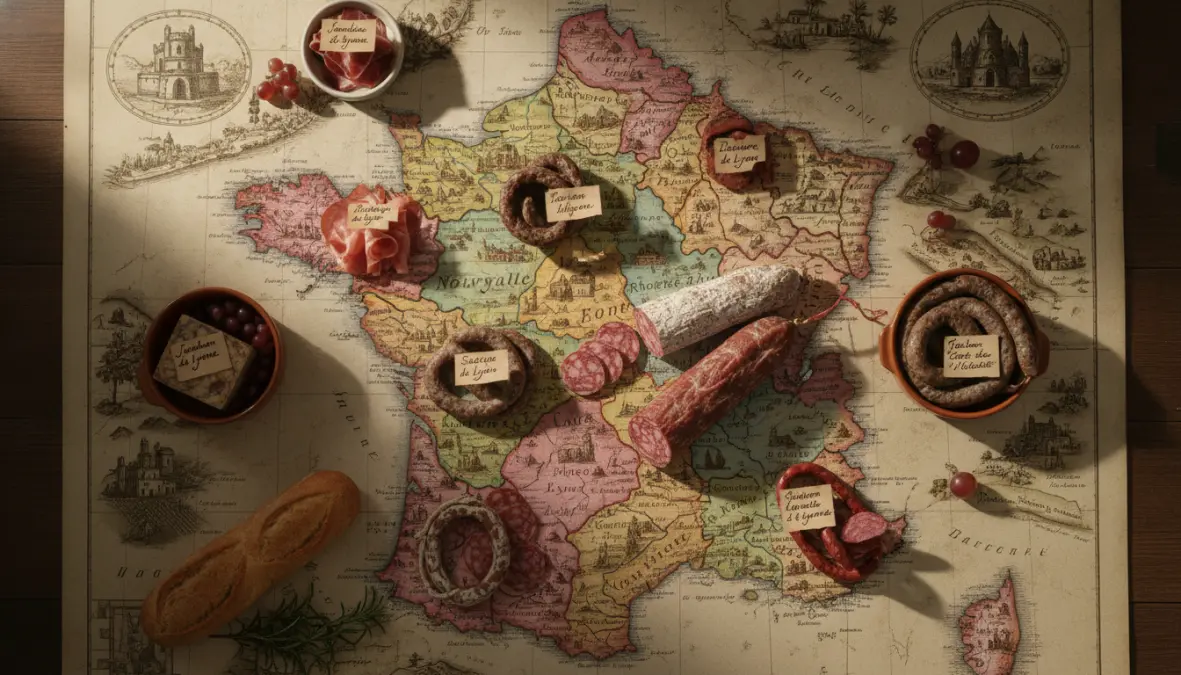
The North and Brittany contribute bolder, more rustic specialties. Andouille de Guéméné from Brittany features concentrically layered pork intestines, smoked over beech wood—an acquired taste with intense, smoky character. Boudin noir (blood sausage) appears throughout northern regions, often enriched with apples or chestnuts. Eastern France, particularly Alsace, shows Germanic influence with smoked products like Schiffala and various wurst-style sausages. Pâté reaches artistic heights in Périgord, where foie gras-enriched pâté de campagne showcases the region’s luxury ingredients. The Center produces Jésus de Morteau, a large smoked sausage from Franche-Comté, and various terrines that range from simple country-style to elaborate game-studded versions. Each product tells stories of local history, available ingredients, and cultural preferences—a salumi-like diversity that celebrates France’s regional identities through the lens of preservation mastery.
FAQ: French Charcuterie Tradition
What makes French charcuterie different from Italian?
While both traditions excel at cured meats, French charcuterie emphasizes cooked preparations like pâté, rillettes, and terrines alongside dry-cured products, whereas Italian salumi focuses primarily on dry-curing and air-drying. French methods often incorporate more herbs (thyme, bay leaf) while Italian techniques favor simpler seasoning, letting pork quality shine.
How long does traditional French charcuterie take to cure?
Timing varies dramatically by product. Small saucisson sec requires 3-6 weeks, while large hams like Jambon de Bayonne need 7-12 months minimum. Pâté and rillettes are ready within days but improve with a week’s rest. Patience remains essential—rushing compromises both safety and flavor development.
What are the essential ingredients in French charcuterie?
Quality pork forms the foundation, complemented by sea salt (often from Guérande or Salies-de-Béarn), black pepper, garlic, and regional herbs. Natural casings, wine or cognac, and curing salt (sodium nitrite) for certain products complete the traditional toolkit. Terroir-specific ingredients distinguish regional specialties.
Can traditional French charcuterie methods be replicated at home?
Absolutely, though learning traditional french charcuterie craft requires dedication and proper equipment. Home enthusiasts can master pâté and rillettes relatively easily, while dry-cured sausages demand temperature-humidity control and food safety knowledge. Starting with cooked preparations builds skills before attempting complex fermented products.
The french charcuterie tradition continues thriving because it honors fundamental truths about food, time, and craftsmanship. In our age of instant gratification, watching a sausage slowly transform over months teaches valuable lessons about patience and respecting natural processes. Whether you’re exploring regional differences in french charcuterie through market visits or attempting how to make traditional french charcuterie at home, you’re participating in a living tradition that connects past and present. These preservation techniques, refined over centuries, offer more than delicious food—they provide wisdom about sustainability, honoring ingredients, and creating flavors that simply cannot be rushed. Next time you slice into a perfectly aged saucisson, remember you’re tasting history, geography, and the patient mastery of countless artisans who believed some things are worth waiting for.