Hákarl: Iceland’s Fermented Shark and Ancient Viking Preservation Traditions
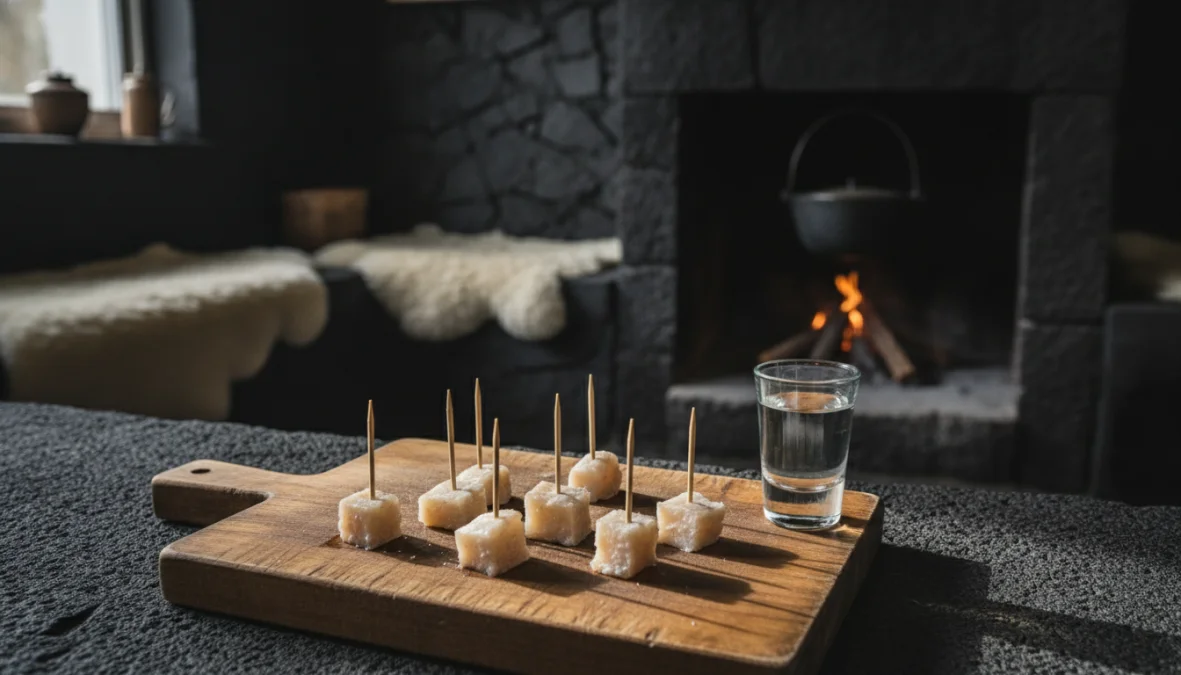
Picture this: you’re standing in a traditional Icelandic market, and someone offers you a small cube of greyish-white meat speared on a toothpick. The smell hits you first—a pungent, ammonia-like odor that makes your eyes water. Welcome to the world of hákarl, Iceland’s infamous fermented shark, a dish that represents one of the most extreme examples of hakarl Icelandic tradition and ancient Viking ingenuity. This polarizing delicacy has survived centuries, transforming from a survival necessity into a symbol of cultural pride and culinary bravery.
What Is Hákarl? Understanding Iceland’s Most Controversial Delicacy
Hákarl is fermented shark Iceland‘s most notorious traditional food, made from Greenland shark (Somniosus microcephalus) that undergoes a months-long fermentation and drying process. But why ferment shark meat at all? The answer lies in survival: Greenland shark toxic compounds, specifically high concentrations of urea and trimethylamine oxide (TMAO), make the fresh meat poisonous to humans. These chemicals help the shark survive in deep, cold ocean waters but would cause severe illness if consumed directly.
The traditional Icelandic hakarl comes in two main varieties: glerhákarl (meaning “glassy shark”), which comes from the body and has a reddish tinge, and skyrhákarl from the belly, which is white, softer, and considered by many to be even more pungent. The ammonia smell that characterizes hákarl is actually a byproduct of the fermentation process—as the shark’s natural chemicals break down, they release this distinctive odor that can be detected from several feet away.
What does hákarl taste like? Describing hákarl is notoriously difficult. First-timers often describe an overwhelming ammonia sensation, followed by a strong fish flavor with a chewy, slightly rubbery texture. The aftertaste lingers, sometimes for hours. In modern Icelandic fermented shark culture, hákarl has transitioned from everyday sustenance to a ceremonial food, often consumed during the midwinter festival of Þorrablót and served to curious tourists seeking authentic cultural experiences.
From Viking Necessity to Cultural Heritage: The History and Evolution of Hákarl
The origins of hakarl Viking food stretch back over a thousand years to Iceland’s settlement period. Viking settlers arriving in Iceland around 870 CE faced harsh realities: limited agricultural possibilities, brutal winters, and the need to preserve food without refrigeration. Viking preservation techniques became essential survival skills, and fermentation proved to be one of the most effective methods for long-term food storage in Iceland’s unforgiving climate.
Greenland sharks, which could grow up to 24 feet long and weigh over a ton, represented an abundant protein source in Iceland’s coastal waters. However, their toxicity presented a challenge that Viking ingenuity solved through the fermentation burial process. By burying the shark meat and allowing natural fermentation to neutralize the toxins, settlers transformed an otherwise inedible catch into edible sustenance that could last through the long, dark winters.
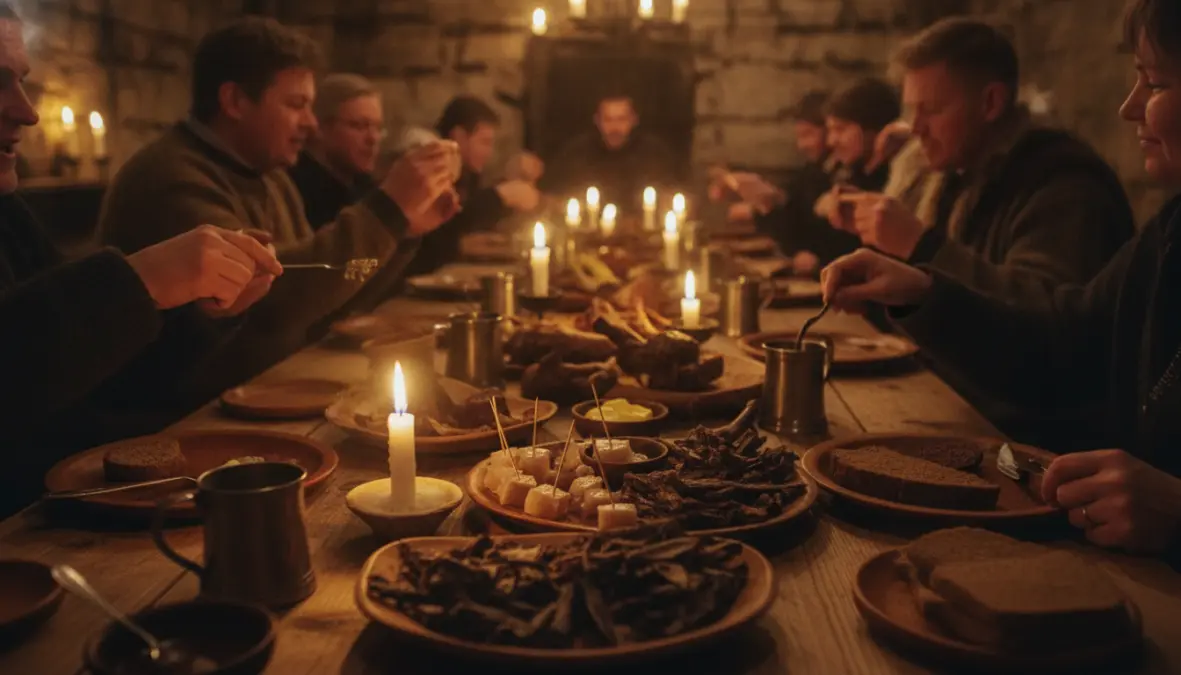
Why do Icelanders eat fermented shark today when modern preservation methods exist? The answer lies in cultural identity. As Iceland’s food culture evolved, hákarl transitioned from necessity to heritage. The Þorrablót festival, celebrated in January and February, became the primary occasion for consuming traditional foods like hákarl, alongside other preserved items like dried fish and fermented ram’s testicles. This midwinter celebration honors Iceland’s Norse heritage and keeps ancient food traditions alive. Similar to how sacred bread traditions across Europe connect communities to their past, hákarl serves as an edible link to Iceland’s Viking ancestors.
The Traditional Hákarl Preparation Method: A Months-Long Fermentation Process
Understanding how is hákarl fermented and prepared reveals the complexity behind this seemingly simple food. The hakarl preparation method has remained largely unchanged for centuries, though modern health regulations have standardized certain practices.
The process begins with catching a Greenland shark, typically through deep-sea fishing. After landing the shark, producers clean and gut the carcass, removing the head and internal organs. The meat is then cut into large chunks, each weighing several pounds. Here’s where the Greenland shark fermentation truly begins: the chunks are placed in shallow gravel pits or special fermentation boxes with excellent drainage.
The buried shark meat is pressed down with heavy stones to force fluids out of the flesh—these fluids contain the highest concentrations of toxic compounds. This pressing stage is crucial; without adequate drainage, the meat would rot rather than ferment properly. The shark remains buried for approximately 6 to 12 weeks, depending on the season (fermentation occurs faster in summer’s milder temperatures).
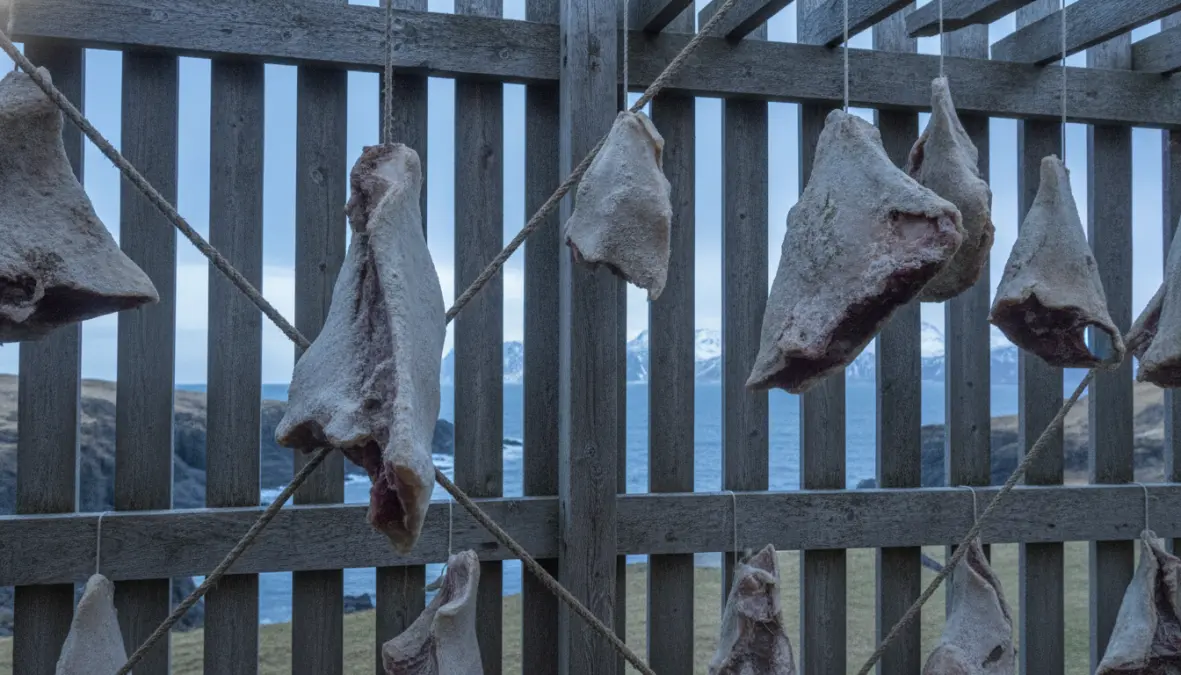
How long does hákarl fermentation take in total? After the burial phase, the meat is exhumed and hung in special drying sheds called hjallur. These open-air structures allow Iceland’s cold, dry winds to continue the curing process while protecting the meat from rain. The shark hangs for another 2 to 4 months, developing a brown crust on the exterior while the interior softens and develops the characteristic ammonia flavor. The entire process typically requires 4 to 6 months from start to finish.
Traditional producers still follow ancestral methods closely, though commercial operations now use temperature-controlled facilities to ensure consistent results and food safety compliance. The science behind the process is fascinating: as fermentation progresses, the shark’s urea breaks down into ammonia, which helps preserve the meat while neutralizing the toxic TMAO. This natural transformation showcases Viking age food wisdom that predated modern food science by centuries.
Where and How to Experience Authentic Hákarl Today
For adventurous food enthusiasts wondering where to try hákarl in Iceland, several excellent options exist. Reykjavik’s Kolaportið flea market, operating on weekends, features vendors selling authentic hákarl alongside other traditional Icelandic foods. Many tourists have their first hákarl experience here, often paired with a shot of brennivín (Iceland’s signature caraway-flavored spirit, nicknamed “Black Death”), which helps mask the intense flavor.
Specialized restaurants throughout Reykjavik include hákarl on their traditional tasting menus, particularly during winter months. Food tours focusing on Icelandic cuisine almost always include a hákarl tasting, with guides providing cultural context that enriches the experience. The Icelandic Shark Museum in Bjarnarhöfn, run by a family that has produced hákarl for generations, offers both education and tastings.
First-time tasters should know: hákarl is served in small cubes, typically consumed in one bite. Many Icelanders recommend breathing through your mouth rather than your nose to minimize the ammonia impact. Don’t feel pressured to eat large quantities—even many Icelanders only consume hákarl during special occasions. Purchasing hákarl is possible at some specialty shops, though its strong odor makes transporting it internationally challenging.
FAQ: Common Questions About Hákarl and Fermented Shark
Is hákarl safe to eat?
Yes, is hákarl safe to eat when properly prepared. The fermentation process neutralizes the toxic compounds found in fresh Greenland shark meat. Modern producers follow strict food safety guidelines, and hákarl has been consumed safely for over a millennium. However, the intense flavor and ammonia content may cause digestive discomfort for those unaccustomed to fermented foods.
Why does hákarl smell so bad?
The notorious smell comes from ammonia released during fermentation as the shark’s natural urea breaks down. This chemical transformation is essential for making the meat safe to eat, but it creates the pungent odor that can overwhelm first-time tasters. The smell is actually a sign that the fermentation occurred properly and the toxic compounds have been neutralized.
What does hákarl taste like?
Hákarl delivers an intense ammonia flavor initially, followed by a strong fishy, slightly cheesy taste with a rubbery, chewy texture. The aftertaste persists significantly. Many describe it as one of the world’s most challenging acquired tastes. The belly portion (skyrhákarl) tends to be stronger than the body meat (glerhákarl), giving tasters options for intensity.
How long does hákarl last?
Properly prepared and stored hákarl can last for months, even years, in cool, dry conditions. The ammonia content acts as a natural preservative. Once opened, it should be consumed within several weeks and kept refrigerated. This exceptional shelf life made hákarl invaluable for Viking food preservation methods Iceland settlers relied upon during harsh winters.
Can you buy hákarl outside Iceland?
Hákarl is rarely available outside Iceland due to import restrictions, limited international demand, and practical shipping challenges (the smell makes transport problematic). Some specialty Scandinavian food shops occasionally stock it frozen. Most enthusiasts find that experiencing kæstur hákarl in its cultural context within Iceland provides the most authentic and meaningful tasting experience.
Hákarl represents far more than just fermented shark meat—it embodies Iceland’s resilient spirit, connecting modern Icelanders to their Viking heritage through traditional Nordic cuisine. Like sacred bread traditions found worldwide, this challenging delicacy serves as cultural glue, binding generations through shared culinary heritage. Whether you’re brave enough to try it or simply fascinated by extreme food preservation, hákarl offers a unique window into how ancient necessity became treasured tradition. Next time you’re in Iceland, will you accept the hákarl challenge?