Spanakopita: Discovering Greece’s Beloved Spinach Pie and Phyllo Pastry Tradition
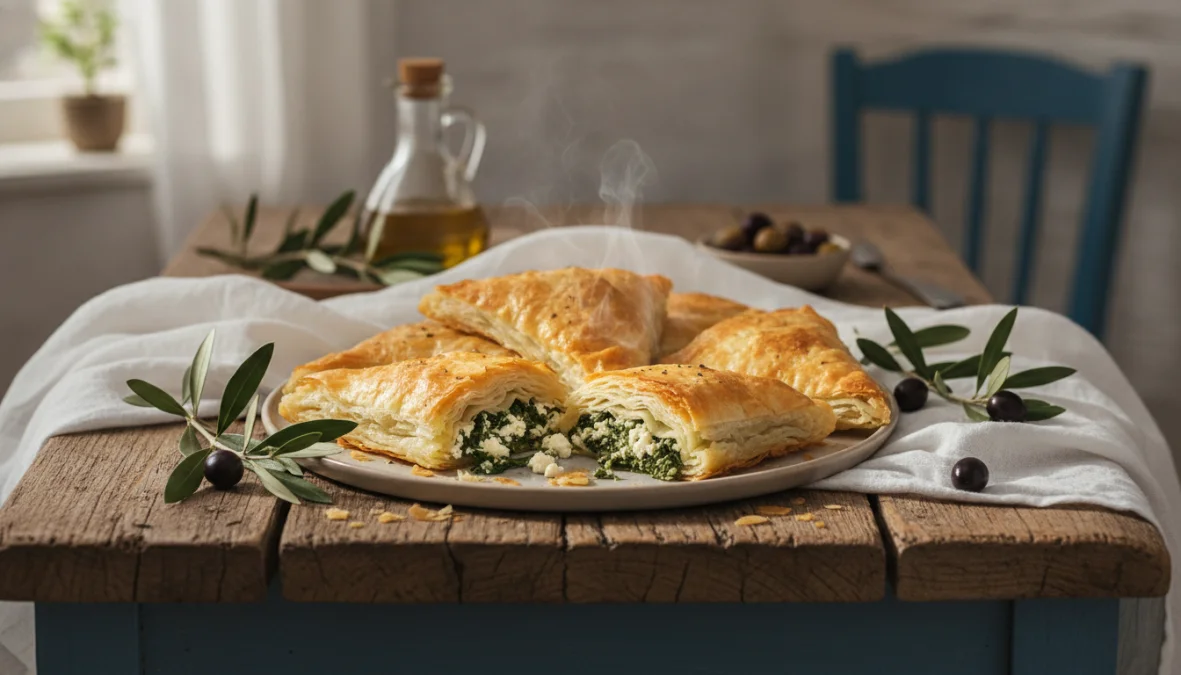
There’s something magical about biting into a perfectly crispy triangle of spanakopita – that golden phyllo shell shattering to reveal layers of tender spinach, creamy feta cheese, and aromatic herbs. This isn’t just a savory pastry; it’s a bite-sized piece of Greek heritage that has graced tables from ancient times to modern tavernas. The spanakopita greek tradition represents centuries of culinary wisdom, where simple ingredients transform into something extraordinary through patient layering and time-honored techniques.
The Rich History Behind Spanakopita Greek Tradition
The story of greek spinach pie begins in the olive groves and mountain villages of ancient Greece, where resourceful cooks learned to preserve wild greens between paper-thin sheets of dough. The spanakopita greek tradition evolved from the practice of foraging horta (wild greens) – a cornerstone of the mediterranean diet that provided essential nutrients during lean seasons.
Phyllo pastry itself traces back to Byzantine kitchens, where palace bakers perfected the art of stretching dough so thin you could read through it. This greek pastry tradition spread throughout the Ottoman Empire, giving birth to countless variations like tyropita (cheese pie) and sweet bougatsa. But spanakopita held special significance – it was affordable enough for everyday meals yet elegant enough for celebrations.
Regional variations tell their own stories: Epirus adds leeks and rice, Crete incorporates local herbs like fennel, while island versions might include wild greens specific to their terrain. During Lent, Orthodox Greeks prepare cheese-free versions, demonstrating how spanakopita greek tradition adapts to religious observances. This cultural flexibility, much like other sacred food traditions across Europe, shows how food becomes intertwined with identity and faith.
Mastering Phyllo Pastry Techniques for Authentic Spanakopita
Working with phyllo intimidates many home cooks, but understanding phyllo pastry techniques transforms it from mysterious to manageable. Commercial phyllo comes frozen in tightly rolled sheets – always thaw it overnight in the refrigerator, never at room temperature, to prevent condensation that makes sheets stick together.
The golden rule when making homemade spanakopita: keep phyllo covered. Unroll your thawed sheets onto a clean kitchen towel, then immediately cover with another slightly damp towel. Phyllo dries out within minutes, becoming brittle and impossible to work with. Greek grandmothers keep a spray bottle nearby to lightly mist the towel if needed.
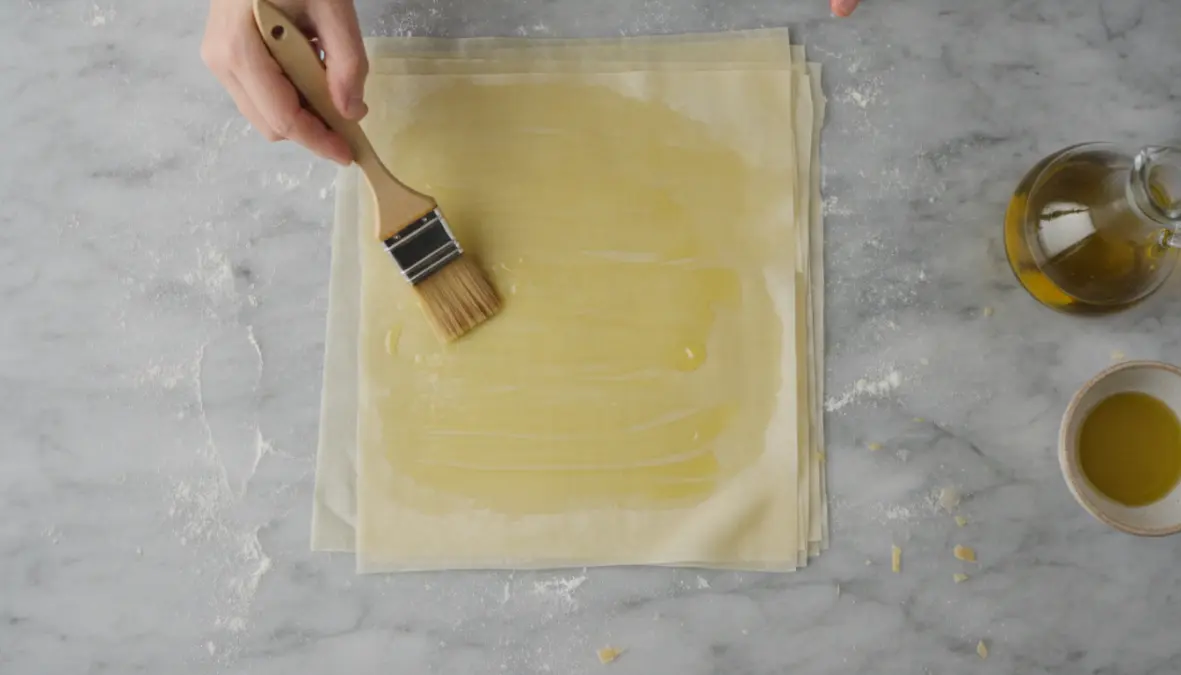
Brushing with olive oil (or melted butter) between layers creates that signature golden crispness. Professional Greek bakers use a light touch – too much oil makes pastry greasy, too little leaves it dry. Apply thin, even coats using a natural bristle brush, working quickly but gently. For authentic spanakopita, you’ll typically layer 6-8 sheets on the bottom, add filling, then top with another 6-8 sheets.
Homemade phyllo exists in traditional Greek kitchens, though it’s labor-intensive. Master bakers stretch dough on massive round tables until it’s translucent, a skill taking years to perfect. For most home cooks, quality store-bought phyllo delivers excellent results. The secret isn’t making phyllo from scratch – it’s learning to handle it with confidence.
Essential Ingredients and Filling Preparation
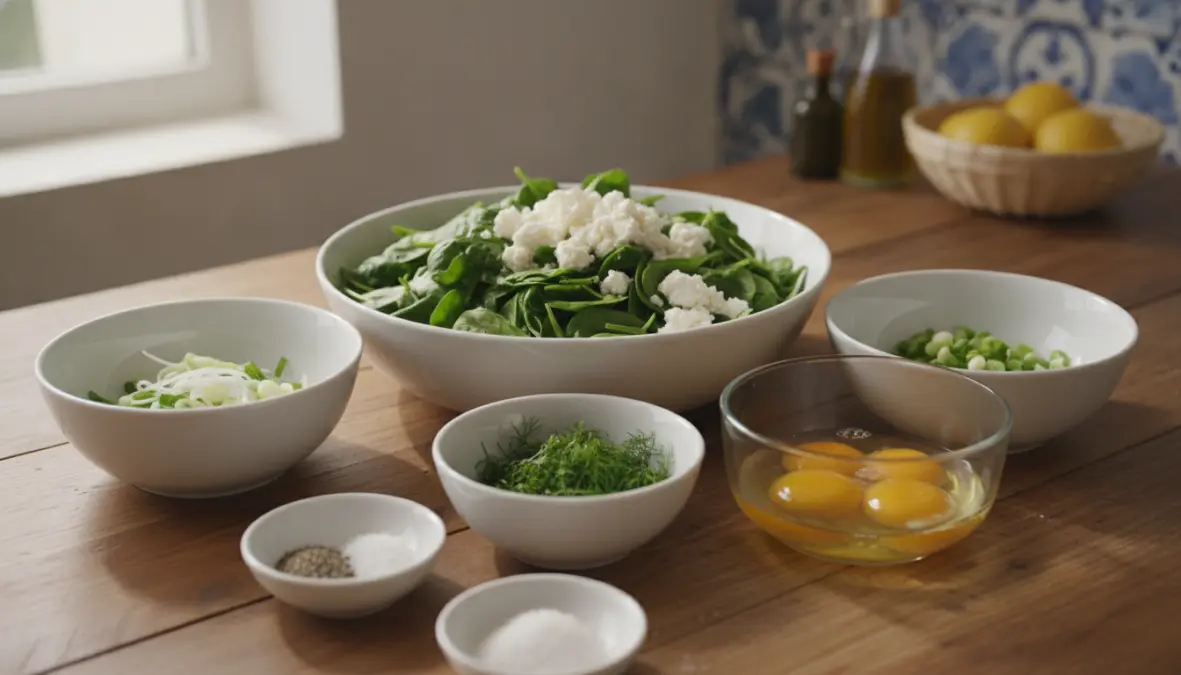
A traditional spanakopita recipe relies on surprisingly few ingredients, each playing a crucial role. Fresh spinach forms the base – you’ll need about 2 pounds, which cooks down dramatically. Frozen spinach works too, but requires thorough draining. Here’s where many home cooks stumble: excess moisture creates soggy pastry. Squeeze spinach in cheesecloth until your arms ache, then squeeze again. This single step determines success or failure.
Feta cheese provides creamy saltiness that defines Greek flavor. Authentic versions use sheep’s milk feta, which crumbles beautifully and melts without becoming stringy. Combine it with eggs (they bind everything together), sautéed onions or scallions, and generous amounts of dill and herbs – dill is traditional, but parsley, mint, or a combination add complexity.
Proportions matter: aim for roughly equal parts spinach and cheese by volume, with 3-4 eggs per pound of spinach. Season generously with black pepper (feta adds sufficient salt). Some cooks add a handful of rice or breadcrumbs to absorb extra moisture, though purists skip this addition.
Step-by-Step Assembly and Baking
For homemade spanakopita, you have two traditional shapes: individual triangles or a large pan version. Triangles require more time but offer beautiful presentation – cut phyllo into strips, place filling at one end, then fold flag-style. Pan versions are simpler: layer phyllo in an oiled baking dish, spread filling evenly, top with more phyllo sheets.
Before baking, score the top layers with a sharp knife (cutting all the way through prevents messy breaking later). Sprinkle lightly with water – this creates steam that helps phyllo puff and separate. Bake at 350°F (175°C) for 45-60 minutes until deeply golden. The aroma alone will transport you to a Greek kitchen.
Perfect spanakopita emerges crispy on top and bottom, with tender layers throughout. Let it rest 10-15 minutes before cutting – this allows filling to set. Serve warm or at room temperature. Similar to Turkish meze traditions, spanakopita shines as both appetizer and main dish, adapting to any occasion.
FAQ: Everything You Need to Know About Spanakopita
Can I make spanakopita ahead of time?
Absolutely! Assemble your homemade spanakopita completely, then refrigerate unbaked for up to 24 hours or freeze for up to 3 months. Bake directly from frozen, adding 15-20 minutes to cooking time. Already-baked spanakopita reheats beautifully in a 325°F oven for 15 minutes, regaining its crispness.
What’s the difference between spanakopita and other Greek pies?
Tyropita contains only cheese (usually feta), while spanakopita combines spinach and cheese. Hortopita uses wild greens without cheese, and prasopita features leeks. Each represents the spanakopita greek tradition of wrapping seasonal ingredients in phyllo, showcasing greek cuisine‘s adaptability.
Can I freeze spanakopita?
Freezing works wonderfully for both unbaked and baked versions. Wrap individual triangles tightly in plastic wrap, then store in freezer bags. Unbaked pieces can go straight from freezer to oven. Baked spanakopita should be thawed and reheated gently to maintain texture.
What can I substitute for feta cheese?
While feta defines authentic spanakopita, ricotta mixed with parmesan offers a milder alternative. Cottage cheese (well-drained) works in a pinch. Some modern versions use goat cheese, though purists might object. The tangy, salty quality of real feta remains irreplaceable.
How do I prevent soggy spanakopita?
Three key steps ensure crispness: thoroughly drain spinach, brush each phyllo layer with oil, and bake until deeply golden. Avoid underbaking – pale phyllo means soggy texture. Store leftovers uncovered or loosely wrapped so steam doesn’t accumulate and soften the pastry.
The beauty of spanakopita lies not just in its layers of flaky pastry and savory filling, but in how it connects us to centuries of Greek hospitality and home cooking. Whether you’re attempting your first batch or perfecting your technique, remember that even imperfect spanakopita tastes delicious. Like bread traditions worldwide, this humble pie carries stories of resourcefulness, celebration, and the universal desire to share good food with those we love. So gather your phyllo, embrace the process, and discover why Greeks have treasured this golden pastry for generations.