The Ancient Art of Cheesemaking in Alpine Cultures: From Survival to Tradition
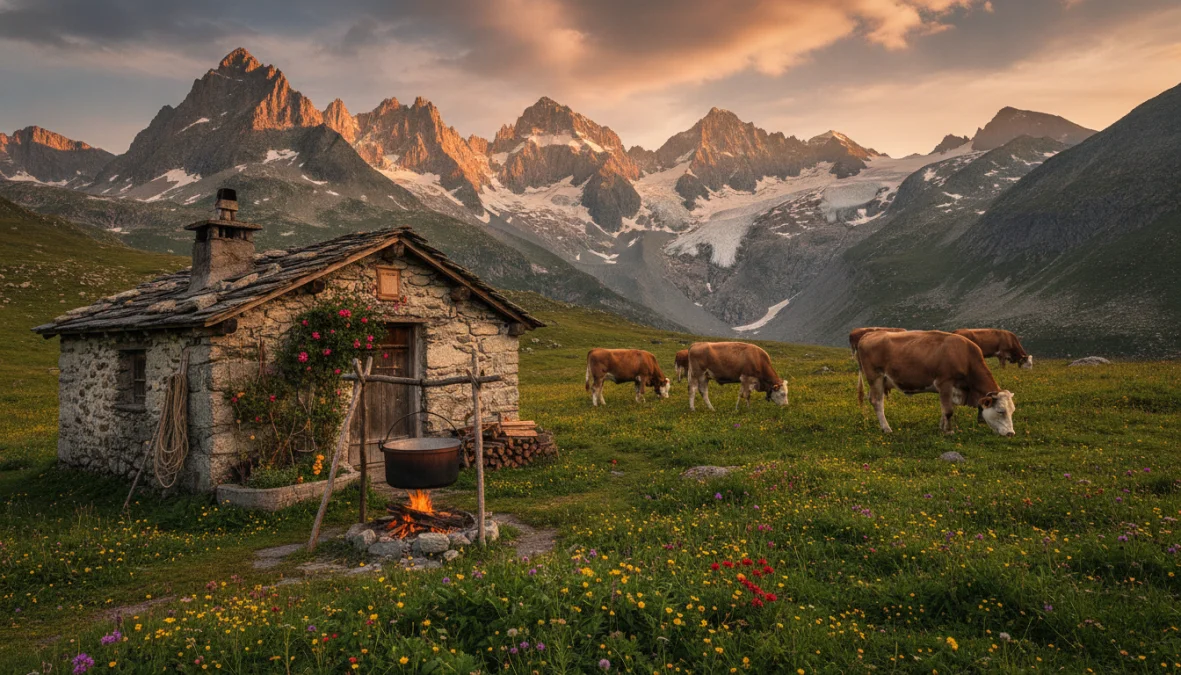
Picture this: a lone shepherd guiding his herd up winding mountain paths as summer arrives, settling into a rustic mountain hut where he’ll spend months transforming fresh milk into golden cheese wheels. This scene has played out across the Alps for thousands of years, forming the backbone of what we now celebrate as alpine cheese tradition—a practice born from survival that evolved into one of Europe’s most revered culinary arts. Far from being simply a food preservation technique, alpine cheesemaking represents an entire way of life shaped by harsh mountain winters, short growing seasons, and the ingenuity of people who learned to work with nature’s rhythms rather than against them.
Origins and Evolution of Alpine Cheesemaking
The story of alpine cheesemaking history begins with a practical problem: what do you do with surplus milk in remote mountain locations without refrigeration? Ancient alpine communities discovered that transforming milk into cheese not only preserved precious nutrition through long winters but created a portable, tradeable commodity. Archaeological evidence suggests traditional mountain cheese production dates back over 3,000 years, with Bronze Age artifacts revealing primitive pressing tools and storage vessels.
The geography of the Alps itself shaped these techniques. Steep terrain meant limited space for agriculture, but abundant high-altitude meadows perfect for grazing. The practice of transhumance—the seasonal migration of livestock to alpine pastures—became central to alpine dairy farming. Farmers would drive cattle upward in late spring, following the snowmelt to access nutrient-rich grasses that only grow at elevation during summer months.
Regional variations emerged across the Alpine arc. Swiss valleys developed different techniques than Italian or Austrian counterparts, influenced by local climate, available resources, and cultural exchange. Swiss cheese culture became particularly renowned, with cantons developing distinct varieties like Gruyère and Emmentaler. French Alpine regions crafted Beaufort and Reblochon, while Italian valleys perfected Fontina and Asiago. Each represented not just different recipes, but entire regional identities.
From Necessity to Craftsmanship
Understanding how alpine farmers make traditional cheese reveals the transformation from survival technique to refined art. Early methods were rudimentary—heating milk over open fires, adding natural rennet from animal stomachs, pressing curds with stones. Over centuries, cheesemakers refined every step, developing specific temperatures, aging times, and techniques that distinguished exceptional cheese from merely edible preservation.
The formation of dairy cooperatives in the 19th century marked a pivotal shift. These collectives pooled resources, allowing smaller producers to access expensive equipment like copper cauldrons while maintaining traditional methods. Knowledge passed from master cheesemakers to apprentices, with ancient cheesemaking methods in the alps carefully guarded and transmitted through generations. Yet this created tension between standardization for commercial viability and preservation of ancestral techniques that made each valley’s cheese unique.
The Ecosystem of Mountain Cheese Production
Mountain cheese production involves far more than simply making cheese—it’s an interconnected ecosystem of animals, land, people, and tradition. The seasonal rhythm begins each spring when herders practice transhumance, moving cattle from valley farms to high mountain pastures. This isn’t just tradition for tradition’s sake; alpine herding traditions recognize that high-altitude grasses, herbs, and wildflowers impart distinctive flavors impossible to replicate at lower elevations.
Specialized cattle breeds play crucial roles. The Bruna Alpina (Brown Swiss) and Simmental developed over centuries to thrive in harsh mountain conditions while producing rich milk ideal for cheesemaking. These hardy animals graze on biodiverse pastures containing hundreds of plant species—gentian, yarrow, mountain clover—creating what cheesemakers call “flower milk” with complex flavor profiles.
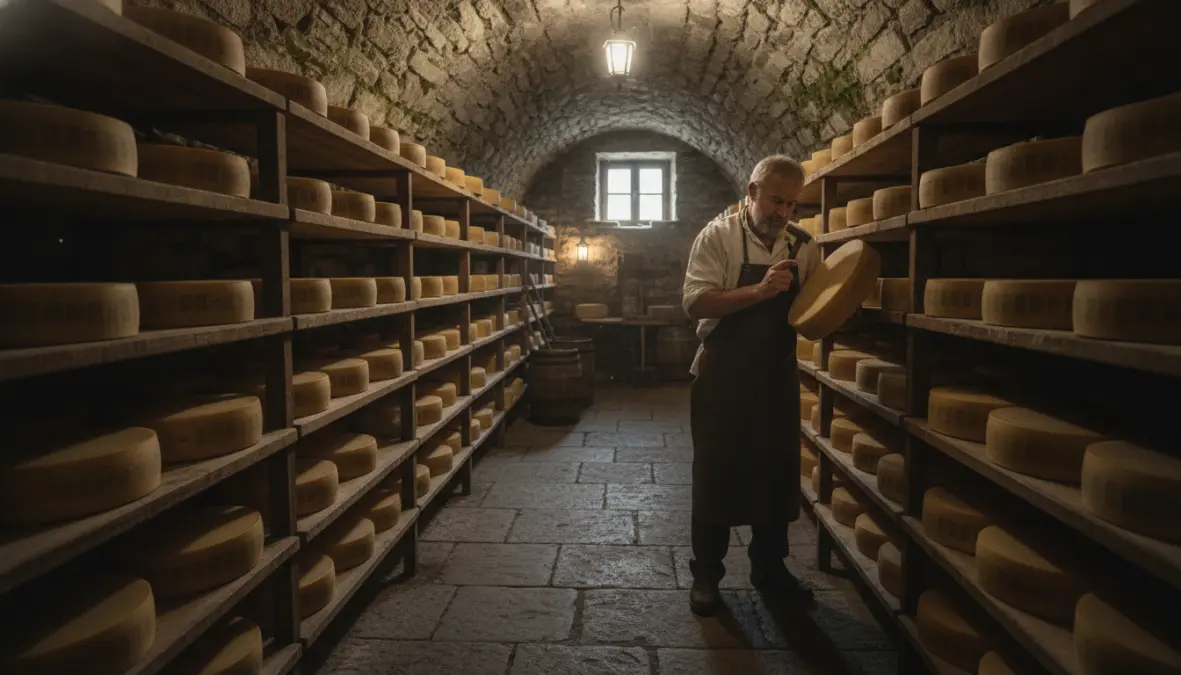
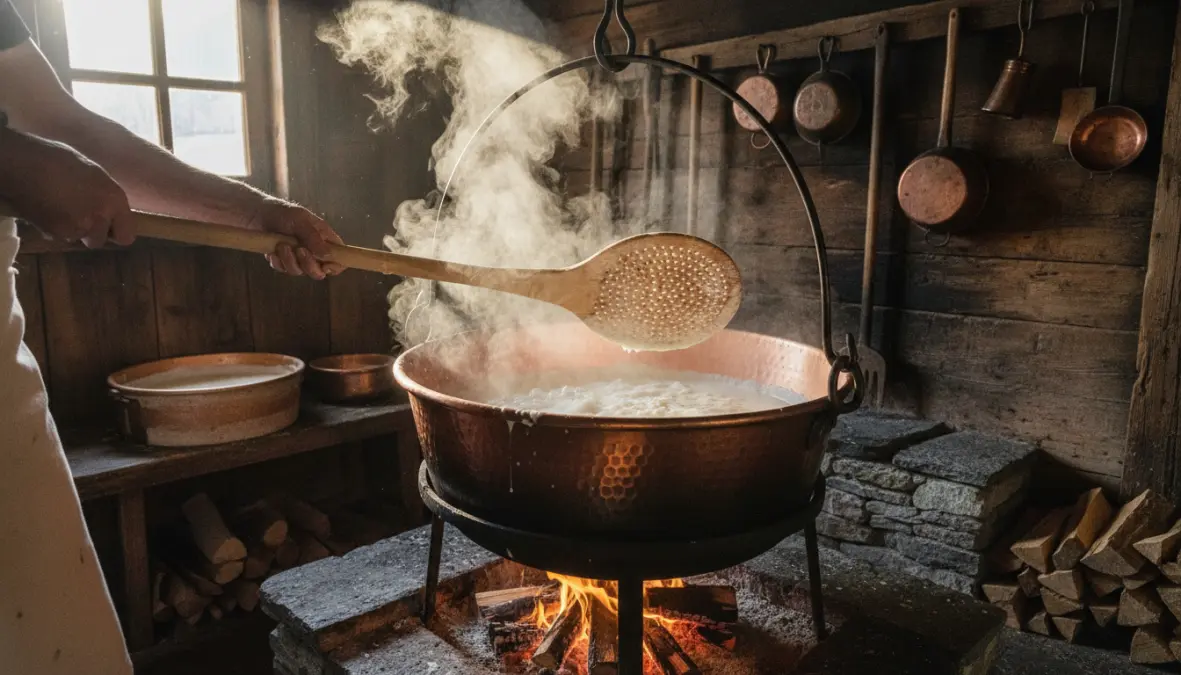
The malga (Italian) or chalet d’alpage (French)—rustic mountain huts—serve as production centers where raw milk is transformed daily. Traditional cheesemakers still use copper cauldrons heated over wood fires, believing modern equipment can’t replicate the subtle temperature variations that contribute to flavor complexity. After forming, cheese wheels are moved to cool cheese cellars—often natural caves or stone buildings where consistent temperature and humidity foster proper aging.
The traditional alpine cheese aging process varies by variety. Gruyère requires minimum five months but can age over a year. During this time, wheels are regularly turned, brushed, and monitored—a labor-intensive process requiring skill to recognize when cheese reaches optimal maturity. This dedication to craft distinguishes true alpine cheeses from industrial imitations, much like traditional maple syrup production honors seasonal rhythms and patient craftsmanship.
Seasonal Rhythms and Alpine Terroir
The concept of terroir—typically associated with wine—applies powerfully to alpine cheese. Seasonal alpine cheese production methods recognize that cheese made in July at 2,000 meters elevation tastes fundamentally different from September cheese or winter production in valley dairies. Summer alpeggio (alpine pasture) cheese commands premium prices because those few months capture the essence of mountain biodiversity.
Altitude affects everything. Higher elevations mean more intense sunlight, influencing plant composition and milk chemistry. Seasonal grazing patterns determine which herbs and grasses cattle consume, directly impacting flavor notes. Experienced tasters can identify not just which valley produced a cheese, but sometimes which specific pasture and which month. This intimate connection between landscape and product—the journey from alpine pastures to cheese cellars—creates cheeses that are literally irreproducible elsewhere.
Preserving Alpine Cheese Traditions in the Modern Era
Today’s artisan cheese traditions face unprecedented challenges. Mountain regions across the Alps experience population decline as young people seek opportunities in cities. Climate change alters seasonal grazing patterns and plant composition in alpine meadows. European Union regulations—designed for industrial dairies—sometimes conflict with centuries-old survival techniques alpine cheesemakers developed, particularly regarding raw milk usage.
Yet the alpine cheese tradition shows remarkable resilience. Protected Designation of Origin (PDO) and Protected Geographical Indication (PGI) status provides legal protection for authentic varieties, ensuring terms like “Gruyère” or “Fontina” can’t be misused by industrial producers. Quality certifications help consumers identify genuine traditional mountain cheese made using heritage methods.
A renaissance is underway. Young cheesemakers increasingly reject industrial careers to revive family traditions or apprentice with master artisans. Agritourism brings visitors to working alpine dairies, creating economic incentives to maintain labor-intensive traditional practices. This mirrors broader interest in food heritage, similar to renewed appreciation for traditional bread-making techniques or ancient cooking methods worldwide.
The cultural significance of alpine cheese traditions extends beyond economics. For alpine communities, cheesemaking represents identity, continuity with ancestors, and connection to land. Seasonal festivals celebrate cheese production; villages take pride in local varieties. This cultural dimension ensures traditions survive not merely as museum pieces but as living practices adapting to contemporary realities while honoring ancestral wisdom.
FAQ
What makes alpine cheese different from other cheeses?
Alpine cheeses are distinguished by several factors: production at high elevation using milk from cattle grazing on biodiverse mountain pastures, traditional methods including raw milk and natural aging in cheese cellars, and seasonal production tied to transhumance rhythms. The unique combination of altitude, plant diversity, and artisan techniques creates complex flavor profiles impossible to replicate in lowland industrial settings.
How long does traditional alpine cheese take to age?
Aging periods vary significantly by variety. Younger alpine cheeses like some Fontina versions age 3-4 months, while classic Gruyère requires minimum 5 months, with reserve versions aging 12-18 months. Exceptional Beaufort or aged Emmentaler can mature 2-3 years. The traditional alpine cheese aging process in cool mountain cellars develops characteristic crystalline texture and intensified flavors over time.
Why is alpine cheese made in summer months?
Summer production during seasonal grazing in high alpine pastures yields the most prized cheese. From June through September, cattle access nutrient-dense grasses and wildflowers that only grow at elevation during warm months. This “flower milk” contains higher fat content and aromatic compounds from diverse alpine plants, creating superior flavor complexity that winter valley-produced cheese cannot match.
What are the most famous alpine cheese varieties?
Iconic varieties include Swiss Gruyère and Emmentaler, French Beaufort and Comté, Italian Fontina and Asiago, and Austrian Bergkäse. Each represents distinct regional swiss cheese culture and alpine traditions, with PDO protection ensuring authentic production methods. These cheeses embody centuries of refinement in mountain cheese production techniques specific to their valleys of origin.
The endurance of alpine cheese tradition reminds us that the most meaningful foods often carry stories of human adaptation, seasonal wisdom, and deep connection to place. Every wheel of authentic alpine cheese represents not just skilled craftsmanship but an entire way of life—one that continues evolving while honoring the shepherd ancestors who first discovered that mountain summers could be captured, preserved, and savored through the transformative alchemy of cheesemaking.