Tortilla Española: The Spanish Omelet That Divides a Nation
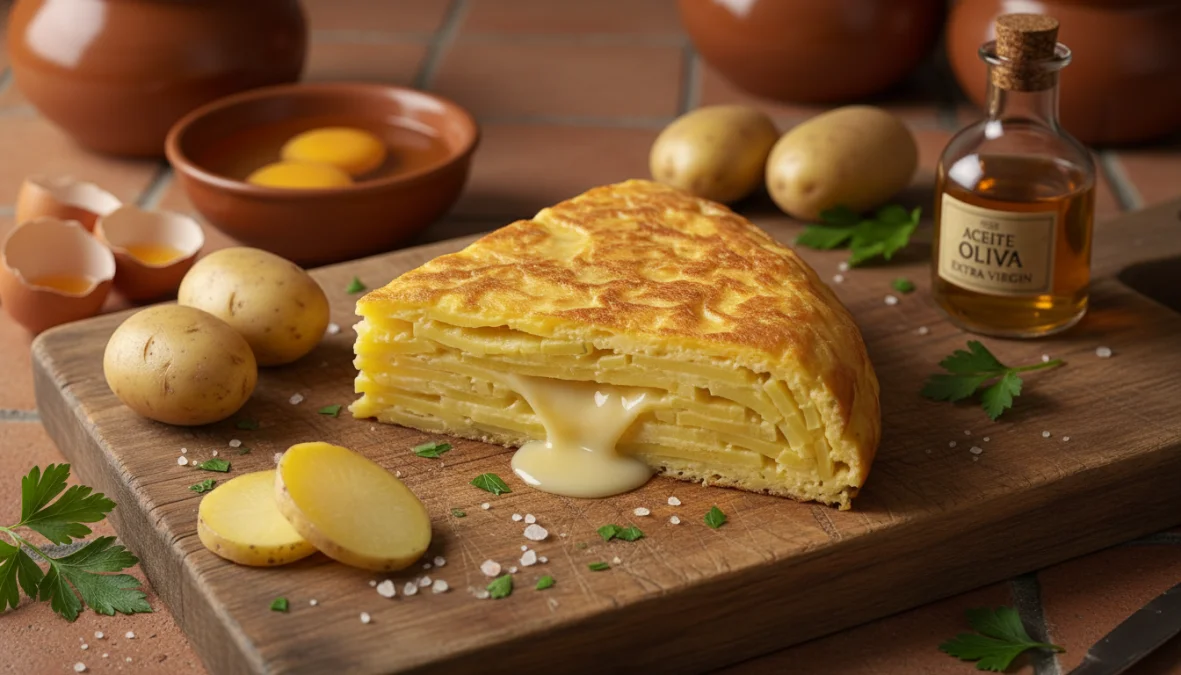
Walk into any Spanish bar at any hour of the day, and you’ll likely spot thick wedges of golden tortilla española sitting proudly under glass domes on the counter. This humble spanish egg dish made from just potatoes, eggs, and olive oil has achieved what few foods can claim: it’s simultaneously everyday comfort food and a source of fierce national debate. The tortilla española tradition runs so deep in Spanish culture that families have been known to argue passionately about the “correct” way to make it, friendships have been tested, and entire regions have declared their allegiance to one version over another.
The Heart of Tortilla Española Tradition: More Than Just a Spanish Egg Dish
The tortilla española history is as layered as the dish itself. While its exact origins remain debated, most historians point to the early 19th century, with some theories linking it to the Carlist Wars when resourceful cooks needed to feed troops with limited ingredients. Others suggest it emerged from peasant kitchens where patatas and huevos were among the few available staples. Regardless of its birthplace, this spanish egg dish quickly became democratized across all social classes.
What makes the tortilla española tradition so remarkable is its omnipresence in daily Spanish life. It appears on breakfast tables, stars as a tapa or pincho in bars, gets packed into school lunchboxes, and serves as a quick dinner solution. Like Ethiopian injera or Vietnamese pho, tortilla española transcends mere sustenance to become cultural identity embodied in food. Every Spanish grandmother claims hers is the definitive version, and they’re all absolutely right—at least within their own families.
The genius of Spanish cuisine often lies in transforming simple ingredients into something extraordinary, and tortilla española exemplifies this philosophy. Three basic components create a dish that’s deceptively complex to execute properly. The thickness, texture, and technique separate mediocre attempts from the silky, potato-packed perfection that defines authentic cocina española.
The Great Divide: With or Without Onion?
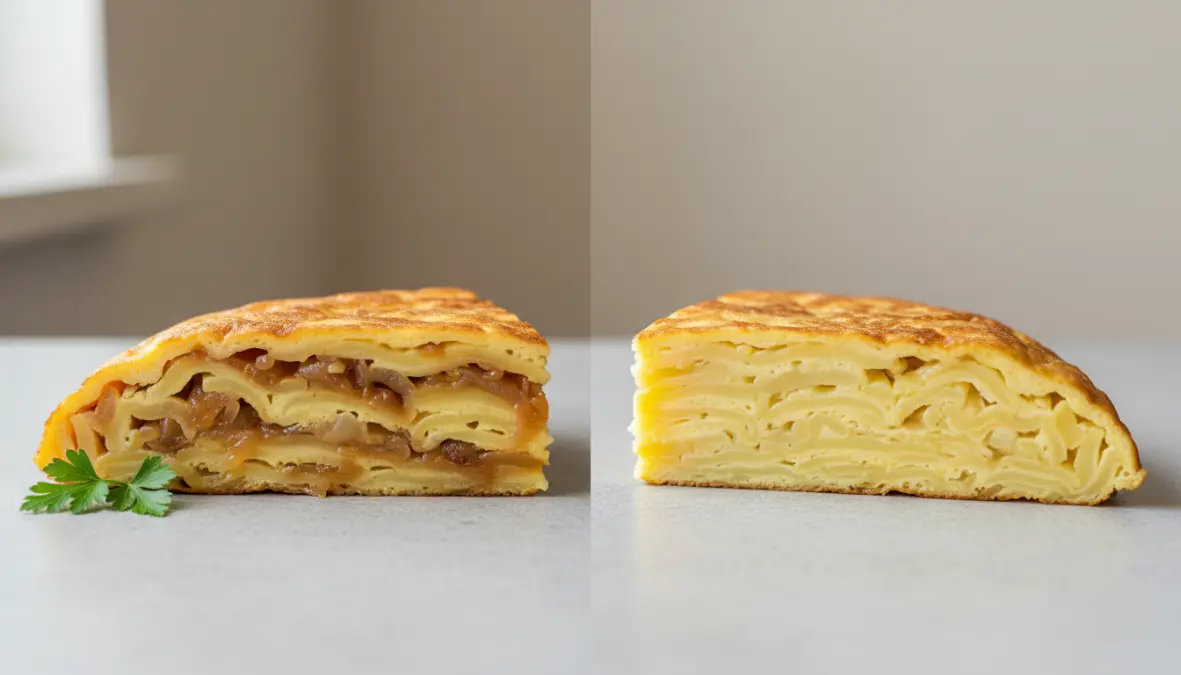
Ask a Spaniard about tortilla española with or without onion, and you’ve just opened Pandora’s box. This isn’t a casual preference—it’s a declaration of identity, tradition, and values. The cebolla debate has genuinely divided the nation, with surveys suggesting roughly 50% of Spaniards prefer their tortilla de patatas with onion while the other half considers it sacrilege.
The anti-onion camp, often called purists, argues that the traditional spanish tortilla requires only potatoes, eggs, olive oil, and salt. They claim onion adds unnecessary sweetness and moisture that compromises the texture. Celebrity chefs and home cooks alike have staked their reputations on this position. Meanwhile, the pro-onion faction insists that cebolla adds depth, sweetness, and complexity that elevates the dish beyond basic ingredients. They view the onion-less version as incomplete, lacking soul.
Regional and familial identities often align with these preferences. Some areas of Spain lean heavily toward one version, passing down recipes through generations with religious fervor. The debate has spawned countless newspaper articles, social media wars, and even academic discussions about what defines tortilla española authentic preparation. Interestingly, similar passionate food debates exist worldwide, much like the regional variations in borscht that define Eastern European identity.
Beyond the onion question, secondary debates simmer beneath the surface: Should the center be jugosa (runny) or fully cooked? How thick should it be? Can you add peppers, chorizo, or other ingredients without losing authenticity? Each question reveals that food isn’t just about taste—it’s about memory, tradition, and belonging.
Mastering the Spanish Potato Omelet: Authentic Recipe and Techniques
Learning how to make authentic tortilla española requires understanding that technique matters as much as ingredients. Here’s the best spanish tortilla recipe traditional approach that even purists respect.
Traditional tortilla española ingredients:
- 500g potatoes (waxy varieties work best)
- 5-6 large eggs
- 200ml extra virgin olive oil
- Salt to taste
- Optional: 1 medium onion (choose your side!)
The spanish potato omelet cooking tips begin with slicing potatoes thinly—about 3mm thick—for even cooking. Many beginners wonder about the difference between tortilla and spanish omelet: while both use eggs, tortilla española is thick, potato-dense, and cooked differently than French omelets or American versions.
Heat olive oil generously in a non-stick pan (about 20-24cm diameter). The potatoes should slowly confit rather than fry—medium-low heat for 15-20 minutes until tender but not crispy. If using onion, add it halfway through. This gentle cooking is crucial for texture. Drain the potatoes, reserving the flavorful oil.
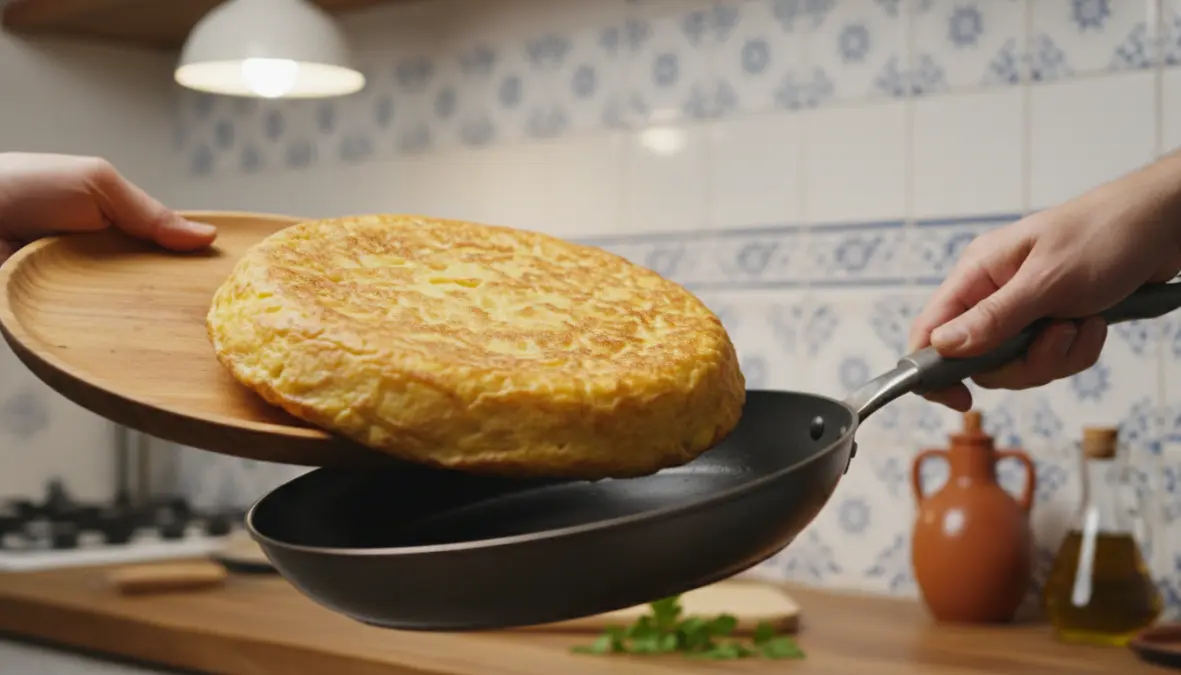
Beat eggs with salt, then fold in the warm potatoes gently. Let the mixture rest for a few minutes so potatoes absorb egg. Heat 2-3 tablespoons of the reserved oil in your pan, pour in the mixture, and cook over medium-low heat. Shape the edges with a spatula. After 4-5 minutes, comes the moment of truth: the flip. Slide the tortilla onto a plate, invert the pan over it, and flip confidently. Cook another 3-4 minutes for jugosa texture, longer if you prefer fully cooked.
Common mistakes include using too little oil (resulting in dry tortilla), cooking at too high heat (burned exterior, raw interior), and flipping too early. The spanish omelet recipe rewards patience and gentle handling. Like mastering risotto alla Milanese, timing and temperature control separate good from exceptional.
FAQ: Common Questions About Tortilla Española
What’s the difference between tortilla española and a regular omelet?
Unlike thin French or American omelets, tortilla de patatas is thick (2-3cm), potato-heavy, and served in wedges like a cake. It’s cooked slowly on both sides rather than folded, creating a distinctly different texture and purpose—it’s a substantial dish rather than a light egg preparation.
Can you make tortilla española ahead of time?
Absolutely! Tortilla española tastes excellent at room temperature and many argue it’s even better the next day once flavors meld. Spaniards commonly prepare it in the morning for evening tapas or pack it for picnics. Store covered at room temperature for a few hours or refrigerate up to three days.
Why is my tortilla falling apart?
Usually from insufficient binding (too few eggs for the amount of potatoes), flipping before the bottom has set properly, or potatoes cut too thick. The ideal ratio is about 100g potatoes per egg. Ensure the bottom is fully set before attempting the flip.
Is tortilla española served hot or cold?
Traditionally, it’s served at room temperature or slightly warm—never piping hot from the pan. This allows the texture to settle and flavors to develop. In bars, you’ll typically see it displayed at room temperature, ready to serve as a tapa or pincho.
What are traditional accompaniments?
Tortilla española shines on its own but pairs beautifully with crusty bread (pan), a simple green salad, or pimientos de padrón. In bars, it’s often served with a toothpick as finger food alongside beer or wine. Some enjoy it in a bocadillo (sandwich) for a satisfying portable meal.
The beauty of the tortilla española tradition lies not in finding the “correct” recipe, but in understanding that each version carries personal and cultural meaning. Whether you’re team onion or team no-onion, whether you prefer jugosa or well-done, making tortilla española connects you to centuries of Spanish home cooking. Much like Swedish fika or mole poblano, this dish reminds us that the most meaningful foods are those that spark conversation, preserve memory, and bring people together—even if they’re arguing passionately about the proper ingredients.